Loading…
 Tuesday, September 29Tuesday, September 29
4 months · 12 summary articles
The European Union on Thursday formally adopted its tariff commitments under the new US trade framework, meeting President Donald Trump’s July 4 deadline while securing safeguards that could suspend benefits if Washington fails to uphold its side of the deal. The EU Council, representing the bloc’s 27 member states, approved the measures in a coordinated vote, capping US tariffs on most EU exports at 15 percent and eliminating EU duties on most industrial and agricultural goods from the United States .
The agreement, struck in July 2025 between Trump and European Commission President Ursula von der Leyen, will take effect before the US president’s self-imposed deadline, according to French daily *Le Monde* . Under the deal, Washington will levy no more than 15 percent on EU exports, while Brussels will lift tariffs entirely on US industrial goods entering the single market. The European Parliament attached a 2029 sunset clause and provisions allowing it to suspend benefits if the US breaches commitments on steel derivatives, adding a layer of conditional oversight to the arrangement.
The swift approval follows months of negotiations and reflects the EU’s urgency to finalize the pact ahead of Trump’s deadline. Greek news outlet *Proto Thema* reported that all 27 member states had given their final green light, ensuring the deal’s implementation before the July 4 target . Dutch broadcaster RTL noted that the agreement had taken nearly a year to translate into legislation, underscoring the complexity of aligning 27 national positions .
The move comes as Brussels also signals alignment with Washington on strategic sectors, including AI chip supply chains. Earlier on Thursday, the EU announced it would join Pax Silica, a US-led initiative to coordinate export controls on advanced semiconductors and counter China’s dominance in the sector . The decision, described by French officials as a form of “colonisation,” arrives just two weeks after the EU unveiled a tech-sovereignty agenda aimed at reducing dependence on foreign technology.
While the tariff deal provides immediate relief for EU exporters facing unpredictable US trade policies, the inclusion of the sunset clause and suspension mechanisms underscores lingering skepticism in Brussels about the durability of Trump’s commitments. The measures will take effect within days, but their long-term viability may hinge on the outcome of the November 2026 US presidential election and the EU’s ability to enforce its own conditions.
Follow us for live European news
2 further sources not geolocated
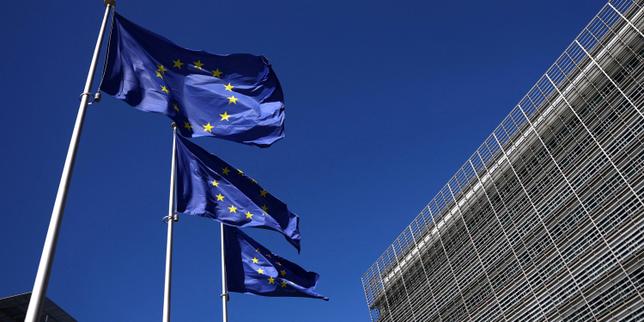
EU-US trade deal to take effect before Trumps deadline Struck between the US president and EU chief Ursula von der Leyen in July 2025, the deal sets levies of 15 on most of EU exports to the United States and zero tariffs for US industrial goods coming into the 27-nation bloc.
le monde · 3 months ago

The EU signs up to Pax Silica, the US-led chip pact France called colonisation Brussels is joining a Washington-led effort to secure AI chip supply chains, a fortnight after unveiling a tech-sovereignty agenda built on the opposite instinct. The European Union is set to join Pax Silica, the US-led initiative to coordinate AI chip supply chains and export controls against China. The decision is awkwardly timed. It arrives just […] This story continues at The Next Web
the next web · 3 months ago
Proposal to microchip sterilised stray cats gains support A proposal to introduce microchips for stray cats sterilised under Cyprus nationwide sterilisation programme has received broad support from government services and animal welfare organisations on Thursday. The proposal was discussed during a coordination meeting by environment and animal welfare commissioner Antonia Theodosiou following a letter from the Cyprus voice for animals (CVA) federation. Representatives […]
cyprus mail · 3 months ago
Τα 27 κράτη-μέλη της ΕΕ έδωσαν το τελικό πράσινο φως για να τεθεί σε ισχύ η εμπορική συμφωνία ΕΕ-ΗΠΑ πριν την 4η Ιουλίου
protothema · 3 months ago
EU adopts tariff commitments under US trade framework The EU Council on Thursday formally approved the blocs tariff commitments under its trade framework with Washington, meeting a July 4 deadline set by President Donald Trump while the European Parliament added safeguards including a 2029 sunset clause and provisions to suspend benefits if Washington breaches commitments on steel derivatives.
yenisafak · 3 months ago

More than 700 animals disappear from California rescue shelter as cops fear worst-case scenario The rescue remains open, with animal control and a veterinarian visiting three times a week to monitor the animals
independent · 3 months ago
International commercial court welcomes Cypriot member Cypriot lawyer Stavros Pavlou was appointed as a new member of the International Court of Arbitration of the International Chamber of Commerce (ICC) following a proposal by the ICC Cyprus National Committee, the Cyprus Chamber of Commerce and Industry (Keve) has announced. The appointment of Pavlou was confirmed by the ICC World Council, which met […]
cyprus mail · 3 months ago
Απεργία στο εμπόριο στις 19 Ιουλίου προαναγγέλλουν Ομοσπονδίες και κυριακάτικη αργία
protothema · 3 months ago
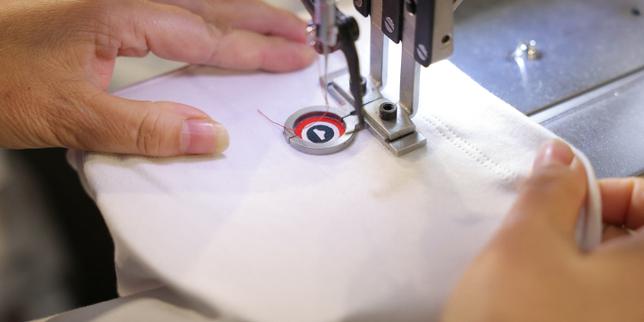
Le Slip français va être coté en Bourse le 14 juillet Les conditions dentrée sur le segment Euronext Growth Paris ont été approuvées mercredi par lAutorité des marchés financiers.
le monde · 3 months ago
Vom Kirchsteigfeld nach Chicago: Potsdamer Gesamtschule knüpft Kontakte in die USA Die Steuben-Schule im Kirchsteigfeld hat Kontakt zu einer gleichnamigen Schule in Chicago aufgenommen. Nun war eine Delegation Gast beim Fest der US-Botschaft.
tagesspiegel · 3 months ago
Eindelijk alle neuzen dezelfde kant op in EU: deal met VS goedgekeurd Het heeft een maand of elf geduurd, maar de EU heeft eindelijk de handelsdeal met de VS goedgekeurd en omgezet in wetgeving. De lidstaten hebben nu ook hun fiat gegeven.
rtl nieuws · 3 months ago