
G7 expands Ukraine military support and sanctions on Russia
Story Timeline
4 months · 21 summary articles
G7 leaders meeting in Évian-les-Bains on Tuesday agreed to expand military support for Ukraine and tighten sanctions on Russia, with US President Donald Trump signing a joint communiqué that signals a rare moment of transatlantic unity on the war. The announcement, released on Wednesday, 17 June 2026, commits the Group of Seven to accelerate deliveries of air defence systems and long-range weapons while exploring licensing arrangements that would allow Ukraine to produce interceptor missiles domestically .
Ukrainian President Volodymyr Zelensky told reporters that G7 leaders had privately acknowledged that Vladimir Putin is not winning the war, describing his meeting with Trump as “very good” and expressing cautious optimism about the summit’s outcome . French President Emmanuel Macron, hosting the gathering in his final G7 summit, hailed the joint declaration as a victory for European diplomacy, noting that Trump had endorsed both stronger military backing for Kyiv and deeper economic pressure on Moscow .
The communiqué stops short of endorsing immediate peace talks but signals willingness to consider production licences that would enable Ukraine to manufacture its own missile interceptors, a move intended to bolster Kyiv’s long-term deterrence capacity . European diplomats quoted by Politico described a “certain sense of optimism” after the first full day of talks, with senior EU officials expressing reduced concern that next month’s NATO summit in Turkey might collapse over allied divisions .
Trump, who had previously urged Kyiv to negotiate directly with Moscow, framed the outcome as a step toward ending the conflict. “Russia should make peace deal with Ukraine,” he told reporters in Évian-les-Bains . Analysts cautioned, however, that no breakthrough is imminent. The Kyiv Post quoted a senior analyst warning that closed-door discussions had produced no tangible concessions from either side .
The G7 also signalled readiness to tighten sanctions on Russia’s oil and gas sector, with several leaders calling for measures targeting the Kremlin’s wartime revenue streams . German newspaper *Die Welt* reported that the renewed cohesion among Western allies had surprised observers, attributing it in part to Trump’s diplomatic setbacks in parallel negotiations over Iran .
Follow us for live European news
- 4
- 2
- 2
- 2
- 2
- 1
- 1
- 1
- 1
1 further source not geolocated
Articles

#Ukraine #EU MBDA has signed a memorandum of understanding with the Ukrainian State Design Bureau "Luch" to collaborate on the development of the Neptune2 cruise missile, enhancing Ukraines deep strike capabilities. This partnership aims to advance strategic defense cooperation between the two entities. Subscribe to @OSINTdefender Chat room
telegram bot · 3 months ago
#EU #Ukraine President Zelenskyy maintains that expedited European Union accession is necessary. Not all leaders support this accelerated framework, as they prefer comprehensible and transparent steps for all parties. However, we are not "all parties"; with due respect to all, we are engaged in war and require immediate action. Subscribe to @OSINTdefender Chat room
telegram bot · 3 months ago
G7 leaders consider granting Ukraine licences to produce interceptor missiles G7 leaders have agreed to expand air defence assistance to Ukraine and are prepared to consider licensing arrangements that would allow interceptor missiles to be produced in Ukraine.
ukrpravda · 3 months ago
Russia loses 1,260 soldiers over past day Ukraines General Staff has updated data on Russian losses: Russia lost 1,260 soldiers killed and wounded over the past day.
ukrpravda · 3 months ago
Russian strikes hit Sumy Oblast: three injured, infrastructure facilities and houses damaged Three civilians were injured and residential buildings, cars and infrastructure facilities were damaged in several communities across Sumy Oblast following Russian attacks.
ukrpravda · 3 months ago
Russians attack Pokrovsk and 3 other fronts over 100 times – Ukraines General Staff A total of 237 clashes between Ukrainian and Russian troops were recorded along the line of contact over the past day, with Ukrainian forces effectively holding positions.
ukrpravda · 3 months ago
Ukrainian air defences down 97 out of 119 drones launched by Russia Ukrainian air defences intercepted 97 out of 119 drones launched by Russia overnight, while several strikes were recorded and the attack is still ongoing as of the morning.
ukrpravda · 3 months ago
ONLINE: Ve Francii skončil summit G7. Lídři se shodli na posílení sankcí proti Rusku a na podpoře Ukrajiny Čelní představitelé ekonomicky vyspělých zemí G7 se na summitu ve Francii shodli na posílení sankcí proti Rusku a navýšení vojenské podpory Ukrajiny, která se už pátým rokem brání rozsáhlé ruské vojenské agresi. Vyplývá to ze společného prohlášení lídrů Spojených států, Německa, Británie, Francie, Itálie, Japonska a Kanady, které bylo zveřejněno v noci na středu.
irozhlas.cz · 3 months ago
Hoe Donald Trump de verkiezingen in de VS naar zijn hand probeert te zetten Met verkiezingen op komst in de VS is de regering-Trump druk bezig het verkiezingsproces zoveel mogelijk naar zijn hand te zetten. "Trump creëert omstandigheden waardoor het makkelijker wordt voor zijn partij om de macht te houden, als ze verliezen. Dat is de grote angst van de Democraten", zegt Amerika-correspondent Erik Mouthaan.
rtl nieuws · 3 months ago

EN DIRECT, guerre en Ukraine : un mort et au moins sept blessés dans des frappes nocturnes russes à Zaporijia Des dizaines de drones ont été lancés, notamment vers des zones résidentielles de cette ville du sud-est de lUkraine. Une partie de luniversité a également été touchée.
le monde · 3 months ago
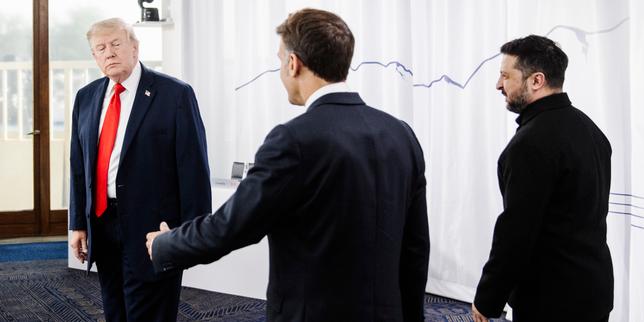
Au sommet du G7, Donald Trump, galvanisé par son accord avec lIran, montre un regain dintérêt pour lUkraine Les Européens, qui souhaitent un réinvestissement des Etats-Unis dans le conflit entre Moscou et Kiev, ont entretenu lenthousiasme du président américain sur son protocole daccord avec Téhéran et ont confirmé leur offre de service dans le détroit dOrmuz.
le monde · 3 months ago
Neue Sanktionen gegen Moskau, mehr Waffen für Kiew: G7-Staaten erhöhen Druck auf Russland Die USA und die anderen G7-Staaten wollen die Bemühungen um ein Ende des Ukraine-Krieges intensivieren. Dafür sollen unter anderem die Sanktionen im Energiesektor verschärft werden.
tagesspiegel · 3 months ago
Gipfel in Evian: G7-Staaten für neue Sanktionen gegen Russland Mehr Waffen, schärfere Sanktionen: Die G7 inklusive Trump setzt auf mehr Druck gegen Russland und begrüßen das Rahmenabkommen zwischen den USA und Iran. mehr...
taz.de · 3 months ago
Generalul Gheorghiţă Vlad, videoconferinţă cu Oleksandr Sirskîi, şeful SM al Forţelor Armate ale Ucrainei. Ce au discutat cei doi Şeful Statului Major al Apărării, generalul Gheorghiţă Vlad, a discutat cu şeful Statului Major al Forţelor Armate ale Ucrainei, generalul Oleksandr Sirskîi, pe tema situaţiei de securitate din regiune. Cei doi au evaluat incidentele recente din zonă şi au abordat măsurile de creştere a capacităţii de monitorizare şi avertizare, precum şi modalităţile de consolidare a coordonării între structurile militare.
digi24 · 3 months ago
Preşedintele sud-coreean îi cere lui Trump să-l ajute să facă pace cu Phenianul, „aşa cum a rezolvat conflictul din Orientul Mijlociu Preşedintele sud-coreean, Lee Jae Myung, i-a cerut omologului său american, Donald Trump, să îl ajute să facă pace cu Coreea de Nord „aşa cum a rezolvat conflictul din Orientul Mijlociu, a anunţat miercuri biroul său, potrivit AFP.
digi24 · 3 months ago
„Un anumit sentiment de optimism. Donald Trump îi întinde Ucrainei o ramură de măslin la summitul G7, dar cu o condiție Liderii Grupului celor Șapte au sosit la Evian-les-Bains, pregătiți pentru o confruntare cu președintele SUA, Donald Trump, pe tema Iranului și a războiului din Ucraina. În schimb, la finalul primei zile complete de discuții din cadrul G7, aceștia s-au arătat neașteptat de optimiști în ceea ce privește relația lor cu Casa Albă — și ceva mai puțin îngrijorați cu privire la posibilitatea ca summitul crucial al NATO de luna viitoare, din Turcia, să dea greș, potrivit a doi diplomați de rang înalt ai UE, notează Politico.
digi24 · 3 months ago
Generalul Gheorghiţă Vlad, şeful Statului Major, videoconferinţă cu omologul său ucrainean despre coordonarea între structurile militare ale României şi Ucrainei Șeful Statului Major al Apărării, generalul Gheorghiță Vlad, a participat la o videoconferință cu omologul său ucrainean, în care s-a vorbit inclusiv despre o mai bună coordonare între structurile de apărare ale României şi Ucrainei.
adevarul · 3 months ago
Opinion: The future of the China-US-Russia triangle after Pelosis visit to Taiwan Since February 24, 2022, the international communitys focus was concentrated entirely on the war in Ukraine and the growing Russia – West confrontation. It seemed that nothing could change the situation until the end of hostilities in Ukraine. However, on August 2 and 3, almost everyones attention shifted from Ukraine to Taiwan. As the Speaker of the US House of Representatives, Nancy Pelosi, stated her intention to visit Taiwan, up to half a million people were watching the trajectory of her plane on air flight tracking sites. The negative reaction of China, including the warning of President Xi during his conversation with President Biden that those who played with fire would be perished by it, created hype around this visit. Many were discussing the possibility of Chinese military jets closing the airspace over Taiwan and preventing Pelosis plane from landing in Taiwan, while some enthusiasts were even contemplating the possibility of a US-China direct military clash. As Pelosi landed in Taiwan and met with the Taiwanese President, the global social media was full of amateur assessments about the strategic victory of the US and the confirmation of the US global hegemony. However, as the dust settles down, and information noise and manipulation eventually decreases, a more serious assessment is needed to understand the real consequences of this visit.
commonspace · 3 months ago
G7 leaders urge Trump to refocus on Ukraine as war continues
gdeltproject.org · 3 months ago
+++ Ukraine-Krieg +++: G7 wollen mit neuen Sanktionen Druck auf Russland erhöhen Russische Fregatte gibt offenbar Warnschuss im Ärmelkanal ab +++ Lukaschenko: Russland und Ukraine müssen Kompromisse schließen +++ Der Newsblog.
handelsblatt · 3 months ago
G7 leaders agree to increase air defense deliveries to Ukraine The leaders of the G7 countries have agreed to expand deliveries of air defense systems and long-range weapons to Ukraine.
ukrinform · 3 months ago
Russias war casualty toll in Ukraine up by 1,260 over past day Russia has lost approximately 1,386,680 personnel since the start of its full-scale invasion of Ukraine on 24 February 2022, including 1,260 over the past day.
ukrinform · 3 months ago
ADF neutralizes 97 of 119 Russian drones overnight Ukraines air defense forces neutralized 97 drones launched by Russian troops in attacks that began on the evening of June 16. Enemy strikes were recorded at 11 locations.
ukrinform · 3 months ago
War update: 237 combat engagements on front line over past day Yesterday, June 16, there were 237 combat engagements between the Defense Forces of Ukraine and Russian invaders on the front line.
ukrinform · 3 months ago
Macron, victorios la ultimul său summit G7: Declarația comună pentru sprijinul Ucrainei și sancționarea Rusiei, semnată și de Trump Liderii G7, inclusiv președintele american Donald Trump, au semnat o declarație comună în care promit să intensifice sprijinul militar acordat Ucrainei și să întărească sancțiunile împotriva Rusiei.
digi24 · 3 months ago
Dans les coulisses du G7 dEvian : quand Donald Trump naime pas le «plaqué or», il le fait savoir Que se passe-t-il quand Emmanuel Macron, Donald Trump et leurs amis des pays les plus riches de la planète se retrouvent dans une station thermale militarisée ? Pendant quatre jours, «Libération» vous embarque dans la «bulle» dEvian pour un récit de lintérieur.
liberation · 3 months ago
Mindestens vier Tote bei russischen Angriffen im Osten und Südosten der Ukraine Die USA und die anderen G7-Staaten verstärken den Druck auf Russland mit verschärften Sanktionen. Indes begann die EU Beitrittsverhandlungen mit der Ukraine
der standard · 3 months ago
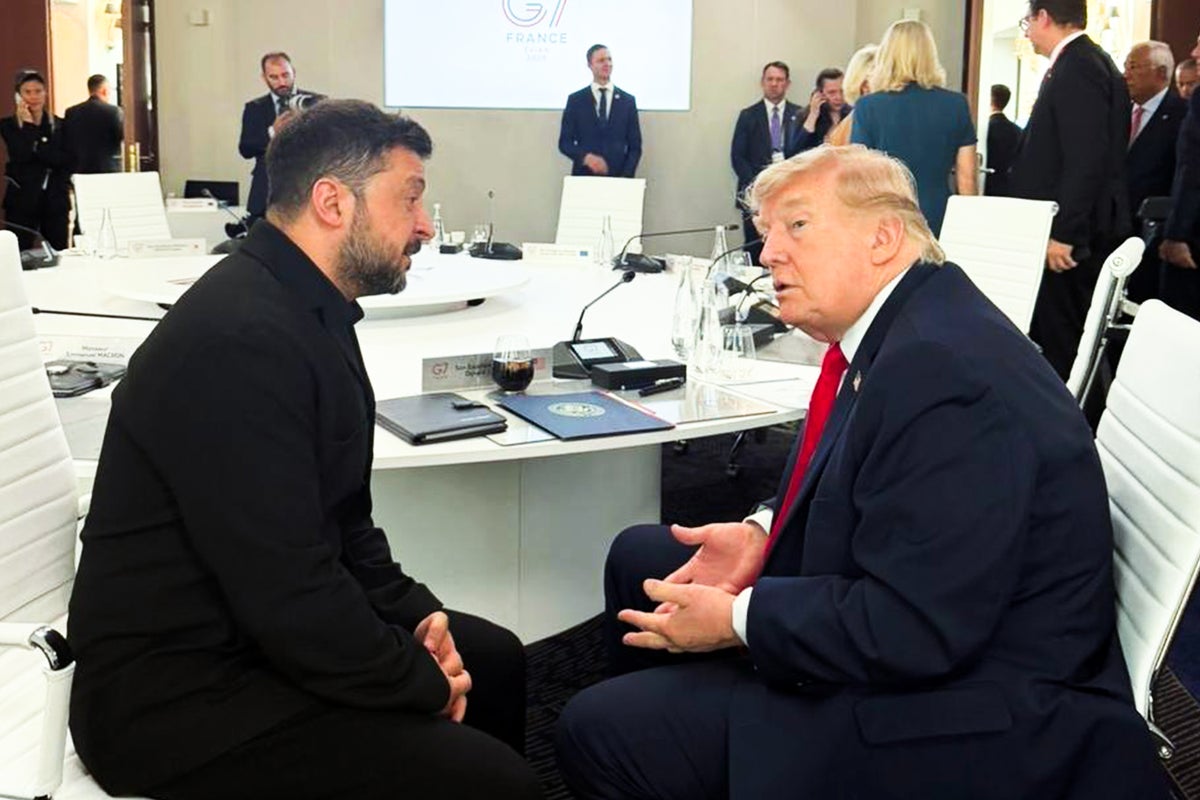
Ukraine-Russia war latest: Zelensky and Trumps very good meeting at G7 boosts hopes for peace G7 leaders agreed that Putin was not winning the war, Zelensky says
independent · 3 months ago
G-7-Staaten kündigen neue Sanktionen gegen Russland und Waffen für die Ukraine an Die G-7-Staaten wollen mit zusätzlichem Druck auf Russland die Bemühungen um ein Ende des Ukraine-Krieges intensivieren und dazu Sanktionen im Öl- und Gassektor verschärfen. Zudem habe man weitere Waffenlieferungen an die Ukraine vereinbart.
welt.de · 3 months ago
Russia should make peace deal with Ukraine: Trump
gdeltproject.org · 3 months ago