
Keir Starmer expected to resign as UK prime minister on Monday

Story Timeline
4 months · 26 summary articles
Keir Starmer is expected to resign as Britain’s prime minister on Monday, according to multiple reports published on Sunday, 21 June 2026, though a government source insisted he remains focused on governing. The *Observer* said Starmer will set out a timetable for his departure after concluding that his position has become unsustainable following a sharp drop in support within his own Labour Party. The threat to his leadership intensified on Friday when his rival Andy Burnham won a seat in Parliament, clearing the way for a formal leadership challenge.
The *Observer* cited conversations with ministers, advisers and trade union leaders as the basis for its report, while a government source told the newspaper that Starmer is still concentrating on his official duties. The same source said the prime minister had not yet made a final decision. Earlier on Sunday, Swedish outlet *Expressen* quoted an unnamed source saying “there is no one left” supporting Starmer, a claim echoed by other European media outlets.
The crisis has been building for months, but the pressure reached a critical point after Burnham’s parliamentary victory, which gives him the platform to mount a leadership bid. Bookmakers have already slashed odds on Starmer’s resignation, with markets pricing an 85% chance he will step down by the end of June. Social media posts promoting non-KYC crypto gambling sites have amplified the speculation, but the underlying political signals remain the most consequential.
Within Labour, more than 100 elected MPs have publicly called for Starmer either to resign or to set a clear exit schedule, according to Greek newspaper *Proto Thema*. Romanian outlet *Adevarul* reported that Starmer met with senior party figures over the weekend and concluded he could no longer command sufficient backing. Austrian public broadcaster ORF and German outlets *Der Standard* and *Die Presse* all carried similar accounts on Sunday morning.
A government spokesperson declined to comment on the resignation reports, repeating that Starmer is focused on delivering his agenda. The prime minister’s office has not issued any statement confirming or denying the claims. If Starmer does announce his departure on Monday, the focus will immediately shift to the Labour Party’s process for selecting a successor and the broader implications for British politics ahead of the next general election.
Follow us for live European news
- 3
- 2
- 2
- 2
- 1
- 1
- 1
- 1
- 1
- 1
- 1
- 1
- 1
- 1
- 1
2 further sources not geolocated
Articles

Nigel Farage flailing is extremely funny People hate Keir Starmer. But a lot of people hate Reform too
new statesman · 3 months ago

És akkor a Fidesz nem bízza a Tiszára a propaganda beszántását, megoldja saját maga Megindult a tömeges elbocsátás és lapbezárások sorozata a NER-médiánál, először ment Magyar Péter EU-csúcsra, és úgy tűnik, Irán és az USA lezárhatja a háborút. Ez a HVG heti gazdasági összefoglalója.
hvg.hu · 3 months ago
Starmer resignation imminent, British media report following Burnhams victory Keir Starmer will resign as early as tomorrow and further announce the timeline of his withdrawal, according to a report in The Sunday Observer, citing government sources, advisors and trade unionists. The PM remains focused on his duties, a source told The Observer. According to the same report, Starmers precarious position, gradually pushing him towards […]
in-cyprus · 3 months ago

4h. Reino Unido. PM britânico vai apresentar a demissão De acordo com o The Observer, após várias reuniões com o governo, Starmer concluiu que é insustentável manter-se no cargo. Ainda, O Curaçau e o Equador empataram a zero bolas.
observador · 3 months ago
Britischer Premier Starmer steht laut Bericht vor Rücktritt Ein Regierungsvertreter wies den Bericht zurück und erklärte, der Premierminister konzentriere sich auf seine Amtsgeschäfte.
die presse · 3 months ago
Report says PM Starmer ready to quit on Monday Observer newspaper said Prime Minister Keir Starmer was expected to resign on Monday and set out a timetable for his departure, though a government source said Starmer remained focused on getting on with the job of governing. The threat to Starmers position, which has been building for months, increased sharply on Friday when his rival […]
cyprus mail · 3 months ago
What Andy Burnhams Westminster past reveals about him King of the North started as a New Labour special adviser before serving in Corbyns shadow cabinet
financial times · 3 months ago

Nieoficjalnie: Starmer szykuje się do rezygnacji. "Boleśnie zderzył się z rzeczywistością" Brytyjski premier Keir Starmer przygotowuje się do ogłoszenia dymisji - podał w niedzielę tygodnik "The Observer". Z nieoficjalnych informacji wynika, że szef rządu ma plan stopniowego przekazania władzy następcy. Przedstawiciele rządu zaprzeczają tym doniesieniom.
gazeta.pl · 3 months ago
Britský premiér Keir Starmer sa podľa týždenníka Observer chystá odstúpiť z funkcie Britský premiér Keir Starmer podľa britského týždenníka Observer vážne uvažuje o tom, že v pondelok oznámi svoju rezignáciu a predstaví harmonogram odchodu. Hoci vládne zdroje tieto informácie nateraz popierajú a tvrdia, že premiér sa sústredí na prácu, tlak vnútri vládnej Labouristickej strany dosiahol kritický bod.
aktuality.sk · 3 months ago

À Miami, la deuxième vie, dorée, de Boris Johnson, grand artisan du Brexit Depuis son retrait de la vie politique en 2023, lex-figure de proue de la campagne pour la sortie de lUE en 2016 et ancien Premier ministre britannique enchaîne les petits boulots plus lucratifs les uns que les autres. Ce magazine de centre gauche se penche, caustique, sur sa dernière aventure professionnelle en date, dans une université privée de Floride.
courrier international · 3 months ago

Britischer Premier Starmer laut Zeitungsbericht vor Rücktritt, Regierungskreise dementieren Der unter Druck stehende Premierminister Keir Starmer soll einem Bericht zufolge am Montag zurücktreten. Ein Regierungsvertreter wies das zurück
der standard · 3 months ago
Presa britanică: Keir Starmer ar putea demisiona zilele următoare. Premierul, sub presiune după scăderea dramatică a popularității Premierul britanic Keir Starmer s-ar putea retrage din funcție în zilele următoare, potrivit unui articol publicat de un ziar britanic, care susține că liderul laburist ar urma să anunțe luni un calendar pentru plecarea sa.
adevarul · 3 months ago
Tensiuni politice în Marea Britanie. Premierul Keir Starmer ar fi pregătit să demisioneze, susține presa din Regat Ziarul britanic The Observer a afirmat că se aşteaptă ca premierul Keir Starmer să demisioneze luni şi să stabilească un calendar pentru plecarea sa, deşi o sursă guvernamentală a declarat că Starmer rămâne concentrat pe îndeplinirea atribuţiilor sale de guvernare, scrie Reuters.
digi24 · 3 months ago

Starmer väntas meddela sin avgång på måndag Premiärminister Keir Starmers avgång är nära, uppger källor till brittiska The Telegraph. Samtidigt växer stödet för hans opponent Andy Burnham – som pekas ut som en trolig efterträdare.
dagens nyheter · 3 months ago
Observer: Έτοιμος να παραιτηθεί ο Στάρμερ, ακόμη και τη Δευτέρα οι ανακοινώσεις για την ομαλή διαδοχή Περισσότεροι από 100 εκλεγμένοι βουλευτές του κόμματος του Βρετανού πρωθυπουργού έχουν δηλώσει δημοσίως ότι επιθυμούν να παραιτηθεί ή να καθορίσει χρονοδιάγραμμα για την αποχώρησή του
protothema · 3 months ago
Medien: Premier Starmer vor Rücktritt
orf.at · 3 months ago
Uppgifter: Keir Starmer är redo att avgå Storbritanniens premiärminister Keir Starmer uppges vara redo att avgå, rapporterar The Telegraph.Stödet för honom har minskat drastiskt senaste veckan. – Det finns ingen kvar, säger en källa.
expressen · 3 months ago
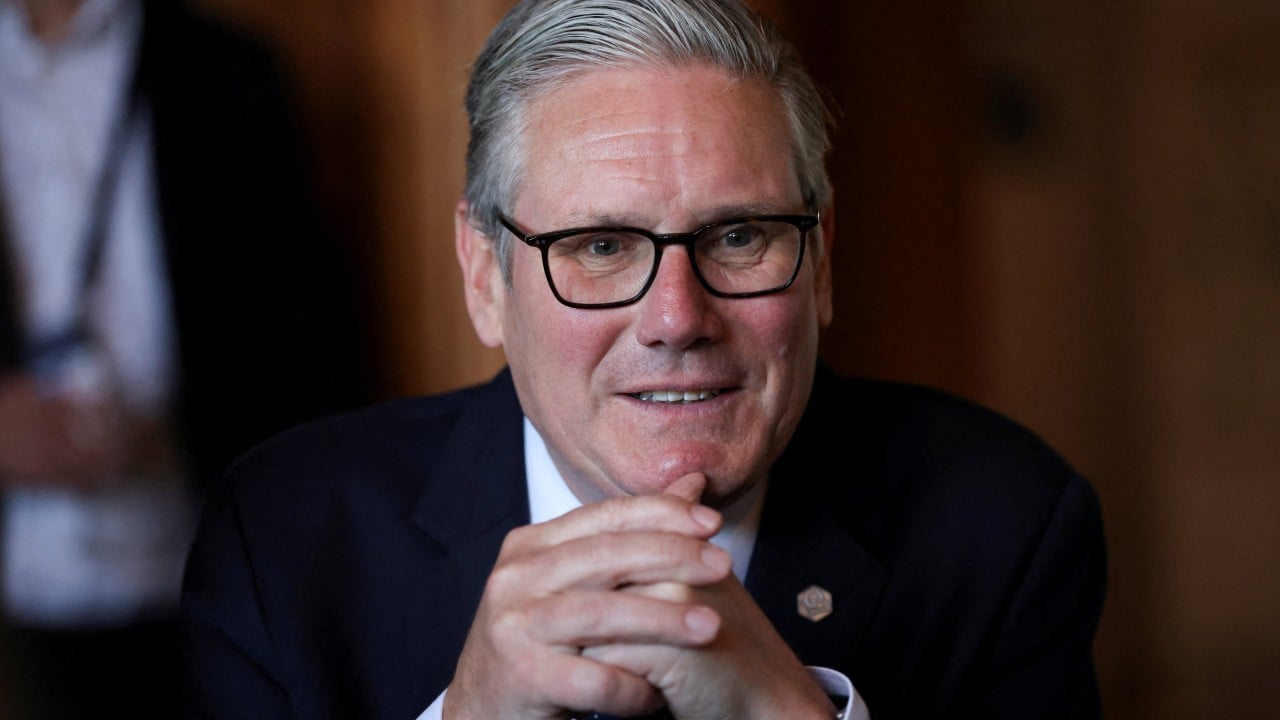
British PM Keir Starmer ready to quit, report says Britains Observer newspaper said Prime Minister Keir Starmer was expected to resign on Monday and set out a timetable for his departure, though a government source said Starmer remained focused on getting on with the job of governing. The threat to Starmers position, which has been building for months, increased sharply on Friday when his rival Andy Burnham won a seat in parliament that would allow him to launch a formal leadership challenge. The Observer report said Starmer was discussing...
south china morning post · 3 months ago
Keir Starmer kan avgå Nya uppgifter i Storbritannien
expressen · 3 months ago
Britisk avis: Keir Starmer er ventet å trekke seg på mandag Den britiske statsministeren vil gå av etter helgen, som følge av manglende støtte i eget parti.
aftenposten · 3 months ago

Premier Starmer soll laut Bericht am Montag zurücktreten – Regierungsvertreter dementiert Starmer sei nach Gesprächen mit Ministern, Beratern und Gewerkschaftsführern zu dem Schluss gekommen, dass er sich nicht mehr im Amt halten könne. Ein Regierungsvertreter weist den Bericht zurück.
welt.de · 3 months ago
Η Αθηνά Ωνάση αποχώρησε από το ΔΣ της Groupe Casino, επικαλέστηκε «προσωπικούς λόγους» Περιγράφεται συχνά ως μία από τις πιο αινιγματικές κληρονόμους της Ευρώπης - Η τελευταία αυτή απόφασή της ενισχύει ακόμη περισσότερο το μυστήριο που περιβάλλει τόσο την προσωπική όσο και την επιχειρηματική της δραστηριότητα
protothema · 3 months ago
Theyre gonna replace Keir Starmer with Keir Starmer. 💧 Rainbet.com the #1 Non-KYC Crypto Casino & Sportsbook @rainbetcom +18
telegram bot · 3 months ago
⚡️ British Prime Minister Keir Starmer on the brink of resigning — Sun 💧 Rainbet.com the #1 Non-KYC Crypto Casino & Sportsbook @rainbetcom +18
telegram bot · 3 months ago

"Acabou, Keir". Ministros preparam ultimato a Keir Starmer Keir Starmer anunciou que irá lutar pela liderança, caso seja desafiado
observador · 3 months ago
Report says UK PM Starmer ready to quit, but source says he is still focused on the job Britains Observer newspaper said UK Prime Minister Keir Starmer was expected to resign on Monday and set out a timetable for his departure, though a government source said the leader remained focused on getting on with the job of governing. The threat to Starmers position, which has been building for months, increased sharply on Friday when his rival Andy Burnham won a seat in parliament that would allow him to launch a formal leadership challenge. The Observer report said Starmer was...
south china morning post · 3 months ago
⚡️Odds on Kier Starmer resigning by the end of this month is up to 85 amid recent rumours. What do you guys think? 💧 Rainbet.com the #1 Non-KYC Crypto Casino & Sportsbook @rainbetcom +18
telegram bot · 3 months ago
Are UK Prime Minister Keir Starmers political days numbered? British PM resisting intensifying party pressure to step aside.
aljazeera · 3 months ago