

https://upload.wikimedia.org/wikipedia/commons/thumb/c/c8/Axios_logo_%282020%29.svg/1200px-Axios_logo_%282020%29.svg.png
Latest articles(15999 total)
Amodei critics target Trump with hit piece before White House dinner Opponents of Anthropics Dario Amodei are circulating a highly negative brief about him to the White House ahead of an important dinner with President Trump, per an Axios review of the document. Why it matters: No company wants to be on Trumps bad side — and a Sunday night dinner between the president and Amodei could be what thaws relations after a year of tension. Behind the scenes: The brief, which is not an internal White House document, casts Amodei as having "a long record of attacking Trump" and having "deep Democratic ties."It notes the companys falling out earlier this year with the Pentagon as a "clear example of Dario showing he doesnt trust President Trump." The brief is intended for Trumps eyes and is likely to get in front of him, according to a source familiar with the internal workings of the White House. Its origin is unclear.It even reads in "Trump Talk," a name the president gives to his style of posting: "Dario claimed that AI would eliminate half of all entry-level white collar jobs as soon as this year. WRONG!"Between the lines: The briefs creators are appealing to a president who prizes loyalty and puts a premium on praise. Amodeis failure to communicate properly with the Trump administration has previously cost the company. Anthropic did not immediately respond to a request for comment. Yes, but: Trump has also been laser-focused on winning the AI race and Anthropic is one of the few companies on the frontier of the technology. Anthropic is also valued at hundreds of billions of dollars and has plans to go public soon, making it even harder for the White House to ignore. "The WH is trying to get everyone seated at the table," one source told Axios. The bottom line: Anthropic and the White House both have something to gain from Sunday nights dinner, so long as Amodeis critics dont get there first. Marc Caputo contributed to this story
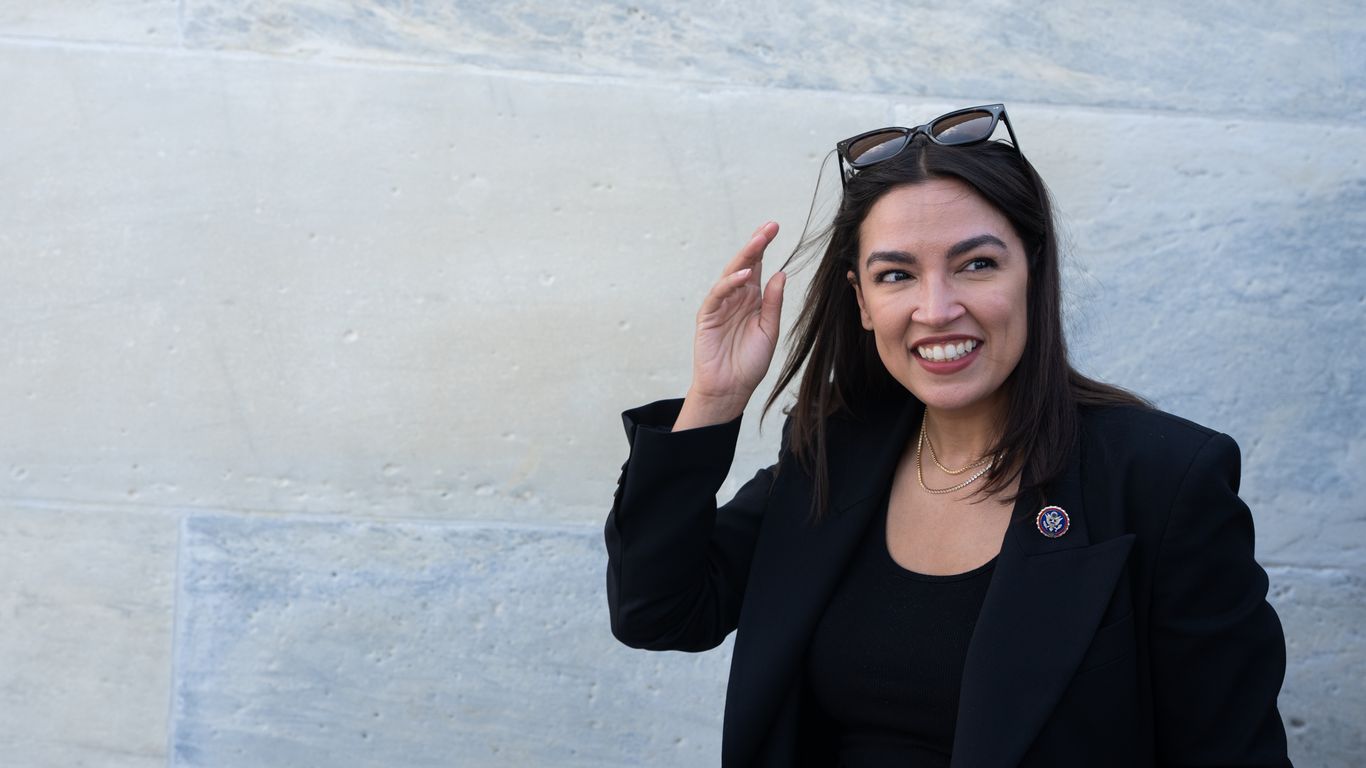
AOC test-runs a Senate bid in upstate New York BUFFALO, N.Y. — Alexandria Ocasio-Cortezs flirtation with a 2028 Senate bid is getting real — more real than the presidential buzz around her might suggest.Shes barnstorming through upstate New York, meeting with local officials, and kicking off a voter turnout program that could help her collect valuable data for a possible Senate campaign.Why it matters: Whether the House member from New York runs for Senate or the White House is one of the biggest questions hanging over the 2028 Democratic presidential primary.Zoom in: Her swing through Buffalo and Ithaca was officially aimed at boosting Democratic turnout in the midterms. But it doubled as a way to test AOCs appeal far from her home base of Queens and the Bronx, and build relationships with locals.In Buffalo, she met privately with Mayor Sean Ryan, then held an impromptu press conference with him, generating coverage of the duo on local TV news.She and her team later kicked off a voter-turnout operation that could help them gather information about the electorate outside New York City. "I want to be very forthright about our intentions here, which is to transform the state of New York," Ocasio-Cortez told activists in a Buffalo arts center who were attending a training session of hers aimed at getting inactive voters to the polls.In Ithaca, she appeared at an apple festival with Rep. Josh Riley (D-N.Y.) and on Sunday was scheduled to headline a "Students vs. Billionaires" town hall. Its friendly terrain: The city is home to several democratic socialist elected officials, and Ocasio-Cortez is a member of the Democratic Socialists of America.The intrigue: AOC says shes genuinely undecided on whether to run for the White House or Senate. Her recent activities upstate suggested that wasnt a head fake.Ryan said Ocasio-Cortez has been talking with state officials about how help communities beyond New York City.Meanwhile, some influential Democrats in early presidential primary states have told us they havent yet heard from AOC. And she hasnt made public visits this year to some of those early states, a contrast from other potential 2028 contenders who are practically living in them.Many political insiders believe that if Ocasio-Cortez were to run for an open Senate seat, shed clear the Democratic field.Senate Minority Leader Chuck Schumer (D-N.Y.), whos in his fifth term, hasnt said whether hell run for reelection.AOC was greeted like a rock star on her upstate tour, with Ryan remarking that at City Hall "a young man really, literally shouted across the lobby, like, Oh my gosh, congresswoman, can I take a picture with you?"Yes, but: Ocasio-Cortez also has taken several steps that could point toward a presidential run. Shes toured the country, moderated her stance on some cultural issues, and opened up about her egg-freezing journey.She recently told the New York Times shell consider whether to run for president after the midterms.Between the lines: One exchange with Ocasio-Cortez offered a window into how she is approaching her decision.We asked her how shes thinking about the future of the progressive movement as she weighs a White House run. In the last two open Democratic presidential primaries, there has been a clear progressive standard-bearer, and many on the left think shes their only hope for 2028.She didnt seem persuaded that by that argument."The movement is so much bigger than any one person," she told us.The bottom line: AOC suggested that her choice wont be solely about ideology."These decisions arent always about punditry or ideology. Its about putting the country first," she said. "Whats important is ending … the corrupt reign of the Trump administration, as well as any of its acolytes."Asked whether that means shes weighing "electability" as she determines her next move, she replied, "I dont see who wouldnt."
Amodei critics target Trump with hit piece before White House dinner Opponents of Anthropics Dario Amodei are circulating a highly negative brief about him to the White House ahead of an important dinner with President Trump, per an Axios review of the document. Why it matters: No company wants to be on Trumps bad side — and a Sunday night dinner between the president and Amodei could be what thaws relations after a year of tension. Behind the scenes: The brief, which is not an internal White House document, casts Amodei as having "a long record of attacking Trump" and having "deep Democratic ties."It notes the companys falling out earlier this year with the Pentagon as a "clear example of Dario showing he doesnt trust President Trump." The brief is intended for Trumps eyes and is likely to get in front of him, according to a source familiar with the internal workings of the White House. Its origin is unclear.It even reads in "Trump Talk," a name the president gives to his style of posting: "Dario claimed that AI would eliminate half of all entry-level white collar jobs as soon as this year. WRONG!"Between the lines: The briefs creators are appealing to a president who prizes loyalty and puts a premium on praise. Amodeis failure to communicate properly with the Trump administration has previously cost the company. Anthropic did not immediately respond to a request for comment. Yes, but: Trump has also been laser-focused on winning the AI race and Anthropic is one of the few companies on the frontier of the technology. Anthropic is also valued at hundreds of billions of dollars and has plans to go public soon, making it even harder for the White House to ignore. "The WH is trying to get everyone seated at the table," one source told Axios. The bottom line: Anthropic and the White House both have something to gain from Sunday nights dinner, so long as Amodeis critics dont get there first. Marc Caputo contributed to this story
AOC test-runs a Senate bid in upstate New York BUFFALO, N.Y. — Alexandria Ocasio-Cortezs flirtation with a 2028 Senate bid is getting real — more real than the presidential buzz around her might suggest.Shes barnstorming through upstate New York, meeting with local officials, and kicking off a voter turnout program that could help her collect valuable data for a possible Senate campaign.Why it matters: Whether the House member from New York runs for Senate or the White House is one of the biggest questions hanging over the 2028 Democratic presidential primary.Zoom in: Her swing through Buffalo and Ithaca was officially aimed at boosting Democratic turnout in the midterms. But it doubled as a way to test AOCs appeal far from her home base of Queens and the Bronx, and build relationships with locals.In Buffalo, she met privately with Mayor Sean Ryan, then held an impromptu press conference with him, generating coverage of the duo on local TV news.She and her team later kicked off a voter-turnout operation that could help them gather information about the electorate outside New York City. "I want to be very forthright about our intentions here, which is to transform the state of New York," Ocasio-Cortez told activists in a Buffalo arts center who were attending a training session of hers aimed at getting inactive voters to the polls.In Ithaca, she appeared at an apple festival with Rep. Josh Riley (D-N.Y.) and on Sunday was scheduled to headline a "Students vs. Billionaires" town hall. Its friendly terrain: The city is home to several democratic socialist elected officials, and Ocasio-Cortez is a member of the Democratic Socialists of America.The intrigue: AOC says shes genuinely undecided on whether to run for the White House or Senate. Her recent activities upstate suggested that wasnt a head fake.Ryan said Ocasio-Cortez has been talking with state officials about how help communities beyond New York City.Meanwhile, some influential Democrats in early presidential primary states have told us they havent yet heard from AOC. And she hasnt made public visits this year to some of those early states, a contrast from other potential 2028 contenders who are practically living in them.Many political insiders believe that if Ocasio-Cortez were to run for an open Senate seat, shed clear the Democratic field.Senate Minority Leader Chuck Schumer (D-N.Y.), whos in his fifth term, hasnt said whether hell run for reelection.AOC was greeted like a rock star on her upstate tour, with Ryan remarking that at City Hall "a young man really, literally shouted across the lobby, like, Oh my gosh, congresswoman, can I take a picture with you?"Yes, but: Ocasio-Cortez also has taken several steps that could point toward a presidential run. Shes toured the country, moderated her stance on some cultural issues, and opened up about her egg-freezing journey.She recently told the New York Times shell consider whether to run for president after the midterms.Between the lines: One exchange with Ocasio-Cortez offered a window into how she is approaching her decision.We asked her how shes thinking about the future of the progressive movement as she weighs a White House run. In the last two open Democratic presidential primaries, there has been a clear progressive standard-bearer, and many on the left think shes their only hope for 2028.She didnt seem persuaded that by that argument."The movement is so much bigger than any one person," she told us.The bottom line: AOC suggested that her choice wont be solely about ideology."These decisions arent always about punditry or ideology. Its about putting the country first," she said. "Whats important is ending … the corrupt reign of the Trump administration, as well as any of its acolytes."Asked whether that means shes weighing "electability" as she determines her next move, she replied, "I dont see who wouldnt."
Amodei critics target Trump with hit piece before White House dinner Opponents of Anthropics Dario Amodei are circulating a highly negative brief about him to the White House ahead of an important dinner with President Trump, per an Axios review of the document. Why it matters: No company wants to be on Trumps bad side — and a Sunday night dinner between the president and Amodei could be what thaws relations after a year of tension. Behind the scenes: The brief, which is not an internal White House document, casts Amodei as having "a long record of attacking Trump" and having "deep Democratic ties."It notes the companys falling out earlier this year with the Pentagon as a "clear example of Dario showing he doesnt trust President Trump." The brief is intended for Trumps eyes and is likely to get in front of him, according to a source familiar with the internal workings of the White House. Its origin is unclear.It even reads in "Trump Talk," a name the president gives to his style of posting: "Dario claimed that AI would eliminate half of all entry-level white collar jobs as soon as this year. WRONG!"Between the lines: The briefs creators are appealing to a president who prizes loyalty and puts a premium on praise. Amodeis failure to communicate properly with the Trump administration has previously cost the company. Anthropic did not immediately respond to a request for comment. Yes, but: Trump has also been laser-focused on winning the AI race and Anthropic is one of the few companies on the frontier of the technology. Anthropic is also valued at hundreds of billions of dollars and has plans to go public soon, making it even harder for the White House to ignore. "The WH is trying to get everyone seated at the table," one source told Axios. The bottom line: Anthropic and the White House both have something to gain from Sunday nights dinner, so long as Amodeis critics dont get there first. Marc Caputo contributed to this story
AOC test-runs a Senate bid in upstate New York BUFFALO, N.Y. — Alexandria Ocasio-Cortezs flirtation with a 2028 Senate bid is getting real — more real than the presidential buzz around her might suggest.Shes barnstorming through upstate New York, meeting with local officials, and kicking off a voter turnout program that could help her collect valuable data for a possible Senate campaign.Why it matters: Whether the House member from New York runs for Senate or the White House is one of the biggest questions hanging over the 2028 Democratic presidential primary.Zoom in: Her swing through Buffalo and Ithaca was officially aimed at boosting Democratic turnout in the midterms. But it doubled as a way to test AOCs appeal far from her home base of Queens and the Bronx, and build relationships with locals.In Buffalo, she met privately with Mayor Sean Ryan, then held an impromptu press conference with him, generating coverage of the duo on local TV news.She and her team later kicked off a voter-turnout operation that could help them gather information about the electorate outside New York City. "I want to be very forthright about our intentions here, which is to transform the state of New York," Ocasio-Cortez told activists in a Buffalo arts center who were attending a training session of hers aimed at getting inactive voters to the polls.In Ithaca, she appeared at an apple festival with Rep. Josh Riley (D-N.Y.) and on Sunday was scheduled to headline a "Students vs. Billionaires" town hall. Its friendly terrain: The city is home to several democratic socialist elected officials, and Ocasio-Cortez is a member of the Democratic Socialists of America.The intrigue: AOC says shes genuinely undecided on whether to run for the White House or Senate. Her recent activities upstate suggested that wasnt a head fake.Ryan said Ocasio-Cortez has been talking with state officials about how help communities beyond New York City.Meanwhile, some influential Democrats in early presidential primary states have told us they havent yet heard from AOC. And she hasnt made public visits this year to some of those early states, a contrast from other potential 2028 contenders who are practically living in them.Many political insiders believe that if Ocasio-Cortez were to run for an open Senate seat, shed clear the Democratic field.Senate Minority Leader Chuck Schumer (D-N.Y.), whos in his fifth term, hasnt said whether hell run for reelection.AOC was greeted like a rock star on her upstate tour, with Ryan remarking that at City Hall "a young man really, literally shouted across the lobby, like, Oh my gosh, congresswoman, can I take a picture with you?"Yes, but: Ocasio-Cortez also has taken several steps that could point toward a presidential run. Shes toured the country, moderated her stance on some cultural issues, and opened up about her egg-freezing journey.She recently told the New York Times shell consider whether to run for president after the midterms.Between the lines: One exchange with Ocasio-Cortez offered a window into how she is approaching her decision.We asked her how shes thinking about the future of the progressive movement as she weighs a White House run. In the last two open Democratic presidential primaries, there has been a clear progressive standard-bearer, and many on the left think shes their only hope for 2028.She didnt seem persuaded that by that argument."The movement is so much bigger than any one person," she told us.The bottom line: AOC suggested that her choice wont be solely about ideology."These decisions arent always about punditry or ideology. Its about putting the country first," she said. "Whats important is ending … the corrupt reign of the Trump administration, as well as any of its acolytes."Asked whether that means shes weighing "electability" as she determines her next move, she replied, "I dont see who wouldnt."
Amodei critics target Trump with hit piece before White House dinner Opponents of Anthropics Dario Amodei are circulating a highly negative brief about him to the White House ahead of an important dinner with President Trump, per an Axios review of the document. Why it matters: No company wants to be on Trumps bad side — and a Sunday night dinner between the president and Amodei could be what thaws relations after a year of tension. Behind the scenes: The brief, which is not an internal White House document, casts Amodei as having "a long record of attacking Trump" and having "deep Democratic ties."It notes the companys falling out earlier this year with the Pentagon as a "clear example of Dario showing he doesnt trust President Trump." The brief is intended for Trumps eyes and is likely to get in front of him, according to a source familiar with the internal workings of the White House. Its origin is unclear.It even reads in "Trump Talk," a name the president gives to his style of posting: "Dario claimed that AI would eliminate half of all entry-level white collar jobs as soon as this year. WRONG!"Between the lines: The briefs creators are appealing to a president who prizes loyalty and puts a premium on praise. Amodeis failure to communicate properly with the Trump administration has previously cost the company. Anthropic did not immediately respond to a request for comment. Yes, but: Trump has also been laser-focused on winning the AI race and Anthropic is one of the few companies on the frontier of the technology. Anthropic is also valued at hundreds of billions of dollars and has plans to go public soon, making it even harder for the White House to ignore. "The WH is trying to get everyone seated at the table," one source told Axios. The bottom line: Anthropic and the White House both have something to gain from Sunday nights dinner, so long as Amodeis critics dont get there first. Marc Caputo contributed to this story
AOC test-runs a Senate bid in upstate New York BUFFALO, N.Y. — Alexandria Ocasio-Cortezs flirtation with a 2028 Senate bid is getting real — more real than the presidential buzz around her might suggest.Shes barnstorming through upstate New York, meeting with local officials, and kicking off a voter turnout program that could help her collect valuable data for a possible Senate campaign.Why it matters: Whether the House member from New York runs for Senate or the White House is one of the biggest questions hanging over the 2028 Democratic presidential primary.Zoom in: Her swing through Buffalo and Ithaca was officially aimed at boosting Democratic turnout in the midterms. But it doubled as a way to test AOCs appeal far from her home base of Queens and the Bronx, and build relationships with locals.In Buffalo, she met privately with Mayor Sean Ryan, then held an impromptu press conference with him, generating coverage of the duo on local TV news.She and her team later kicked off a voter-turnout operation that could help them gather information about the electorate outside New York City. "I want to be very forthright about our intentions here, which is to transform the state of New York," Ocasio-Cortez told activists in a Buffalo arts center who were attending a training session of hers aimed at getting inactive voters to the polls.In Ithaca, she appeared at an apple festival with Rep. Josh Riley (D-N.Y.) and on Sunday was scheduled to headline a "Students vs. Billionaires" town hall. Its friendly terrain: The city is home to several democratic socialist elected officials, and Ocasio-Cortez is a member of the Democratic Socialists of America.The intrigue: AOC says shes genuinely undecided on whether to run for the White House or Senate. Her recent activities upstate suggested that wasnt a head fake.Ryan said Ocasio-Cortez has been talking with state officials about how help communities beyond New York City.Meanwhile, some influential Democrats in early presidential primary states have told us they havent yet heard from AOC. And she hasnt made public visits this year to some of those early states, a contrast from other potential 2028 contenders who are practically living in them.Many political insiders believe that if Ocasio-Cortez were to run for an open Senate seat, shed clear the Democratic field.Senate Minority Leader Chuck Schumer (D-N.Y.), whos in his fifth term, hasnt said whether hell run for reelection.AOC was greeted like a rock star on her upstate tour, with Ryan remarking that at City Hall "a young man really, literally shouted across the lobby, like, Oh my gosh, congresswoman, can I take a picture with you?"Yes, but: Ocasio-Cortez also has taken several steps that could point toward a presidential run. Shes toured the country, moderated her stance on some cultural issues, and opened up about her egg-freezing journey.She recently told the New York Times shell consider whether to run for president after the midterms.Between the lines: One exchange with Ocasio-Cortez offered a window into how she is approaching her decision.We asked her how shes thinking about the future of the progressive movement as she weighs a White House run. In the last two open Democratic presidential primaries, there has been a clear progressive standard-bearer, and many on the left think shes their only hope for 2028.She didnt seem persuaded that by that argument."The movement is so much bigger than any one person," she told us.The bottom line: AOC suggested that her choice wont be solely about ideology."These decisions arent always about punditry or ideology. Its about putting the country first," she said. "Whats important is ending … the corrupt reign of the Trump administration, as well as any of its acolytes."Asked whether that means shes weighing "electability" as she determines her next move, she replied, "I dont see who wouldnt."
Amodei critics target Trump with hit piece before White House dinner Opponents of Anthropics Dario Amodei are circulating a highly negative brief about him to the White House ahead of an important dinner with President Trump, per an Axios review of the document. Why it matters: No company wants to be on Trumps bad side — and a Sunday night dinner between the president and Amodei could be what thaws relations after a year of tension. Behind the scenes: The brief, which is not an internal White House document, casts Amodei as having "a long record of attacking Trump" and having "deep Democratic ties."It notes the companys falling out earlier this year with the Pentagon as a "clear example of Dario showing he doesnt trust President Trump." The brief is intended for Trumps eyes and is likely to get in front of him, according to a source familiar with the internal workings of the White House. Its origin is unclear.It even reads in "Trump Talk," a name the president gives to his style of posting: "Dario claimed that AI would eliminate half of all entry-level white collar jobs as soon as this year. WRONG!"Between the lines: The briefs creators are appealing to a president who prizes loyalty and puts a premium on praise. Amodeis failure to communicate properly with the Trump administration has previously cost the company. Anthropic did not immediately respond to a request for comment. Yes, but: Trump has also been laser-focused on winning the AI race and Anthropic is one of the few companies on the frontier of the technology. Anthropic is also valued at hundreds of billions of dollars and has plans to go public soon, making it even harder for the White House to ignore. "The WH is trying to get everyone seated at the table," one source told Axios. The bottom line: Anthropic and the White House both have something to gain from Sunday nights dinner, so long as Amodeis critics dont get there first. Marc Caputo contributed to this story

Trump: 5 terrorism suspects in U.K. base incident were under investigation British police arrested five men Sunday on suspicion of terrorism near a U.K. air base used for U.S. operations in Iran, as President Trump said the suspects had been under investigation.The latest: "Working with Britain, it was an amazing job," Trump told reporters Sunday morning. "We had them under investigation. They were looking to do big damage to our fort, and working with the British worked out great and we got them."The big picture: Officials declared a major incident and set up roadblocks overnight near RAF Fairford in Gloucestershire, southwestern England.The incident, which British investigators did not immediately link to Tehran, comes one day after Trump said hed rejected the latest Iranian proposal to end the war — though he told Axioss Barak Ravid on Sunday that he expects fresh talks this week. State of play: Police received a call around 12.45 a.m. Sunday local time relating to "three suspicious vehicles" that appeared to be traveling towards the air base used by the U.S. 501st Combat Support Wing and the 420th Air Base Squadron, per a Metropolitan Police statement.Armed officers responded in the area of Whelford, a village some 33 miles from the city of Oxford. There they arrested the men "on suspicion of committing offenses under the Explosives Act" and they were further arrested "on suspicion of preparation of a terrorist act, contrary to section 5 of the Terrorism Act," according to the statement.Zoom in: U.K. counter-terrorism official Vicki Evans said officers established a 400-meter cordon (roughly a quarter-mile) around vehicles in the area while the British Armys Explosive Ordnance Disposal unit conducted examinations. "As a precaution, around 85 households have been evacuated whilst these examinations take place," she said in a statement.A nearby leisure centre was opened for people evacuated from the area.Context: RAF Fairford is the U.S. Air Forces preferred bomber forward operating location in Europe and supports a variety of missions and exercises throughout the year, according to the Air Force.Flashback: Irans Islamic Revolutionary Guard Corps warned in July that any base used for attacks on Iranian territory would be considered a "legitimate target" in a statement that specifically referenced U.S. B-1 bombers flying from RAF Fairford.What theyre saying: The 501st Combat Support Wing told Axios that no U.S. Air Force personnel were involved in the incident. "The 501st Combat Support Wing appreciates the swift response and continued support of our local law enforcement partners," the statement said. "We remain in close coordination with our UK partners to help ensure the safety and security of both our military and local communities."Editors note: This story has been updated with additional details throughout.
AOC test-runs a Senate bid in upstate New York BUFFALO, N.Y. — Alexandria Ocasio-Cortezs flirtation with a 2028 Senate bid is getting real — more real than the presidential buzz around her might suggest.Shes barnstorming through upstate New York, meeting with local officials, and kicking off a voter turnout program that could help her collect valuable data for a possible Senate campaign.Why it matters: Whether the House member from New York runs for Senate or the White House is one of the biggest questions hanging over the 2028 Democratic presidential primary.Zoom in: Her swing through Buffalo and Ithaca was officially aimed at boosting Democratic turnout in the midterms. But it doubled as a way to test AOCs appeal far from her home base of Queens and the Bronx, and build relationships with locals.In Buffalo, she met privately with Mayor Sean Ryan, then held an impromptu press conference with him, generating coverage of the duo on local TV news.She and her team later kicked off a voter-turnout operation that could help them gather information about the electorate outside New York City. "I want to be very forthright about our intentions here, which is to transform the state of New York," Ocasio-Cortez told activists in a Buffalo arts center who were attending a training session of hers aimed at getting inactive voters to the polls.In Ithaca, she appeared at an apple festival with Rep. Josh Riley (D-N.Y.) and on Sunday was scheduled to headline a "Students vs. Billionaires" town hall. Its friendly terrain: The city is home to several democratic socialist elected officials, and Ocasio-Cortez is a member of the Democratic Socialists of America.The intrigue: AOC says shes genuinely undecided on whether to run for the White House or Senate. Her recent activities upstate suggested that wasnt a head fake.Ryan said Ocasio-Cortez has been talking with state officials about how help communities beyond New York City.Meanwhile, some influential Democrats in early presidential primary states have told us they havent yet heard from AOC. And she hasnt made public visits this year to some of those early states, a contrast from other potential 2028 contenders who are practically living in them.Many political insiders believe that if Ocasio-Cortez were to run for an open Senate seat, shed clear the Democratic field.Senate Minority Leader Chuck Schumer (D-N.Y.), whos in his fifth term, hasnt said whether hell run for reelection.AOC was greeted like a rock star on her upstate tour, with Ryan remarking that at City Hall "a young man really, literally shouted across the lobby, like, Oh my gosh, congresswoman, can I take a picture with you?"Yes, but: Ocasio-Cortez also has taken several steps that could point toward a presidential run. Shes toured the country, moderated her stance on some cultural issues, and opened up about her egg-freezing journey.She recently told the New York Times shell consider whether to run for president after the midterms.Between the lines: One exchange with Ocasio-Cortez offered a window into how she is approaching her decision.We asked her how shes thinking about the future of the progressive movement as she weighs a White House run. In the last two open Democratic presidential primaries, there has been a clear progressive standard-bearer, and many on the left think shes their only hope for 2028.She didnt seem persuaded that by that argument."The movement is so much bigger than any one person," she told us.The bottom line: AOC suggested that her choice wont be solely about ideology."These decisions arent always about punditry or ideology. Its about putting the country first," she said. "Whats important is ending … the corrupt reign of the Trump administration, as well as any of its acolytes."Asked whether that means shes weighing "electability" as she determines her next move, she replied, "I dont see who wouldnt."
Amodei critics target Trump with hit piece before White House dinner Opponents of Anthropics Dario Amodei are circulating a highly negative brief about him to the White House ahead of an important dinner with President Trump, per an Axios review of the document. Why it matters: No company wants to be on Trumps bad side — and a Sunday night dinner between the president and Amodei could be what thaws relations after a year of tension. Behind the scenes: The brief, which is not an internal White House document, casts Amodei as having "a long record of attacking Trump" and having "deep Democratic ties."It notes the companys falling out earlier this year with the Pentagon as a "clear example of Dario showing he doesnt trust President Trump." The brief is intended for Trumps eyes and is likely to get in front of him, according to a source familiar with the internal workings of the White House. Its origin is unclear.It even reads in "Trump Talk," a name the president gives to his style of posting: "Dario claimed that AI would eliminate half of all entry-level white collar jobs as soon as this year. WRONG!"Between the lines: The briefs creators are appealing to a president who prizes loyalty and puts a premium on praise. Amodeis failure to communicate properly with the Trump administration has previously cost the company. Anthropic did not immediately respond to a request for comment. Yes, but: Trump has also been laser-focused on winning the AI race and Anthropic is one of the few companies on the frontier of the technology. Anthropic is also valued at hundreds of billions of dollars and has plans to go public soon, making it even harder for the White House to ignore. "The WH is trying to get everyone seated at the table," one source told Axios. The bottom line: Anthropic and the White House both have something to gain from Sunday nights dinner, so long as Amodeis critics dont get there first. Marc Caputo contributed to this story
Trump: 5 terrorism suspects in U.K. base incident were under investigation British police arrested five men Sunday on suspicion of terrorism near a U.K. air base used for U.S. operations in Iran, as President Trump said the suspects had been under investigation.The latest: "Working with Britain, it was an amazing job," Trump told reporters Sunday morning. "We had them under investigation. They were looking to do big damage to our fort, and working with the British worked out great and we got them."The big picture: Officials declared a major incident and set up roadblocks overnight near RAF Fairford in Gloucestershire, southwestern England.The incident, which British investigators did not immediately link to Tehran, comes one day after Trump said hed rejected the latest Iranian proposal to end the war — though he told Axioss Barak Ravid on Sunday that he expects fresh talks this week. State of play: Police received a call around 12.45 a.m. Sunday local time relating to "three suspicious vehicles" that appeared to be traveling towards the air base used by the U.S. 501st Combat Support Wing and the 420th Air Base Squadron, per a Metropolitan Police statement.Armed officers responded in the area of Whelford, a village some 33 miles from the city of Oxford. There they arrested the men "on suspicion of committing offenses under the Explosives Act" and they were further arrested "on suspicion of preparation of a terrorist act, contrary to section 5 of the Terrorism Act," according to the statement.Zoom in: U.K. counter-terrorism official Vicki Evans said officers established a 400-meter cordon (roughly a quarter-mile) around vehicles in the area while the British Armys Explosive Ordnance Disposal unit conducted examinations. "As a precaution, around 85 households have been evacuated whilst these examinations take place," she said in a statement.A nearby leisure centre was opened for people evacuated from the area.Context: RAF Fairford is the U.S. Air Forces preferred bomber forward operating location in Europe and supports a variety of missions and exercises throughout the year, according to the Air Force.Flashback: Irans Islamic Revolutionary Guard Corps warned in July that any base used for attacks on Iranian territory would be considered a "legitimate target" in a statement that specifically referenced U.S. B-1 bombers flying from RAF Fairford.What theyre saying: The 501st Combat Support Wing told Axios that no U.S. Air Force personnel were involved in the incident. "The 501st Combat Support Wing appreciates the swift response and continued support of our local law enforcement partners," the statement said. "We remain in close coordination with our UK partners to help ensure the safety and security of both our military and local communities."Editors note: This story has been updated with additional details throughout.
AOC test-runs a Senate bid in upstate New York BUFFALO, N.Y. — Alexandria Ocasio-Cortezs flirtation with a 2028 Senate bid is getting real — more real than the presidential buzz around her might suggest.Shes barnstorming through upstate New York, meeting with local officials, and kicking off a voter turnout program that could help her collect valuable data for a possible Senate campaign.Why it matters: Whether the House member from New York runs for Senate or the White House is one of the biggest questions hanging over the 2028 Democratic presidential primary.Zoom in: Her swing through Buffalo and Ithaca was officially aimed at boosting Democratic turnout in the midterms. But it doubled as a way to test AOCs appeal far from her home base of Queens and the Bronx, and build relationships with locals.In Buffalo, she met privately with Mayor Sean Ryan, then held an impromptu press conference with him, generating coverage of the duo on local TV news.She and her team later kicked off a voter-turnout operation that could help them gather information about the electorate outside New York City. "I want to be very forthright about our intentions here, which is to transform the state of New York," Ocasio-Cortez told activists in a Buffalo arts center who were attending a training session of hers aimed at getting inactive voters to the polls.In Ithaca, she appeared at an apple festival with Rep. Josh Riley (D-N.Y.) and on Sunday was scheduled to headline a "Students vs. Billionaires" town hall. Its friendly terrain: The city is home to several democratic socialist elected officials, and Ocasio-Cortez is a member of the Democratic Socialists of America.The intrigue: AOC says shes genuinely undecided on whether to run for the White House or Senate. Her recent activities upstate suggested that wasnt a head fake.Ryan said Ocasio-Cortez has been talking with state officials about how help communities beyond New York City.Meanwhile, some influential Democrats in early presidential primary states have told us they havent yet heard from AOC. And she hasnt made public visits this year to some of those early states, a contrast from other potential 2028 contenders who are practically living in them.Many political insiders believe that if Ocasio-Cortez were to run for an open Senate seat, shed clear the Democratic field.Senate Minority Leader Chuck Schumer (D-N.Y.), whos in his fifth term, hasnt said whether hell run for reelection.AOC was greeted like a rock star on her upstate tour, with Ryan remarking that at City Hall "a young man really, literally shouted across the lobby, like, Oh my gosh, congresswoman, can I take a picture with you?"Yes, but: Ocasio-Cortez also has taken several steps that could point toward a presidential run. Shes toured the country, moderated her stance on some cultural issues, and opened up about her egg-freezing journey.She recently told the New York Times shell consider whether to run for president after the midterms.Between the lines: One exchange with Ocasio-Cortez offered a window into how she is approaching her decision.We asked her how shes thinking about the future of the progressive movement as she weighs a White House run. In the last two open Democratic presidential primaries, there has been a clear progressive standard-bearer, and many on the left think shes their only hope for 2028.She didnt seem persuaded that by that argument."The movement is so much bigger than any one person," she told us.The bottom line: AOC suggested that her choice wont be solely about ideology."These decisions arent always about punditry or ideology. Its about putting the country first," she said. "Whats important is ending … the corrupt reign of the Trump administration, as well as any of its acolytes."Asked whether that means shes weighing "electability" as she determines her next move, she replied, "I dont see who wouldnt."
Amodei critics target Trump with hit piece before White House dinner Opponents of Anthropics Dario Amodei are circulating a highly negative brief about him to the White House ahead of an important dinner with President Trump, per an Axios review of the document. Why it matters: No company wants to be on Trumps bad side — and a Sunday night dinner between the president and Amodei could be what thaws relations after a year of tension. Behind the scenes: The brief, which is not an internal White House document, casts Amodei as having "a long record of attacking Trump" and having "deep Democratic ties."It notes the companys falling out earlier this year with the Pentagon as a "clear example of Dario showing he doesnt trust President Trump." The brief is intended for Trumps eyes and is likely to get in front of him, according to a source familiar with the internal workings of the White House. Its origin is unclear.It even reads in "Trump Talk," a name the president gives to his style of posting: "Dario claimed that AI would eliminate half of all entry-level white collar jobs as soon as this year. WRONG!"Between the lines: The briefs creators are appealing to a president who prizes loyalty and puts a premium on praise. Amodeis failure to communicate properly with the Trump administration has previously cost the company. Anthropic did not immediately respond to a request for comment. Yes, but: Trump has also been laser-focused on winning the AI race and Anthropic is one of the few companies on the frontier of the technology. Anthropic is also valued at hundreds of billions of dollars and has plans to go public soon, making it even harder for the White House to ignore. "The WH is trying to get everyone seated at the table," one source told Axios. The bottom line: Anthropic and the White House both have something to gain from Sunday nights dinner, so long as Amodeis critics dont get there first. Marc Caputo contributed to this story
Trump: 5 terrorism suspects in U.K. base incident were under investigation British police arrested five men Sunday on suspicion of terrorism near a U.K. air base used for U.S. operations in Iran, as President Trump said the suspects had been under investigation.The latest: "Working with Britain, it was an amazing job," Trump told reporters Sunday morning. "We had them under investigation. They were looking to do big damage to our fort, and working with the British worked out great and we got them."The big picture: Officials declared a major incident and set up roadblocks overnight near RAF Fairford in Gloucestershire, southwestern England.The incident, which British investigators did not immediately link to Tehran, comes one day after Trump said hed rejected the latest Iranian proposal to end the war — though he told Axioss Barak Ravid on Sunday that he expects fresh talks this week. State of play: Police received a call around 12.45 a.m. Sunday local time relating to "three suspicious vehicles" that appeared to be traveling towards the air base used by the U.S. 501st Combat Support Wing and the 420th Air Base Squadron, per a Metropolitan Police statement.Armed officers responded in the area of Whelford, a village some 33 miles from the city of Oxford. There they arrested the men "on suspicion of committing offenses under the Explosives Act" and they were further arrested "on suspicion of preparation of a terrorist act, contrary to section 5 of the Terrorism Act," according to the statement.Zoom in: U.K. counter-terrorism official Vicki Evans said officers established a 400-meter cordon (roughly a quarter-mile) around vehicles in the area while the British Armys Explosive Ordnance Disposal unit conducted examinations. "As a precaution, around 85 households have been evacuated whilst these examinations take place," she said in a statement.A nearby leisure centre was opened for people evacuated from the area.Context: RAF Fairford is the U.S. Air Forces preferred bomber forward operating location in Europe and supports a variety of missions and exercises throughout the year, according to the Air Force.Flashback: Irans Islamic Revolutionary Guard Corps warned in July that any base used for attacks on Iranian territory would be considered a "legitimate target" in a statement that specifically referenced U.S. B-1 bombers flying from RAF Fairford.What theyre saying: The 501st Combat Support Wing told Axios that no U.S. Air Force personnel were involved in the incident. "The 501st Combat Support Wing appreciates the swift response and continued support of our local law enforcement partners," the statement said. "We remain in close coordination with our UK partners to help ensure the safety and security of both our military and local communities."Editors note: This story has been updated with additional details throughout.
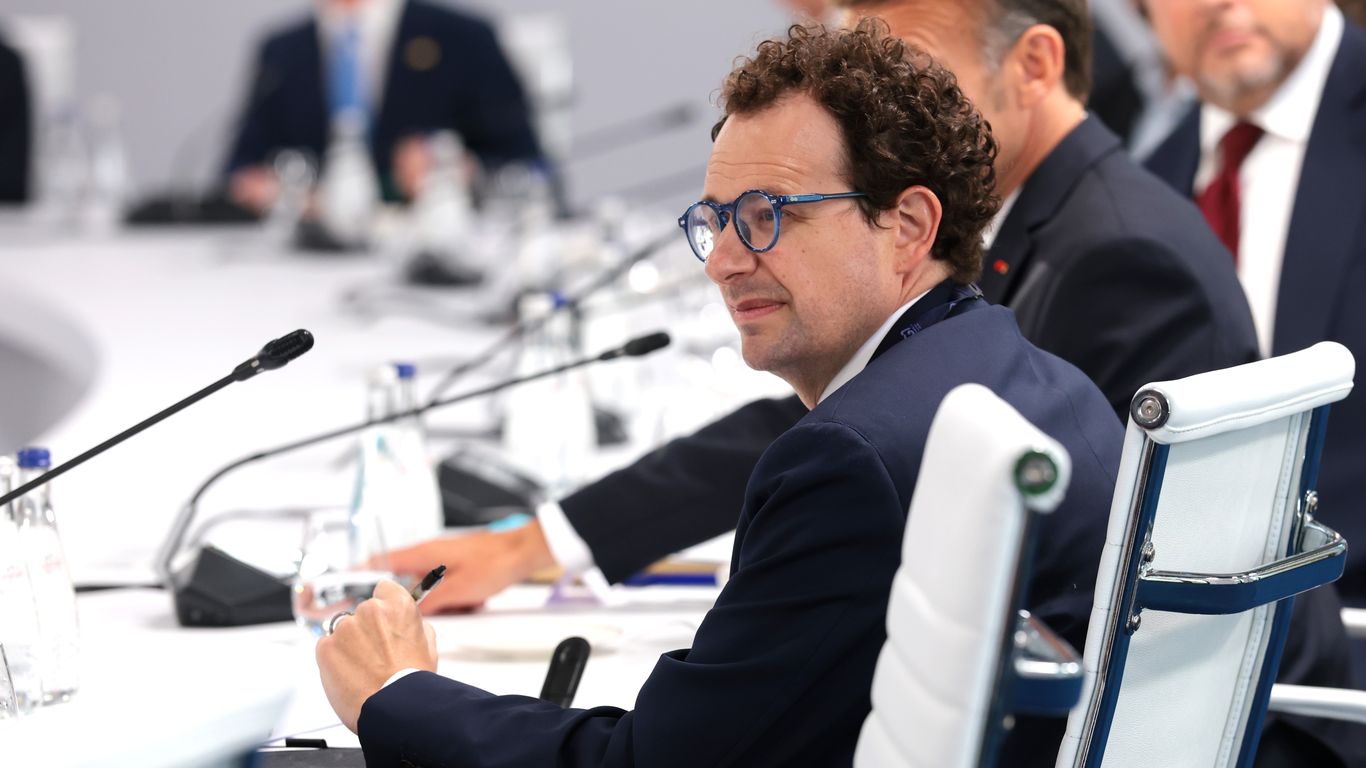
Scoop: Anthropics Dario Amodei to have White House dinner with Trump President Trump plans to host Anthropic CEO Dario Amodei at a private White House dinner on Sunday evening, sources familiar told Axios.Why it matters: The dinner —the first one-on-one meeting between the two— is an indication of thawing relations between Anthropic and the administration, whose officials and allies have had longstanding tensions.Driving the news: Trump and House Speaker Mike Johnson plan to meet top AI CEOs Tuesday at the White House, and this friendly dinner serves as an appetizer.Top tech CEOs from OpenAIs Sam Altman to Googles Sundar Pichai flanked Trump during a state dinner last week but there was one notable exception —Amodei, who had a scheduling conflict.Afterward, Trump personally invited Amodei to the dinner, one of the sources said.The big picture: Anthropics relationship with the administration has been on shaky ground all year, with signs of warming quickly deteriorating thereafter.Between the lines: Amodei is such a quirky and controversial figure in AI that he has started to enter mainstream pop culture.Amodei was mocked on the latest episode of Saturday Night Live over his personality traits and his views on AI safety.Last week, Trump allies circulated talking points to the White House that emphasized Amodeis role in, and the oddities of, the effective altruism movement.Months ago, when Anthropic first started talking about having a one-on-one with Trump, some advised against it because "Darios a little too weird" for Trump, one senior official told Axios. What they are saying: "President Trump has been clear: America will lead the world in Super Intelligence, while protecting American consumers," a White House official said."We will drive innovation, strengthen American competitiveness, and ensure this transformative technology works for the American people."The bottom line: In an administration that is so closely attuned to the presidents moods and personal relationships, a sit down with Trump at the White House is priceless for any company.
Amodei critics target Trump with hit piece before White House dinner Opponents of Anthropics Dario Amodei are circulating a highly negative brief about him to the White House ahead of an important dinner with President Trump, per an Axios review of the document. Why it matters: No company wants to be on Trumps bad side — and a Sunday night dinner between the president and Amodei could be what thaws relations after a year of tension. Behind the scenes: The brief, which is not an internal White House document, casts Amodei as having "a long record of attacking Trump" and having "deep Democratic ties."It notes the companys falling out earlier this year with the Pentagon as a "clear example of Dario showing he doesnt trust President Trump." The brief is intended for Trumps eyes and is likely to get in front of him, according to a source familiar with the internal workings of the White House. Its origin is unclear.It even reads in "Trump Talk," a name the president gives to his style of posting: "Dario claimed that AI would eliminate half of all entry-level white collar jobs as soon as this year. WRONG!"Between the lines: The briefs creators are appealing to a president who prizes loyalty and puts a premium on praise. Amodeis failure to communicate properly with the Trump administration has previously cost the company. Anthropic did not immediately respond to a request for comment. Yes, but: Trump has also been laser-focused on winning the AI race and Anthropic is one of the few companies on the frontier of the technology. Anthropic is also valued at hundreds of billions of dollars and has plans to go public soon, making it even harder for the White House to ignore. "The WH is trying to get everyone seated at the table," one source told Axios. The bottom line: Anthropic and the White House both have something to gain from Sunday nights dinner, so long as Amodeis critics dont get there first. Marc Caputo contributed to this story
Trump: 5 terrorism suspects in U.K. base incident were under investigation British police arrested five men Sunday on suspicion of terrorism near a U.K. air base used for U.S. operations in Iran, as President Trump said the suspects had been under investigation.The latest: "Working with Britain, it was an amazing job," Trump told reporters Sunday morning. "We had them under investigation. They were looking to do big damage to our fort, and working with the British worked out great and we got them."The big picture: Officials declared a major incident and set up roadblocks overnight near RAF Fairford in Gloucestershire, southwestern England.The incident, which British investigators did not immediately link to Tehran, comes one day after Trump said hed rejected the latest Iranian proposal to end the war — though he told Axioss Barak Ravid on Sunday that he expects fresh talks this week. State of play: Police received a call around 12.45 a.m. Sunday local time relating to "three suspicious vehicles" that appeared to be traveling towards the air base used by the U.S. 501st Combat Support Wing and the 420th Air Base Squadron, per a Metropolitan Police statement.Armed officers responded in the area of Whelford, a village some 33 miles from the city of Oxford. There they arrested the men "on suspicion of committing offenses under the Explosives Act" and they were further arrested "on suspicion of preparation of a terrorist act, contrary to section 5 of the Terrorism Act," according to the statement.Zoom in: U.K. counter-terrorism official Vicki Evans said officers established a 400-meter cordon (roughly a quarter-mile) around vehicles in the area while the British Armys Explosive Ordnance Disposal unit conducted examinations. "As a precaution, around 85 households have been evacuated whilst these examinations take place," she said in a statement.A nearby leisure centre was opened for people evacuated from the area.Context: RAF Fairford is the U.S. Air Forces preferred bomber forward operating location in Europe and supports a variety of missions and exercises throughout the year, according to the Air Force.Flashback: Irans Islamic Revolutionary Guard Corps warned in July that any base used for attacks on Iranian territory would be considered a "legitimate target" in a statement that specifically referenced U.S. B-1 bombers flying from RAF Fairford.What theyre saying: The 501st Combat Support Wing told Axios that no U.S. Air Force personnel were involved in the incident. "The 501st Combat Support Wing appreciates the swift response and continued support of our local law enforcement partners," the statement said. "We remain in close coordination with our UK partners to help ensure the safety and security of both our military and local communities."Editors note: This story has been updated with additional details throughout.
Scoop: Anthropics Dario Amodei to have White House dinner with Trump President Trump plans to host Anthropic CEO Dario Amodei at a private White House dinner on Sunday evening, sources familiar told Axios.Why it matters: The dinner —the first one-on-one meeting between the two— is an indication of thawing relations between Anthropic and the administration, whose officials and allies have had longstanding tensions.Driving the news: Trump and House Speaker Mike Johnson plan to meet top AI CEOs Tuesday at the White House, and this friendly dinner serves as an appetizer.Top tech CEOs from OpenAIs Sam Altman to Googles Sundar Pichai flanked Trump during a state dinner last week but there was one notable exception —Amodei, who had a scheduling conflict.Afterward, Trump personally invited Amodei to the dinner, one of the sources said.The big picture: Anthropics relationship with the administration has been on shaky ground all year, with signs of warming quickly deteriorating thereafter.Between the lines: Amodei is such a quirky and controversial figure in AI that he has started to enter mainstream pop culture.Amodei was mocked on the latest episode of Saturday Night Live over his personality traits and his views on AI safety.Last week, Trump allies circulated talking points to the White House that emphasized Amodeis role in, and the oddities of, the effective altruism movement.Months ago, when Anthropic first started talking about having a one-on-one with Trump, some advised against it because "Darios a little too weird" for Trump, one senior official told Axios. What they are saying: "President Trump has been clear: America will lead the world in Super Intelligence, while protecting American consumers," a White House official said."We will drive innovation, strengthen American competitiveness, and ensure this transformative technology works for the American people."The bottom line: In an administration that is so closely attuned to the presidents moods and personal relationships, a sit down with Trump at the White House is priceless for any company.
Amodei critics target Trump with hit piece before White House dinner Opponents of Anthropics Dario Amodei are circulating a highly negative brief about him to the White House ahead of an important dinner with President Trump, per an Axios review of the document. Why it matters: No company wants to be on Trumps bad side — and a Sunday night dinner between the president and Amodei could be what thaws relations after a year of tension. Behind the scenes: The brief, which is not an internal White House document, casts Amodei as having "a long record of attacking Trump" and having "deep Democratic ties."It notes the companys falling out earlier this year with the Pentagon as a "clear example of Dario showing he doesnt trust President Trump." The brief is intended for Trumps eyes and is likely to get in front of him, according to a source familiar with the internal workings of the White House. Its origin is unclear.It even reads in "Trump Talk," a name the president gives to his style of posting: "Dario claimed that AI would eliminate half of all entry-level white collar jobs as soon as this year. WRONG!"Between the lines: The briefs creators are appealing to a president who prizes loyalty and puts a premium on praise. Amodeis failure to communicate properly with the Trump administration has previously cost the company. Anthropic did not immediately respond to a request for comment. Yes, but: Trump has also been laser-focused on winning the AI race and Anthropic is one of the few companies on the frontier of the technology. Anthropic is also valued at hundreds of billions of dollars and has plans to go public soon, making it even harder for the White House to ignore. "The WH is trying to get everyone seated at the table," one source told Axios. The bottom line: Anthropic and the White House both have something to gain from Sunday nights dinner, so long as Amodeis critics dont get there first. Marc Caputo contributed to this story
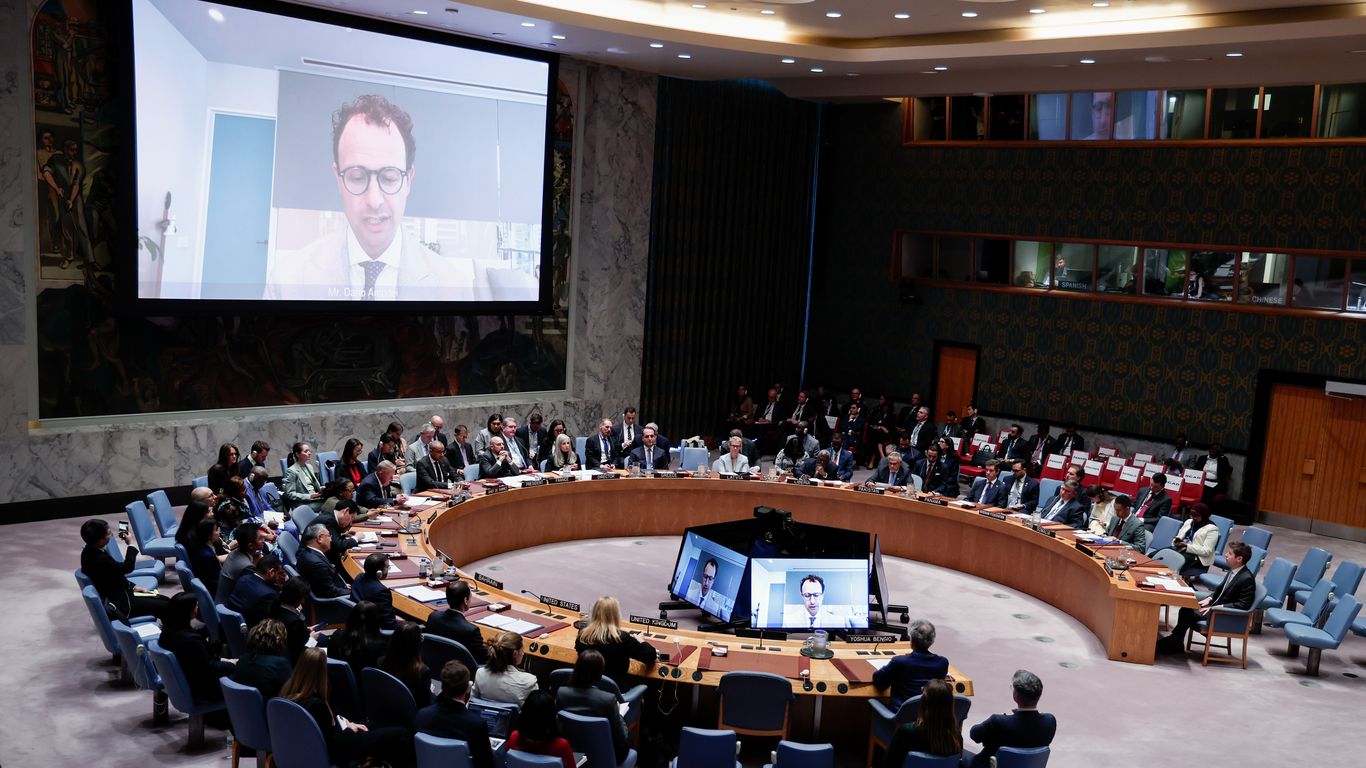
![After nixing Iran proposal, Trump tells Axios he expects talks this week One day after he rejected an Iranian proposal to end the war, President Trump told Axios in a phone interview on Sunday that he expects U.S. negotiators to engage in more talks with the country this week.Why it matters: Qatar and other regional mediators are trying to revive negotiations between the U.S. and Iran, but the two sides are far apart on the key issues.While Iran wants to focus any talks on the Strait of Hormuz and the U.S. naval blockade, the Trump administration is demanding that Iran agree to nuclear concessions. Two regional sources confirmed Trumps comment about more talks this week. They said they expect another round of indirect dialogue between the U.S. and Iran as early as Monday. But it isnt clear if the gaps can be bridged. What hes saying: "I expect more talks with Iran [this week]. They want to make a deal, but it is not the deal that I want to make. It is what we would have maybe agreed to a year ago. They overplayed their hand," Trump said.Asked if he is considering resuming strikes against Iran, Trump said: "I am always thinking about it."State of play: In the meantime, Trump said, the U.S. military is facilitating a lot of oil out of the Strait of Hormuz. He said that over the weekend the largest amount of oil transited through the strait since the war began. "More than 20 million barrels," Trump said. A U.S. defense official confirmed Trumps assertion, saying that on Friday night 22 million barrels of oil were exported through the strait. Driving the news: U.S. envoys Steve Witkoff and Jared Kushner held a new round of indirect negotiations with Iranian Foreign Minister Abbas Araghchi on the sidelines of the UN General Assembly in New York last Tuesday.Qatari officials participated, passing messages between the two sides.Araghchi delivered to Witkoff and Kushner Irans conditions for reopening the Strait of Hormuz and resuming nuclear talks.Iran proposed reopening the strait and restarting nuclear talks in a week, if the U.S. lifts its naval blockade, removes sanctions on oil sales and reinstates a ceasefire across the region.Trump rejected the Iranian proposal on Saturday. Behind the scenes: But a U.S. official and two regional sources told Axios that Qatari mediators are continuing shuttle diplomacy to try to reach a deal.On Thursday, the prime minister of Qatar met in New York with the Iranian president and discussed the potential deal with the Trump administration. Shortly after, senior Qatari officials met Witkoff and briefed him. A regional source with knowledge of the indirect negotiations said the Qatari mediators discussed the original Iranian proposal with both parties and provided a compromise proposal to both sides to review. What to watch: Over the weekend, the Qatari mediators have been going back and forth separately with Iranian and U.S. negotiators on changes to the text. Qatari mediators are expected to meet separately with Araghchi and Witkoff as early as Monday.The other side: Araghchi told NBC on Sunday that despite Trumps rejection of the Iranian proposal, Iran still wants a diplomatic solution. He said that the midterm elections arent part of Irans calculations. "We only care about our national interests. We are ready for negotiations," he said. "Although we heard from President Trump that hes rejecting this deal ... we are still waiting for an official response through the mediators," Araghchi added.](https://images.axios.com/VQX2MvdGlPcrzGAgwN9y7SEC0Rg=/0x0:6469x3639/1366x768/2026/09/27/1790517848272.jpeg)
After nixing Iran proposal, Trump tells Axios he expects talks this week One day after he rejected an Iranian proposal to end the war, President Trump told Axios in a phone interview on Sunday that he expects U.S. negotiators to engage in more talks with the country this week.Why it matters: Qatar and other regional mediators are trying to revive negotiations between the U.S. and Iran, but the two sides are far apart on the key issues.While Iran wants to focus any talks on the Strait of Hormuz and the U.S. naval blockade, the Trump administration is demanding that Iran agree to nuclear concessions. Two regional sources confirmed Trumps comment about more talks this week. They said they expect another round of indirect dialogue between the U.S. and Iran as early as Monday. But it isnt clear if the gaps can be bridged. What hes saying: "I expect more talks with Iran [this week]. They want to make a deal, but it is not the deal that I want to make. It is what we would have maybe agreed to a year ago. They overplayed their hand," Trump said.Asked if he is considering resuming strikes against Iran, Trump said: "I am always thinking about it."State of play: In the meantime, Trump said, the U.S. military is facilitating a lot of oil out of the Strait of Hormuz. He said that over the weekend the largest amount of oil transited through the strait since the war began. "More than 20 million barrels," Trump said. A U.S. defense official confirmed Trumps assertion, saying that on Friday night 22 million barrels of oil were exported through the strait. Driving the news: U.S. envoys Steve Witkoff and Jared Kushner held a new round of indirect negotiations with Iranian Foreign Minister Abbas Araghchi on the sidelines of the UN General Assembly in New York last Tuesday.Qatari officials participated, passing messages between the two sides.Araghchi delivered to Witkoff and Kushner Irans conditions for reopening the Strait of Hormuz and resuming nuclear talks.Iran proposed reopening the strait and restarting nuclear talks in a week, if the U.S. lifts its naval blockade, removes sanctions on oil sales and reinstates a ceasefire across the region.Trump rejected the Iranian proposal on Saturday. Behind the scenes: But a U.S. official and two regional sources told Axios that Qatari mediators are continuing shuttle diplomacy to try to reach a deal.On Thursday, the prime minister of Qatar met in New York with the Iranian president and discussed the potential deal with the Trump administration. Shortly after, senior Qatari officials met Witkoff and briefed him. A regional source with knowledge of the indirect negotiations said the Qatari mediators discussed the original Iranian proposal with both parties and provided a compromise proposal to both sides to review. What to watch: Over the weekend, the Qatari mediators have been going back and forth separately with Iranian and U.S. negotiators on changes to the text. Qatari mediators are expected to meet separately with Araghchi and Witkoff as early as Monday.The other side: Araghchi told NBC on Sunday that despite Trumps rejection of the Iranian proposal, Iran still wants a diplomatic solution. He said that the midterm elections arent part of Irans calculations. "We only care about our national interests. We are ready for negotiations," he said. "Although we heard from President Trump that hes rejecting this deal ... we are still waiting for an official response through the mediators," Araghchi added.
Trump: 5 terrorism suspects in U.K. base incident were under investigation British police arrested five men Sunday on suspicion of terrorism near a U.K. air base used for U.S. operations in Iran, as President Trump said the suspects had been under investigation.The latest: "Working with Britain, it was an amazing job," Trump told reporters Sunday morning. "We had them under investigation. They were looking to do big damage to our fort, and working with the British worked out great and we got them."The big picture: Officials declared a major incident and set up roadblocks overnight near RAF Fairford in Gloucestershire, southwestern England.The incident, which British investigators did not immediately link to Tehran, comes one day after Trump said hed rejected the latest Iranian proposal to end the war — though he told Axioss Barak Ravid on Sunday that he expects fresh talks this week. State of play: Police received a call around 12.45 a.m. Sunday local time relating to "three suspicious vehicles" that appeared to be traveling towards the air base used by the U.S. 501st Combat Support Wing and the 420th Air Base Squadron, per a Metropolitan Police statement.Armed officers responded in the area of Whelford, a village some 33 miles from the city of Oxford. There they arrested the men "on suspicion of committing offenses under the Explosives Act" and they were further arrested "on suspicion of preparation of a terrorist act, contrary to section 5 of the Terrorism Act," according to the statement.Zoom in: U.K. counter-terrorism official Vicki Evans said officers established a 400-meter cordon (roughly a quarter-mile) around vehicles in the area while the British Armys Explosive Ordnance Disposal unit conducted examinations. "As a precaution, around 85 households have been evacuated whilst these examinations take place," she said in a statement.A nearby leisure centre was opened for people evacuated from the area.Context: RAF Fairford is the U.S. Air Forces preferred bomber forward operating location in Europe and supports a variety of missions and exercises throughout the year, according to the Air Force.Flashback: Irans Islamic Revolutionary Guard Corps warned in July that any base used for attacks on Iranian territory would be considered a "legitimate target" in a statement that specifically referenced U.S. B-1 bombers flying from RAF Fairford.What theyre saying: The 501st Combat Support Wing told Axios that no U.S. Air Force personnel were involved in the incident. "The 501st Combat Support Wing appreciates the swift response and continued support of our local law enforcement partners," the statement said. "We remain in close coordination with our UK partners to help ensure the safety and security of both our military and local communities."Editors note: This story has been updated with additional details throughout.
Scoop: Anthropics Dario Amodei to have White House dinner with Trump President Trump plans to host Anthropic CEO Dario Amodei at a private White House dinner on Sunday evening, sources familiar told Axios.Why it matters: The dinner —the first one-on-one meeting between the two— is an indication of thawing relations between Anthropic and the administration, whose officials and allies have had longstanding tensions.Driving the news: Trump and House Speaker Mike Johnson plan to meet top AI CEOs Tuesday at the White House, and this friendly dinner serves as an appetizer.Top tech CEOs from OpenAIs Sam Altman to Googles Sundar Pichai flanked Trump during a state dinner last week but there was one notable exception —Amodei, who had a scheduling conflict.Afterward, Trump personally invited Amodei to the dinner, one of the sources said.The big picture: Anthropics relationship with the administration has been on shaky ground all year, with signs of warming quickly deteriorating thereafter.Between the lines: Amodei is such a quirky and controversial figure in AI that he has started to enter mainstream pop culture.Amodei was mocked on the latest episode of Saturday Night Live over his personality traits and his views on AI safety.Last week, Trump allies circulated talking points to the White House that emphasized Amodeis role in, and the oddities of, the effective altruism movement.Months ago, when Anthropic first started talking about having a one-on-one with Trump, some advised against it because "Darios a little too weird" for Trump, one senior official told Axios. What they are saying: "President Trump has been clear: America will lead the world in Super Intelligence, while protecting American consumers," a White House official said."We will drive innovation, strengthen American competitiveness, and ensure this transformative technology works for the American people."The bottom line: In an administration that is so closely attuned to the presidents moods and personal relationships, a sit down with Trump at the White House is priceless for any company.
Amodei critics target Trump with hit piece before White House dinner Opponents of Anthropics Dario Amodei are circulating a highly negative brief about him to the White House ahead of an important dinner with President Trump, per an Axios review of the document. Why it matters: No company wants to be on Trumps bad side — and a Sunday night dinner between the president and Amodei could be what thaws relations after a year of tension. Behind the scenes: The brief, which is not an internal White House document, casts Amodei as having "a long record of attacking Trump" and having "deep Democratic ties."It notes the companys falling out earlier this year with the Pentagon as a "clear example of Dario showing he doesnt trust President Trump." The brief is intended for Trumps eyes and is likely to get in front of him, according to a source familiar with the internal workings of the White House. Its origin is unclear.It even reads in "Trump Talk," a name the president gives to his style of posting: "Dario claimed that AI would eliminate half of all entry-level white collar jobs as soon as this year. WRONG!"Between the lines: The briefs creators are appealing to a president who prizes loyalty and puts a premium on praise. Amodeis failure to communicate properly with the Trump administration has previously cost the company. Anthropic did not immediately respond to a request for comment. Yes, but: Trump has also been laser-focused on winning the AI race and Anthropic is one of the few companies on the frontier of the technology. Anthropic is also valued at hundreds of billions of dollars and has plans to go public soon, making it even harder for the White House to ignore. "The WH is trying to get everyone seated at the table," one source told Axios. The bottom line: Anthropic and the White House both have something to gain from Sunday nights dinner, so long as Amodeis critics dont get there first. Marc Caputo contributed to this story
After nixing Iran proposal, Trump tells Axios he expects talks this week One day after he rejected an Iranian proposal to end the war, President Trump told Axios in a phone interview on Sunday that he expects U.S. negotiators to engage in more talks with the country this week.Why it matters: Qatar and other regional mediators are trying to revive negotiations between the U.S. and Iran, but the two sides are far apart on the key issues.While Iran wants to focus any talks on the Strait of Hormuz and the U.S. naval blockade, the Trump administration is demanding that Iran agree to nuclear concessions. Two regional sources confirmed Trumps comment about more talks this week. They said they expect another round of indirect dialogue between the U.S. and Iran as early as Monday. But it isnt clear if the gaps can be bridged. What hes saying: "I expect more talks with Iran [this week]. They want to make a deal, but it is not the deal that I want to make. It is what we would have maybe agreed to a year ago. They overplayed their hand," Trump said.Asked if he is considering resuming strikes against Iran, Trump said: "I am always thinking about it."State of play: In the meantime, Trump said, the U.S. military is facilitating a lot of oil out of the Strait of Hormuz. He said that over the weekend the largest amount of oil transited through the strait since the war began. "More than 20 million barrels," Trump said. A U.S. defense official confirmed Trumps assertion, saying that on Friday night 22 million barrels of oil were exported through the strait. Driving the news: U.S. envoys Steve Witkoff and Jared Kushner held a new round of indirect negotiations with Iranian Foreign Minister Abbas Araghchi on the sidelines of the UN General Assembly in New York last Tuesday.Qatari officials participated, passing messages between the two sides.Araghchi delivered to Witkoff and Kushner Irans conditions for reopening the Strait of Hormuz and resuming nuclear talks.Iran proposed reopening the strait and restarting nuclear talks in a week, if the U.S. lifts its naval blockade, removes sanctions on oil sales and reinstates a ceasefire across the region.Trump rejected the Iranian proposal on Saturday. Behind the scenes: But a U.S. official and two regional sources told Axios that Qatari mediators are continuing shuttle diplomacy to try to reach a deal.On Thursday, the prime minister of Qatar met in New York with the Iranian president and discussed the potential deal with the Trump administration. Shortly after, senior Qatari officials met Witkoff and briefed him. A regional source with knowledge of the indirect negotiations said the Qatari mediators discussed the original Iranian proposal with both parties and provided a compromise proposal to both sides to review. What to watch: Over the weekend, the Qatari mediators have been going back and forth separately with Iranian and U.S. negotiators on changes to the text. Qatari mediators are expected to meet separately with Araghchi and Witkoff as early as Monday.The other side: Araghchi told NBC on Sunday that despite Trumps rejection of the Iranian proposal, Iran still wants a diplomatic solution. He said that the midterm elections arent part of Irans calculations. "We only care about our national interests. We are ready for negotiations," he said. "Although we heard from President Trump that hes rejecting this deal ... we are still waiting for an official response through the mediators," Araghchi added.
Trump: 5 terrorism suspects in U.K. base incident were under investigation British police arrested five men Sunday on suspicion of terrorism near a U.K. air base used for U.S. operations in Iran, as President Trump said the suspects had been under investigation.The latest: "Working with Britain, it was an amazing job," Trump told reporters Sunday morning. "We had them under investigation. They were looking to do big damage to our fort, and working with the British worked out great and we got them."The big picture: Officials declared a major incident and set up roadblocks overnight near RAF Fairford in Gloucestershire, southwestern England.The incident, which British investigators did not immediately link to Tehran, comes one day after Trump said hed rejected the latest Iranian proposal to end the war — though he told Axioss Barak Ravid on Sunday that he expects fresh talks this week. State of play: Police received a call around 12.45 a.m. Sunday local time relating to "three suspicious vehicles" that appeared to be traveling towards the air base used by the U.S. 501st Combat Support Wing and the 420th Air Base Squadron, per a Metropolitan Police statement.Armed officers responded in the area of Whelford, a village some 33 miles from the city of Oxford. There they arrested the men "on suspicion of committing offenses under the Explosives Act" and they were further arrested "on suspicion of preparation of a terrorist act, contrary to section 5 of the Terrorism Act," according to the statement.Zoom in: U.K. counter-terrorism official Vicki Evans said officers established a 400-meter cordon (roughly a quarter-mile) around vehicles in the area while the British Armys Explosive Ordnance Disposal unit conducted examinations. "As a precaution, around 85 households have been evacuated whilst these examinations take place," she said in a statement.A nearby leisure centre was opened for people evacuated from the area.Context: RAF Fairford is the U.S. Air Forces preferred bomber forward operating location in Europe and supports a variety of missions and exercises throughout the year, according to the Air Force.Flashback: Irans Islamic Revolutionary Guard Corps warned in July that any base used for attacks on Iranian territory would be considered a "legitimate target" in a statement that specifically referenced U.S. B-1 bombers flying from RAF Fairford.What theyre saying: The 501st Combat Support Wing told Axios that no U.S. Air Force personnel were involved in the incident. "The 501st Combat Support Wing appreciates the swift response and continued support of our local law enforcement partners," the statement said. "We remain in close coordination with our UK partners to help ensure the safety and security of both our military and local communities."Editors note: This story has been updated with additional details throughout.
Scoop: Anthropics Dario Amodei to have White House dinner with Trump President Trump plans to host Anthropic CEO Dario Amodei at a private White House dinner on Sunday evening, sources familiar told Axios.Why it matters: The dinner —the first one-on-one meeting between the two— is an indication of thawing relations between Anthropic and the administration, whose officials and allies have had longstanding tensions.Driving the news: Trump and House Speaker Mike Johnson plan to meet top AI CEOs Tuesday at the White House, and this friendly dinner serves as an appetizer.Top tech CEOs from OpenAIs Sam Altman to Googles Sundar Pichai flanked Trump during a state dinner last week but there was one notable exception —Amodei, who had a scheduling conflict.Afterward, Trump personally invited Amodei to the dinner, one of the sources said.The big picture: Anthropics relationship with the administration has been on shaky ground all year, with signs of warming quickly deteriorating thereafter.Between the lines: Amodei is such a quirky and controversial figure in AI that he has started to enter mainstream pop culture.Amodei was mocked on the latest episode of Saturday Night Live over his personality traits and his views on AI safety.Last week, Trump allies circulated talking points to the White House that emphasized Amodeis role in, and the oddities of, the effective altruism movement.Months ago, when Anthropic first started talking about having a one-on-one with Trump, some advised against it because "Darios a little too weird" for Trump, one senior official told Axios. What they are saying: "President Trump has been clear: America will lead the world in Super Intelligence, while protecting American consumers," a White House official said."We will drive innovation, strengthen American competitiveness, and ensure this transformative technology works for the American people."The bottom line: In an administration that is so closely attuned to the presidents moods and personal relationships, a sit down with Trump at the White House is priceless for any company.
Amodei critics target Trump with hit piece before White House dinner Opponents of Anthropics Dario Amodei are circulating a highly negative brief about him to the White House ahead of an important dinner with President Trump, per an Axios review of the document. Why it matters: No company wants to be on Trumps bad side — and a Sunday night dinner between the president and Amodei could be what thaws relations after a year of tension. Behind the scenes: The brief, which is not an internal White House document, casts Amodei as having "a long record of attacking Trump" and having "deep Democratic ties."It notes the companys falling out earlier this year with the Pentagon as a "clear example of Dario showing he doesnt trust President Trump." The brief is intended for Trumps eyes and is likely to get in front of him, according to a source familiar with the internal workings of the White House. Its origin is unclear.It even reads in "Trump Talk," a name the president gives to his style of posting: "Dario claimed that AI would eliminate half of all entry-level white collar jobs as soon as this year. WRONG!"Between the lines: The briefs creators are appealing to a president who prizes loyalty and puts a premium on praise. Amodeis failure to communicate properly with the Trump administration has previously cost the company. Anthropic did not immediately respond to a request for comment. Yes, but: Trump has also been laser-focused on winning the AI race and Anthropic is one of the few companies on the frontier of the technology. Anthropic is also valued at hundreds of billions of dollars and has plans to go public soon, making it even harder for the White House to ignore. "The WH is trying to get everyone seated at the table," one source told Axios. The bottom line: Anthropic and the White House both have something to gain from Sunday nights dinner, so long as Amodeis critics dont get there first. Marc Caputo contributed to this story
After nixing Iran proposal, Trump tells Axios he expects talks this week One day after he rejected an Iranian proposal to end the war, President Trump told Axios in a phone interview on Sunday that he expects U.S. negotiators to engage in more talks with the country this week.Why it matters: Qatar and other regional mediators are trying to revive negotiations between the U.S. and Iran, but the two sides are far apart on the key issues.While Iran wants to focus any talks on the Strait of Hormuz and the U.S. naval blockade, the Trump administration is demanding that Iran agree to nuclear concessions. Two regional sources confirmed Trumps comment about more talks this week. They said they expect another round of indirect dialogue between the U.S. and Iran as early as Monday. But it isnt clear if the gaps can be bridged. What hes saying: "I expect more talks with Iran [this week]. They want to make a deal, but it is not the deal that I want to make. It is what we would have maybe agreed to a year ago. They overplayed their hand," Trump said.Asked if he is considering resuming strikes against Iran, Trump said: "I am always thinking about it."State of play: In the meantime, Trump said, the U.S. military is facilitating a lot of oil out of the Strait of Hormuz. He said that over the weekend the largest amount of oil transited through the strait since the war began. "More than 20 million barrels," Trump said. A U.S. defense official confirmed Trumps assertion, saying that on Friday night 22 million barrels of oil were exported through the strait. Driving the news: U.S. envoys Steve Witkoff and Jared Kushner held a new round of indirect negotiations with Iranian Foreign Minister Abbas Araghchi on the sidelines of the UN General Assembly in New York last Tuesday.Qatari officials participated, passing messages between the two sides.Araghchi delivered to Witkoff and Kushner Irans conditions for reopening the Strait of Hormuz and resuming nuclear talks.Iran proposed reopening the strait and restarting nuclear talks in a week, if the U.S. lifts its naval blockade, removes sanctions on oil sales and reinstates a ceasefire across the region.Trump rejected the Iranian proposal on Saturday. Behind the scenes: But a U.S. official and two regional sources told Axios that Qatari mediators are continuing shuttle diplomacy to try to reach a deal.On Thursday, the prime minister of Qatar met in New York with the Iranian president and discussed the potential deal with the Trump administration. Shortly after, senior Qatari officials met Witkoff and briefed him. A regional source with knowledge of the indirect negotiations said the Qatari mediators discussed the original Iranian proposal with both parties and provided a compromise proposal to both sides to review. What to watch: Over the weekend, the Qatari mediators have been going back and forth separately with Iranian and U.S. negotiators on changes to the text. Qatari mediators are expected to meet separately with Araghchi and Witkoff as early as Monday.The other side: Araghchi told NBC on Sunday that despite Trumps rejection of the Iranian proposal, Iran still wants a diplomatic solution. He said that the midterm elections arent part of Irans calculations. "We only care about our national interests. We are ready for negotiations," he said. "Although we heard from President Trump that hes rejecting this deal ... we are still waiting for an official response through the mediators," Araghchi added.