
Trump drops 20% Strait of Hormuz fee plan for Gulf trade deals amid rising US-Iran tensions
Story Timeline
4 months · 10 summary articles
Donald Trump has backtracked on his plan to charge a 20% fee for ships traveling through the Strait of Hormuz, replacing it with proposed trade and investment agreements with Persian Gulf states. The reversal came a day after Trump said the United States would act as “THE GUARDIAN OF THE HORMUZ STRAIT” and seek reimbursement for protecting shipping through the key oil and gas route.
"Based on highly productive conversations with Middle East leadership, I have decided to replace the 20% United States Reimbursement Fee with Trade and Investment Deals that the various Gulf States will be making into the United States," Trump wrote on Truth Social on July 14. He provided no details of commitments by Persian Gulf governments but said the investments would be “MASSIVE” .
The decision comes amid escalating tensions in the region. The United States and Iran have exchanged strikes for the third consecutive day, with the American military targeting a submarine and ship maintenance facility in the Iranian port of Bandar Abbas using sea drones. This marks the first time Washington has deployed sea drones in combat operations .
Iran has also claimed hits on at least two commercial ships in the Strait of Hormuz. The Islamic Revolutionary Guard Corps accused US naval forces of directing two supertankers toward an unauthorized route in the Strait of Hormuz shortly before the vessels were struck and disabled .
In response to the escalating conflict, China has called on all sides to “avoid escalating the conflict” as the war fallout damages its crude oil imports and helium shortages threaten its AI chip manufacturing .
Iran’s parliament has introduced a strategic bill on the management of the Strait of Hormuz and the Persian Gulf, following recent U.S. assertions over the strategic waterway. The bill aims to formalize control over the strait and undermine any negotiations .
The Strait of Hormuz is one of the world’s most critical maritime chokepoints, with around one-fifth of global petroleum shipments transiting through it. The United States maintains a naval presence in the region, citing the protection of freedom of navigation.
Trump’s announcement comes as the United States prepares to reinstate a naval blockade against all maritime traffic through the Strait of Hormuz on July 14. The blockade will apply to all ships entering or leaving Iranian ports or carrying Iranian cargo .
The UN shipping agency had opposed imposing fees on vessels using international waterways. The decision to replace the fee with trade and investment deals follows conversations with Middle East leadership, according to Trump.
The escalation in the Strait of Hormuz has led to increased oil prices and concerns about the global energy crisis. The conflict has also drawn international attention, with various countries calling for restraint and a peaceful resolution.
Follow us for live European news
- 3
- 3
- 3
- 2
- 2
- 1
- 1
- 1
- 1
- 1
3 further sources not geolocated
Articles

Donald Trump returns to escalation against Iran Also in todays newsletter, Lindsey Grahams sudden death reverberates across Washington
financial times · 3 months ago
Trump backtracks on plan to charge 20 percent fee for ships traveling through Strait of Hormuz The status of the critical waterway has roiled the U.S.-Iran war.
politico.eu · 3 months ago

Trump zieht Forderung nach Hormus‑Gebühr überraschend wieder zurück Eine neue Wendung im Iran‑Konflikt: Donald Trump stoppt die angekündigte 20‑Prozent‑Gebühr für Schiffsfracht in der Straße von Hormus und setzt stattdessen auf Handelsdeals mit Golfstaaten.
welt.de · 3 months ago
China reiterates free, safe Hormuz call amid US-Iran strikes Chinese Foreign Ministry spokesperson Lin Jian on Monday called for the immediate restoration of free navigation through the Strait of Hormuz, warning that renewed military exchanges between Washington and Tehran threaten regional stability and international energy supplies.
yenisafak · 3 months ago
Strait of Hormuz tanker traffic nears halt after US-Iran strikes Marine tracking data showed only two tankers completed passage through the Strait of Hormuz in the 24 hours through Tuesday morning as renewed US-Iran strikes disrupted traffic through the critical waterway, prompting heightened security concerns among international shipowners and operators.
yenisafak · 3 months ago
Brazilian president slams Trump Hormuz shipping fee as piracy Brazilian President Luiz Inacio Lula da Silva criticized US President Donald Trumps plan to charge commercial vessels a 20 fee for transiting the Strait of Hormuz, telling reporters that demanding payment for passage through the vital waterway amounts to "piracy" and violates established principles of global maritime trade.
yenisafak · 3 months ago
SUA verifică dacă Iranul depozitează drone în Cuba. Donald Trump: „Dacă le au, ne vom ocupa de asta Președintele SUA Donald Trump a declarat că administrația sa verifică dacă Teheranul depozitează drone și rachete în Cuba și a avertizat că Washingtonul va acționa dacă se confirmă acest lucru, dar nu a oferit nicio dovadă sau detalii despre presupusele arme, informează Euronews.
digi24 · 3 months ago
Yhdysvallat | Trump haluaa, että Lindsey Grahamin korvaa tämän sisko politiikan ulkopuolelta Presidentti Trump oli itse toivonut, että Grahamin sisko nimitetään väliaikaiseksi senaattoriksi. Sisko ei ole mukana politiikassa.
helsingin sanomat · 3 months ago
Der neue Iran-Krieg spielt Teheran in die Hände [premium] Die Pläne des US-Präsidenten für die Straße von Hormuz sind unrealistisch. Trump rückt von seiner Hormus-Gebühr bereits wieder ab. Teheran könnte sich mit seinen arabischen Nachbarn einigen – denn Trump hatte die Golfstaaten mit seinem jüngsten Plan vor den Kopf gestoßen.
die presse · 3 months ago
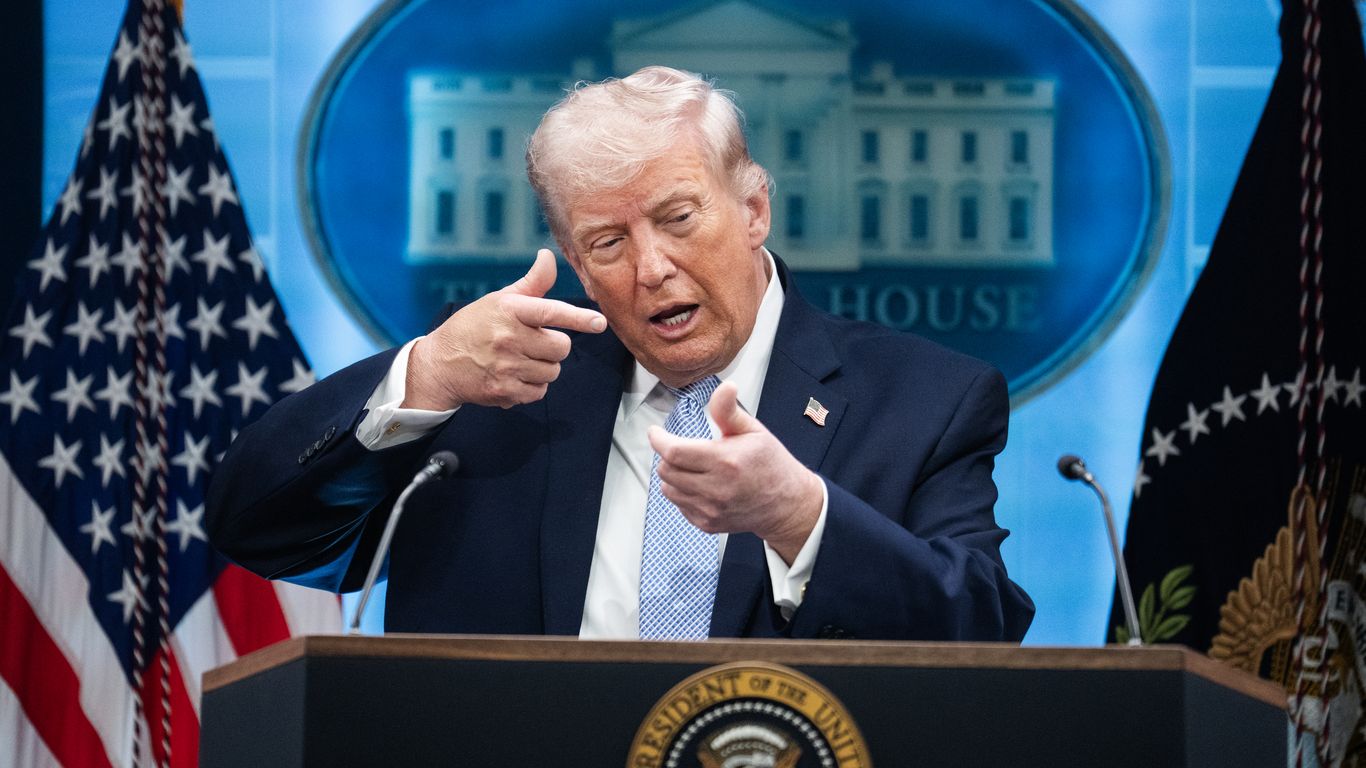
Trump backtracks on Hormuz 20 toll demand President Trump on Tuesday walked back his demand for collecting a 20 toll from ships that transit through the strait of Hormuz — and instead said Gulf states would make major investments in the U.S.Why it matters: Trumps Hormuz fee announcement on Monday was deemed illegal by the UN maritime agency and shocked many U.S. allies in the Gulf. It also validated the Iranian demand to collect service fees in the strait — something Trump himself rejected until several days ago. What he is saying: "Based on highly productive conversations with Middle East leadership, I have decided to replace the 20 United States Reimbursement Fee with Trade and Investment Deals that the various Gulf States will be making into the United States," Trump wrote on Truth Social.Behind the scenes: Two Gulf officials said Trumps tolls announcement on Monday caught countries in the region by surprise. Officials from several Gulf countries asked their White House counterparts for clarifications, the sources said. On Tuesday, Trump spoke to Qatari Emir Sheikh Tamim bin Hamad Al Thani to express his condolences for the death of his father. The issue of the strait of Hormuz also came up in the call. Reality check: Before the war with Iran, Saudi Arabia, Qatar, the UAE and Bahrain had already committed to invest more than $2 trillion in the U.S. over the next several years. Trump said in his post that the Gulf countries will make "new Investments" that "will make that Number even larger."State of play: Trump made his comments several hours before a U.S. naval blockade on Iran comes into effect, and amid exchanges of fire between the U.S. and Iran in the strait of Hormuz for the fourth day in a row. "The Strait of Hormuz is open to ALL Ship traffic except for Iran — and that is because of their lying, violent, malicious leadership, which is taking them down the path of TOTAL DESTRUCTION," Trump wrote.
axios · 3 months ago

The Battle for Hormuz: Trump Shifts Into Dangerous New Phase in Iran War President Trumps third major shift in military strategy comes as he searches for a way to turn the tables on Iran in the nearly five-month-old war.
wsj · 3 months ago
US and Iran exchange strikes for the third day A serious escalation is occurring in the fighting between the US and Iran. Overnight and into this morning, the American military targeted sites across the Islamic Republic – while Iran fired ballistic missiles at US airbases in Jordan and Bahrain. There has been an escalation in the war of words too: President Donald Trump vowed to reinstate an American blockade of Iranian ports and charge ships for safe passage through the Strait of Hormuz. Details and analysis by Scott Lucas, professor of US and international politics at the Clinton Institute of University College Dublin.
france24 · 3 months ago
Rubio vows to end International Criminal Court "threat", claiming it interferes with US operations A major diplomatic battle is shaping up between Washington and its closest allies over the future of global justice. The Trump administration is preparing to completely isolate the International Criminal Court. But the move is already drawing fierce resistance from both the United Nations and European Leaders. Details by Caitlin Brown.
france24 · 3 months ago
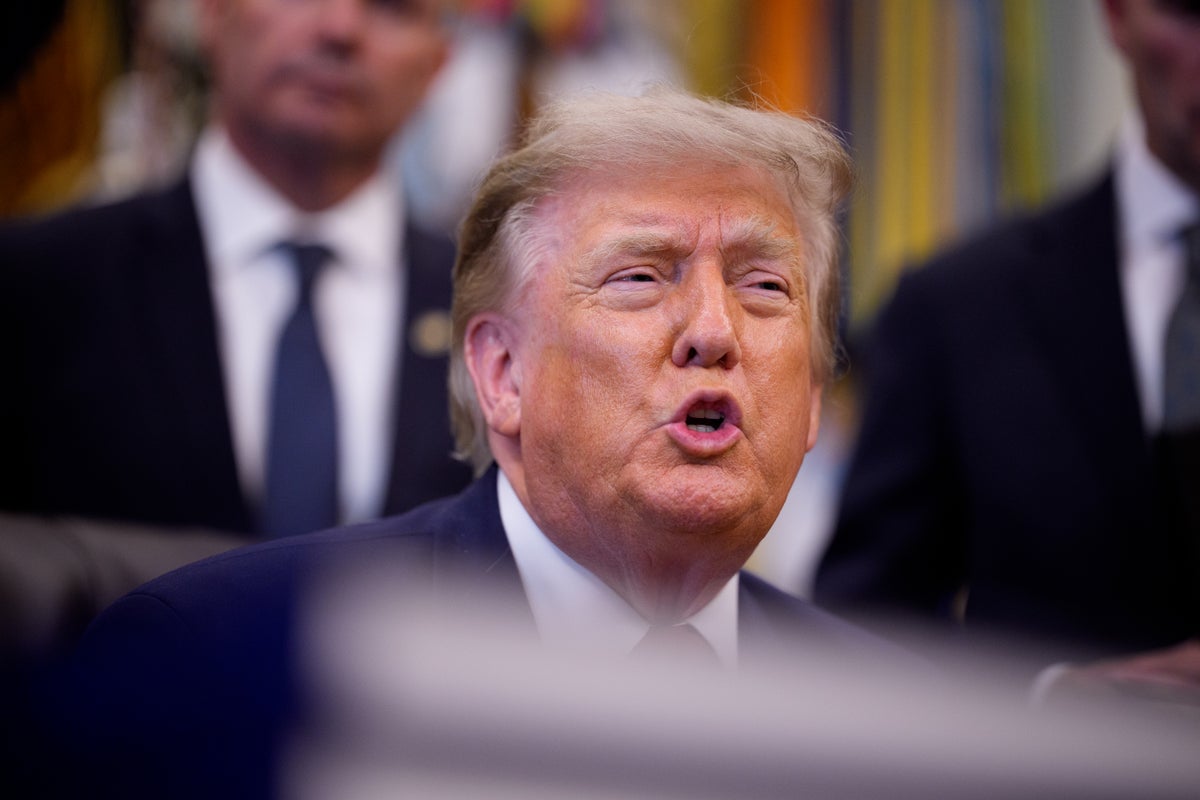
The Trump toll: Why plan to charge ships 20 fee in Strait of Hormuz will never work Trumps 20 per cent toll on shipping could more than double the cost of transporting oil from the Gulf to Europe, say analysts
independent · 3 months ago
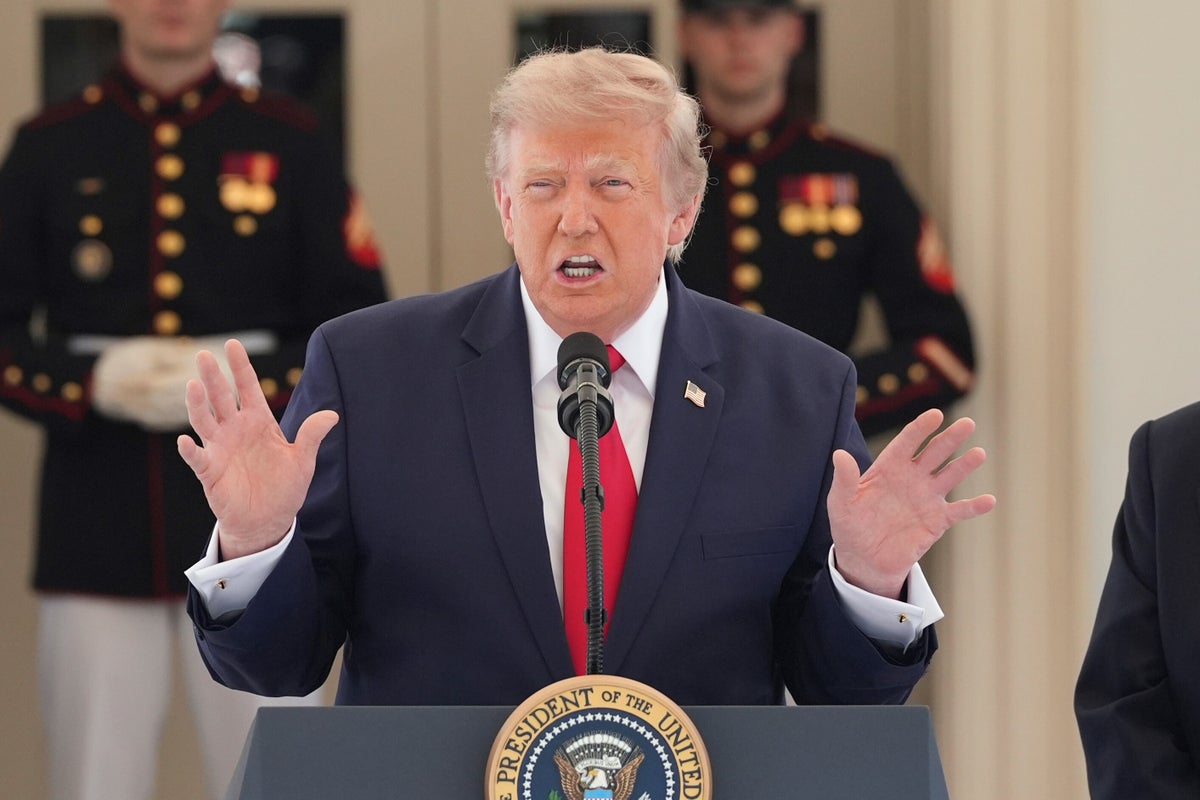
Iran-US war latest: Trump backtracks on 20 Hormuz toll a day after announcing it Donald Trump had said the US will be guardians of Strait of Hormuz and impose a 20 percent toll on ships using it
independent · 3 months ago
Piracy: Will Trumps 20 percent Hormuz toll find takers? Trump says the US will start charging a cargo fee for ships passing through the Strait of Hormuz.
aljazeera · 3 months ago
US strikes Bushehr as Irans parliament tables bill to control Hormuz Four points in the port city hosting Irans only nuclear power plant were hit by US projectiles on Tuesday, as Irans parliament formally submitted a bill asserting Tehrans permanent control over the Strait of Hormuz.
euronews · 3 months ago
US-Iran conflict widens after deadly tanker attack in Strait of Hormuz Commercial shipping has come under attack in the Strait of Hormuz as the US and Iran exchange military action, raising fears the conflict could draw more Gulf states into the fighting.
euronews · 3 months ago

JUST IN: President Trump dropped the idea of charging a 20 fee on all cargo shipped through the Strait of Hormuz, and said he would instead take trade and investment deals with the Gulf states reut.rs/4f2FY4R
bluesky_Reuters · 3 months ago
🇺🇸🇮🇷⚡️ — NEW: Reuters Poll finds most Americans expect the US-Iran war to be prolonged. ➡️ 79 of respondents expect US attacks on Iran to continue "for an extended period of time," up from 65 in late March. ➡️ Just 18 believe the conflict will "end pretty quickly in a matter of weeks." ➡️ 37 of respondents approve of US strikes on Iran, which resumed on 26 June. ➡️ The Reuters/Ipsos poll surveyed 1,019 US adults over three days, completing Sunday, with a margin of error of ±4 points. @IntelSlava
telegram_Intel Slava · 3 months ago
Trump will Gebühren für Hormus-Passage erheben: Geld machen um jeden Preis Eine Abgabe von 20 Prozent erwarten die USA für möglichen Geleitschutz durch die Meerenge. So will Trump die Kassen füllen – und tut es damit dem Iran gleich.
tagesspiegel · 3 months ago
Trumps neue Hormus-Maut: So stark würde das die deutsche und die Weltwirtschaft treffen US-Präsident Donald Trump will eine 20-Prozent-Abgabe für Transporte durch die Straße von Hormus erheben. Schifffahrts- und Handelsexperten analysieren mögliche Folgen.
tagesspiegel · 3 months ago
Iran warns US against interference in Strait of Hormuz management Irans military has issued a stern warning to the United States against "interference" in the Strait of Hormuz, following President Donald Trumps suggestion that Washington would likely take control of operations in the strategic waterway.
yenisafak · 3 months ago
Trump to address nation Thursday on Iran, election intel US President Donald Trump announced Monday he will deliver a nationwide address on Thursday evening at 9 p.m. Eastern, amid escalating exchanges of strikes with Iran and plans to reveal newly declassified intelligence on foreign interference in the 2020 presidential election.
yenisafak · 3 months ago
Krieg zwischen USA und Iran: Trump rudert zurück, aber Krieg geht weiter Erst wollte Trump auf Warentransporte durch die Straße von Hormus eine 20-Prozent-Gebühr erheben. Jetzt nicht mehr. Aber die Angriffe dauern an. mehr...
taz.de · 3 months ago
Trumps Hormuz fees threat further undermines US credibility in the Gulf Trumps Hormuz fees threat further undermines US credibility in the Gulf Expert comment jon.wallace 14 July 2026 International law does not permit any country to appoint itself guardian of other states rights and demand payment. The only realistic solution is a return to negotiations. On 13 July President Donald Trump appointed the United States the Guardian of the Strait of Hormuz. The US would ensure passage through the Strait, he announced, but would as a matter of FAIRNESS demand a payment of 20 per cent of the value of the cargo carried by each passing vessel. This could be up to $30 million per passage for a large oil tanker – an exorbitant amount and 15 times the sum Iran has reportedly demanded in tolls. It would be a reimbursement for any and all costs necessary to do the job of providing safety and security to this very volatile section of the world, Trump added.The president matched this announcement in the same post by re-imposing the US blockade of Iranian vessels and maritime traffic destined for Iran. In response, Iran confirmed that it would close the Strait again. In essence, this means that shipping has now returned to the status it had before the ceasefire agreed by the US and Iran in the Memorandum of Understanding (MoU) of 17 June.Of course, international law does not allow any country, however powerful it may be, to appoint itself guardian of the rights of all other states, and demand payment for such unsolicited protection. And the presidents move contradicts the statements of his senior officials, undermining US credibility in the region. Meanwhile the only viable solution to restoring shipping in the Strait of Hormuz remains a negotiated settlement.Negotiations for control of the StraitIn the MoU, the US surprisingly conceded that Iran would restore freedom of navigation without charge for 60 days only. Afterwards, the MoU stated, Iran and Oman would define the future administration and maritime services in relation to the Strait.The MoU referred to international law and the interest of other Gulf states. But it also emphasized the sovereign rights of coastal states in the Strait of Hormuz. Iran might be forgiven for thinking that by agreeing to this language, the US had caved in to its demand for control over the Strait. It has certainly behaved as if it does. It is now expected that US Central Command…will have to row back on the presidents statement. It is true, every coastal state enjoys sovereign rights over its territorial seas up to 12 nautical miles from its coast. However, where a strait used for international navigation traverses the territorial sea of any country, that state must grant unhindered passage to shipping of all flag states. There is therefore no room in international law for Irans attempts to extract tolls, or for a similar attempt by the White House. Routes through the StraitIran persists in its claim to have moved the Straits sea lanes northwards, closer to its coastline and falling still further within its territorial waters.But the original routing through the middle of the Strait was agreed as far back as 1966 with the International Maritime Organization (IMO) and cannot simply be changed by one state at the expense of all shipping nations.The US and Oman, with the involvement of the IMO, responded to Irans claim by moving the sea lane southwards, hugging the Omani coast and mainly traversing its territorial waters. Iran has tried to oppose this US attempt to reduce its power over passage by mounting occasional missile and drone attacks against shipping seeking to use the US/ Omani route. — Traffic lanes are approximations based on maps from the Associated Press (accessed June 25, 2026) and the Institute for the Study of War and AEIs Critical Threats Project, updated June 25, 2026. The hazardous area is based on a map from Irans National Security Commission accessed via Lloyds List, 9 April, 2026. Last week, Oman hosted negotiations on this issue, supported by mediation from Qatar and others and legal drafting from Europe. A compromise would have been obvious: to return to the approved, original sea lane towards the middle of the Strait.To facilitate this, experts supporting the negotiations proposed a compromise on the Malacca Strait model. In that busy shipping route, coastal states do not collect tolls merely for passage. Instead, a reasonable fee is collected for pilotage and perhaps the provision of navigational aids and other services, with the approval of the affected maritime states.Control over this arrangement could be exercised by a joint Iranian and Omani body, perhaps with some international representation. It would ensure that the fees remain proportionate to the services rendered and that the scheme is administered without discrimination, for instance against hostile flag-states, which might include Israel or the US. However, Iran remained intransigent in the negotiations, and no agreement was reached.Trumps feesPresident Trumps new proposal to levy vast and disproportionate fees on shipping appears as if the US seeks to make money out of an emergency suffered by others, including those desperate for the importation of oil and fertilizers. In that respect it is reminiscent of the minerals agreement pressed onto Ukraine last year. The presidents fees announcement was immediately opposed by the IMO, which emphasized that it opposes all charging of mandatory fees for passage through straits used for international navigation. Trumps reference to the fact that Iran started this crisis by demanding tolls is not relevant. The fact that someone observes another stealing a car does not authorize that observer to steal one. Ultimately this crisis was brought about by the US and Israeli attack on Iran in February. The Trump scheme is not realistic and will be resisted. It also further undermines the White Houses diplomacy in the Gulf. Secretary of State Marco Rubio stated in June, referencing international law, that no toll would be allowed for passage through the Strait. Trumps governance by Truth Social has undercut this position, highlighting how capricious the US president remains and how little can be invested in the statements of his most senior diplomatic officials. Seeking to impose fees further damages maritime freedoms – but it also further erodes US credibility.Rowing backIt is now expected that US Central Command (CENTCOM), the US military command responsible for the Gulf region, will have to row back on the presidents statement and announce that the proposed massive charge will be voluntary – and would only apply to ships requesting US convoying and air cover through the southern route. Perhaps certain flag states might be asked to contribute some voluntary funds to the US effort. Asian states and Europe might come under pressure to contribute. Related work Why demining the Strait of Hormuz will be difficult – but also presents an opportunity Regardless, it is not clear that many shipowners will expose vessels worth up to $200 million and their crews to the risk of an opposed passage of the Strait, hugging the Omani coast under US naval and aerial protection. Would the US offer a guarantee of safe passage and insurance against Iranian attack in exchange for payment of the protection charge? Even disregarding the risk, a charge of anything like 20 per cent of the value of the cargo would not be a commercially viable proposition for the shipowners and their clients. The only realistic approach must lie in the resumption of negotiations to regulate shipping through the Strait. Other countries such as China could make a significant contribution by finally applying pressure in favour of restoring the maritime freedoms on which they also depend. There can be no Iranian control of passage or tolls. But there can be a face-saving arrangement for limited fees charged in proportion to expenses made in assuring safety of navigation, protection against environmental damage, and other reasonable expenses. And Europe, with leadership from the UK, can take a role in securing freedom of navigation once a deal is finally done – without seeking to impose a charge upon the world in consequence.
chatham house · 3 months ago
Trump warns US will "take care" of Iranian drones stockpiled in Cuba US President Donald Trump said on July 13 that his administration was investigating claims that Iran has stored drones in Cuba, warning that Washington would respond if the presence of such weaponry on the island were confirmed.
intellinews · 3 months ago
USA zahlten Zölle in Milliardenhöhe zurück Mit Drohungen und der tatsächlichen Verhängung von hohen Zöllen hat US-Präsident Donald Trump international Politik gemacht und damit die Staatskassen aufgefüllt. Am Montag (Ortszeit) gab das US-Finanzministerium nun bekannt, dass in diesem Steuerjahr, das im Oktober begonnen hatte, bisher Zollgebühren in Höhe von 81 Milliarden Dollar (rund 71 Mrd. Euro) zurückgezahlt werden mussten.
orf.at · 3 months ago

Trump Backs Off 20 Strait of Hormuz Fee The decision comes just a day after the president floated the idea of charging other countries shipping cargo through waterway that Iran has sought to control
wsj · 3 months ago

#BREAKING Trump says scrapping planned 20 levy on ships passing through Strait of Hormuz, replacing with trade deals with Gulf allies
bluesky_AFP English · 3 months ago