 Saturday, July 4Saturday, July 4
7 months · 16 summary articles
The European Union on Thursday disbursed the first €3.2 billion tranche of a €90 billion loan to Ukraine, European Commission President Ursula von der Leyen announced at the opening of the Ukraine Recovery Conference in Gdańsk, Poland. The payment marks the start of a macro-financial assistance package designed to support Ukraine’s post-war reconstruction and military needs, with von der Leyen calling the transfer “solidarity put into practice” and proof that the EU’s backing for Kyiv is “for the long term” .
Ukrainian Prime Minister Denys Shmyhal confirmed the receipt of the funds during the conference, which was attended by German Chancellor Friedrich Merz and other European leaders. The EU had previously agreed in April to provide the €90 billion loan, with the first installment arriving just two months later—a rapid deployment underscoring the bloc’s commitment amid Russia’s ongoing invasion .
Von der Leyen also revealed that a second tranche, worth approximately €6 billion and earmarked for drone production, is expected to be unveiled in the coming days. The announcement follows a broader push by Western partners to bolster Ukraine’s defense industry and economic resilience. The U.S. International Development Finance Corporation (DFC) and the World Bank’s Multilateral Investment Guarantee Agency (MIGA) announced a new partnership to insure DFC projects in Ukraine against political and war-related risks, further de-risking investment in the country .
Beyond the EU’s loan, other commitments were made on Thursday. Lithuania pledged €1 million to a new business partnership program with Ukraine, while a multinational demining fund raised €150 million, with Vilnius contributing half. The U.K. also announced nearly £290 million in additional support for Ukraine’s recovery and energy security. Meanwhile, the European Union formally opened the first chapter of membership negotiations with Ukraine and Moldova, a symbolic step toward eventual accession, though the process remains years away .
Despite the flurry of financial commitments, challenges persist. A recent poll found that nearly 60% of Poles oppose Ukraine’s EU accession, highlighting the political hurdles ahead. Progress on the EU’s priority reforms plan for Ukraine has also stalled, with only 15 out of 100 points achieved halfway through the allotted time. Still, the disbursement of the €3.2 billion loan signals a tangible step forward in the international effort to stabilize and rebuild Ukraine.
Follow us for live European news
6 further sources not geolocated

SEFA in new $500 million fund; Victoria Tasmania forest woes; EU battery swaps; Deakin Uni
gdeltproject.org · 8 days ago
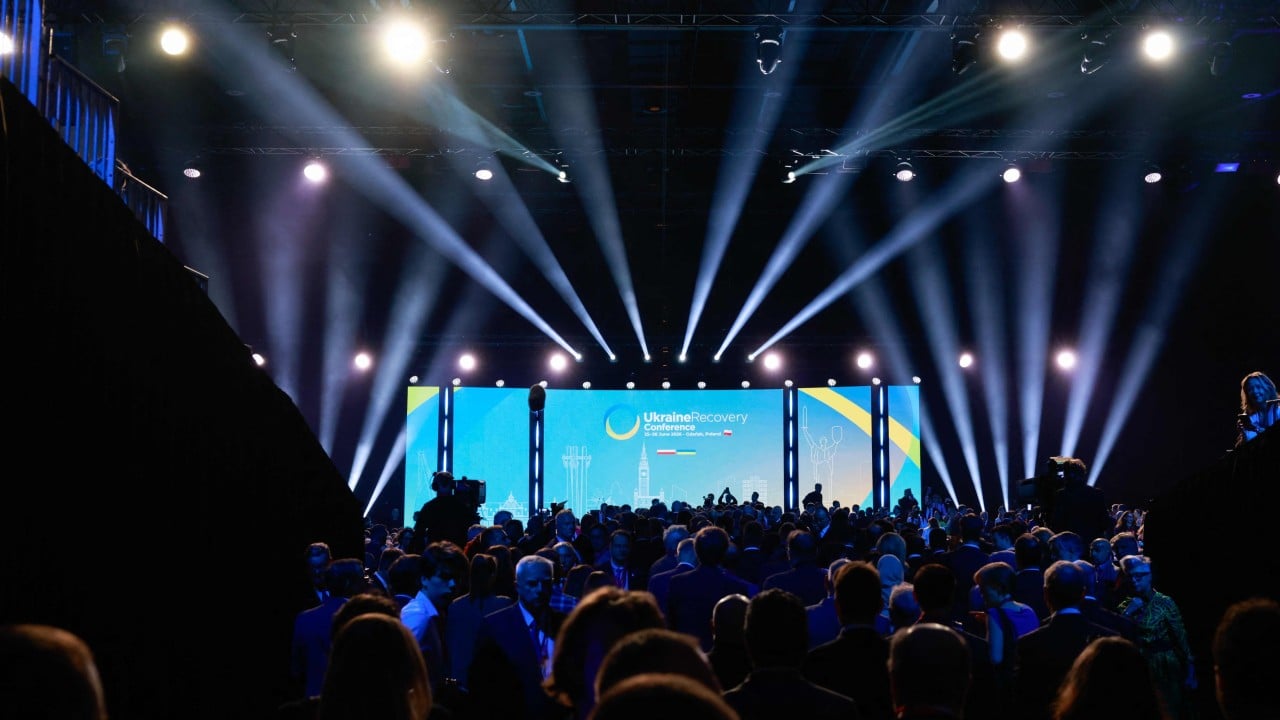
EU releases €3 billion loan for Ukraines recovery The European Union has disbursed the first €3 billion (US$3.4 billion) tranche of a €90 billion loan to Ukraine, the countrys prime minister announced on Thursday at the opening of a conference on Ukraines post-war recovery in Poland. The conference, attended by key European leaders including German Chancellor Friedrich Merz and European Commission President Ursula von der Leyen, is both a fundraising forum and a message to Russia that Ukraines Western supporters are in it for a long...
south china morning post · 8 days ago
UK bank to pay £32mn to clients of WealthTek CACEIS UK, the sub-custodian bank for the collapsed wealth manager, comes to agreement with FCA
financial times · 8 days ago
Lithuania launches €1m business partnership programme with Ukraine Lithuania has agreed to allocate one million euros to a new programme supporting business cooperation with Ukraine, with the aim of channelling commercial activity towards the countrys reconstruction and economic recovery.
lrt · 8 days ago
Ukraine demining fund raises €150m, with Lithuania providing half A multinational coalition supporting Ukraines demining efforts has accumulated 150 million euros in funding, with Lithuania contributing more than half of the total, according to Lithuanias Ministry of Defence.
lrt · 8 days ago

Britain announces allocation of nearly GBP 290 mln for recovery and energy security of Ukraine #UkraineBritain announces allocation o...
mastodon bot · 8 days ago
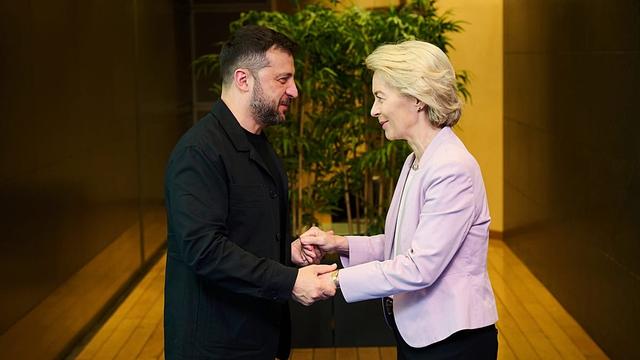
#Ukraine gets €3.2 billion from #EU support loan, von der Leyen saysThe announcement marks the first disbursement under the €90 billion loan. A second payment worth about €6 billion and dedicated to drone production is expected to be unveiled in the coming days.
mastodon bot · 8 days ago

The Kyiv Independent, in collaboration with KPMG Ukraine Gateway, has released the fifth installment of its Investors Guide to Ukraine — a must-read for foreign investors looking to navigate Ukraines business landscape.
bluesky bot · 8 days ago

⚡️ New US-World Bank partnership to de-risk investment in Ukraine. The partnership with the World Banks insurance arm, the Multilateral Investment Guarantee Agency or MIGA, will insure DFC projects in Ukraine against political and war-related risks.
bluesky bot · 8 days ago

US DFC and World Banks MIGA to set up political risk insurance for Ukraine fund reut.rs/4aQfYqE
bluesky bot · 8 days ago
Secure data rooms and the future of cross-border M&A in Europe Cross-border deal-making in Europe depends on trust, but trust is increasingly built through digital infrastructure. A company preparing for an acquisition, fundraising round, restructuring or private credit transaction must share sensitive information with advisers, investors, lenders and counterparties. That information may include employee data, customer contracts, tax records, board papers, intellectual property files, and financial […]
cyprus mail · 8 days ago
Key Financial Institutions Send a Joint Message: Retail Deposits Are Safe, BiH Financial Sector Remains Stable Following the decision to place Bosnia and Herzegovina on the increased monitoring list for anti-money laundering and terrorist financing (the so-called grey list), key financial institutions issued a joint, reassuring statement to the public. They state that the financial sector of Bosnia and Herzegovina remains fully stable, liquid, adequately capitalized, and safe. The joint statement […] The post Key Financial Institutions Send a Joint Message: Retail Deposits Are Safe, BiH Financial Sector Remains Stable appeared first on Sarajevo Times.
sarajevo times · 8 days ago
"Japan Creator Support Fund Progress Report Meeting" highlights international success of Japans next generation of creators and artists The Fund is beginning to generate tangible international outcomes, including awards, nominations and co-productions across music, film, games and the arts, while expanding opportunities for overseas performances, international events and cross-border collaborations. To date, projects supported ...
the slovenia times · 8 days ago
Poll: Nearly 60 of Poles oppose Ukraines EU accession Nearly 60 of Poles (59.7 to be exact) do not support Ukraine joining the European Union, according to a new poll. Meanwhile, 35.4 of respondents are backing Ukraines EU accession, with support highest among voters of the governing coalition.
ukrpravda · 8 days ago
Von der Leyen: EU disburses €3.2bn to Ukraine, drone funding will follow shortly European Commission President Ursula von der Leyen announced on Thursday 25 June the disbursement of the first €3.2 billion tranche of macro-financial assistance from the EUs €90 billion loan to Ukraine and said funding for drone production will begin shortly.
ukrpravda · 8 days ago
Wiederaufbaukonferenz: Ukraine bekommt erste Milliarden aus EU-Hilfskredit Seit mehr als vier Jahren verwüstet Russlands Angriffskrieg die Ukraine. Doch der Wiederaufbau wird schon geplant. Kanzler Merz kommt zu dem Treffen mit einer klaren Botschaft an Moskau.
handelsblatt · 8 days ago
Rezultate LOTO - Joi, 25 iunie 2026: La 6/49 sunt în joc peste 6,64 milioane de euro. La Noroc, reportul trece de 1,39 milioane de euro Joi, 25 iunie 2026, au loc noi trageri Loto 6/49, Noroc, Joker, Noroc Plus, Loto 5/40 și Super Noroc. La Noroc, Loteria Română anunță un report cumulat de peste 1,39 milioane de euro. La 6/49, sunt în joc peste 6,64 milioane de euro.
digi24 · 8 days ago
Ucraina primește prima tranșă din împrumutul UE de 90 de miliarde de euro. Ursula von der Leyen: „Solidaritate pusă în practică Comisia Europeană a virat Ucrainei prima tranșă, de 3,2 miliarde de euro, din împrumutul european de 90 de miliarde de euro, destinat susținerii financiare și militare a Kievului. Ursula von der Leyen a afirmat că transferul reprezintă „solidaritate pusă în practică și dovedește că sprijinul Uniunii Europene pentru Ucraina „este de durată.
digi24 · 8 days ago
International Claims Commission for Ukraine: first meeting of preparatory committee
gdeltproject.org · 8 days ago
Not only up to Kyiv: Ukraines indeterminably long road toward EU membership The European Union has formally opened the first chapter of membership negotiations with Ukraine and Moldova, marking a significant milestone in their accession process but underscoring the long road that remains before either country can join the bloc.
lrt · 8 days ago
Alpha Bank secures controlling stake in Alpha Trust Holdings Alpha Bank S.A. on Thursday announced that it has secured a controlling 69.61 per cent stake in Alpha Trust Holdings S.A., fulfilling the key condition required for the completion of its voluntary public takeover offer. The announcement relates to the voluntary public offer submitted by Alpha Bank to all holders of ordinary registered voting shares […]
cyprus mail · 8 days ago
Ukraine receives €3.2bn from EU Ukraine has received €3.2 billion from the European Union as the first tranche under the new Ukraine Support Loan financial instrument.
ukrpravda · 8 days ago
Ukraine-Konferenz in Polen: Ein Zahltag und viele Pläne Polen richtet die fünfte Wiederaufbaukonferenz für die Ukraine aus – und die EU überweist die erste Tranche des 90-Milliarden-Euro-Kredits. Eine zentrale Figur fehlt allerdings in Danzig.
sueddeutsche · 8 days ago

NATO Deputy Secretary General highlights innovation and support for Ukraine at Recovery Conference #Europe #NATO
mastodon bot · 8 days ago

🇪🇺🇺🇦 #Ukraine has received €3.2 billion as the first disbursement under the European Unions €90 billion support loan, Ursula von der Leyen has announced.
mastodon bot · 9 days ago
Poll: Nearly 60 of Poles oppose Ukraines EU accession Nearly 60 of Poles (59.7 to be exact) do not support Ukraine joining the European Union, according to a new poll. Meanwhile, 35.4 of respondents are backing Ukraines EU accession, with support highest among voters of the governing coalition.
ukrpravda · 9 days ago

UE transfere para Kiev a primeira parcela de empréstimo O empréstimo da UE à Ucrânia totaliza 90 milhões de euros
observador · 9 days ago
Ucraina primește prima tranșă din împrumutul UE de 90 de miliarde de euro. Ursula von der Leyen: „Solidaritate pusă în practică Comisia Europeană a virat Ucrainei prima tranșă, de 3,2 miliarde de euro, din împrumutul european de 90 de miliarde de euro, destinat susținerii financiare și militare a Kievului. Ursula von der Leyen a afirmat că transferul reprezintă „solidaritate pusă în practică și dovedește că sprijinul Uniunii Europene pentru Ucraina „este de durată.
digi24 · 9 days ago
EÚ posiela Ukrajine prvé miliardy z megapôžičky. Oznámila Von der Leyen, že 3,2 miliardy prídu už vo štvrtok Ukrajina dostáva prvých 3,2 miliardy eur z veľkého úveru EÚ na obnovu a obranu. Brusel tak vysiela jasný signál o dlhodobej podpore Kyjeva.
aktuality.sk · 9 days ago
EU zahlt Ukraine erste Milliarden aus neuem Darlehen aus Die Ukraine erhält erste Tranchen des lange von Orbán blockierten 90-Mrd.-Hilspakets. Die Wiederaufbaukonferenz in Danzig findet inmitten eines Streits zwischen der Ukraine und Polen ohne Selenskyj statt. Österreich sieht wirtschaftliche Chancen.
die presse · 9 days ago