Loading…
 Tuesday, September 29Tuesday, September 29
5 months · 10 summary articles
The EU is engaging in discussions with the Taliban to address the repatriation of Afghan migrants from Europe. Markus Lammert, spokesperson for the EU Committee on Home Affairs, stated that these measures target individuals without the right to remain in the EU and those posing security threats. The EU has clarified that these talks do not constitute recognition of the Taliban regime by Brussels .
The European Commission plans to invite Taliban representatives to Brussels for technical-level discussions on repatriation, coordinated with Sweden. While the EU does not recognize the Taliban government, Belgium, as the host country, is prepared to facilitate the meeting by issuing necessary visas . These talks follow previous visits by EU officials to Afghanistan to advance the repatriation agenda.
Follow us for live European news

The EU invites the Taliban to talks on the repatriation of Afghan migrants Markus Lammert, spokesperson for the Committee on Home Affairs, has clarified that the measures apply to individuals who do not have the right to remain in the EU and who pose a security threat. Furthermore, contacts with the authorities in Kabul in no way constitute recognition of the regime by Brussels
eunews.it · 5 months ago
Dutch households face dozens of euros in extra monthly costs from new EU CO2 tax Suppliers of gasoline, diesel and natural gas for building heating will have to buy CO2 emission allowances from 2028 under a new European Union system, with the costs passed on to consumers and po
nltimes.nl · 5 months ago
Critical medicines: green light for agreement between Parliament and Council – the EU aims for pharmaceutical sovereignty The agreed measures include the allocation of EU funds to companies manufacturing within Europe and the introduction of criteria that favour European production systems in public procurement
eunews.it · 5 months ago
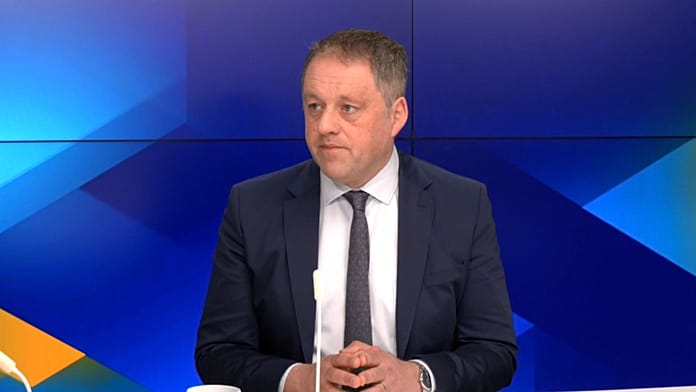
Ireland hopes new Budapest government will facilitate Ukraines EU membership Irelands Minister of State for European Affairs and Defence Thomas Byrne said the European Union must continue increasing pressure on Russia through sanctions, military support and diplomatic efforts.
euronews · 5 months ago
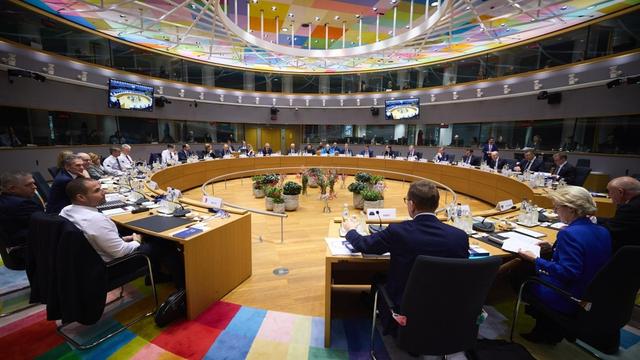
#Ukraine hopes for the opening of the first cluster of #EU accession negotiations on May 26 the minister said of Foreign Affairs Andriy Sybiga at the meeting of the EU Council on Foreign Affairs in Brussels with the participation of ministers of the member states of the European Union.
mastodon bot · 5 months ago
Ukraine, Mînzatu: Education is key to reconstruction and the path to EU accession The EU and Ukraine have reaffirmed the commitment made in 2023 to strengthen cooperation in the fields of education and skills. Since 2022, the EU has mobilised over €1.1 billion to support education in the country
eunews.it · 5 months ago
Press release - 2026 Charlemagne Youth Prize: European laureates announced This years awards went to an Estonian project to boost female democratic participation, a French political engagement app and a Spanish network for relations with China.Committee on Culture and Education Source : © European Union, 2026 - EP
european parlament · 5 months ago
Press release - First European Order of Merit ceremony: media information On Tuesday, 19 May, at a ceremony in Parliament laureates will receive the inaugural European Order of Merit for their significant contribution to EU integration and values. Source : © European Union, 2026 - EP
european parlament · 5 months ago
EU to invite Taliban for talks repatriation of Afghan migrants The EU Commission plans to invite Taliban representatives to Brussels to discuss repatriating Afghan migrants, following previous visits by EU officials to Afghanistan. This technical-level meeting, coordinated with Sweden, aims to pursue the repatriation agenda. Although the EU does not recognize the Taliban regime, Belgium, as the host country, is prepared to issue the necessary […]
cphpost · 5 months ago
EU guidelines: airlines cant raise ticket prices after sale or refuse compensations Airlines cannot retroactively increase ticket prices or refuse compensation for cancelled flights solely because of higher fuel prices, the European Commission said Friday in new guidelines issued for the EU transport and tourism sectors.
lrt · 5 months ago
132 600 people refused entry in the EU, up by 7.1 In 2025, 132 600 third-country nationals were refused entry into the EU territory at one of its external borders, indicating a 7.1 increase compared with 2024 (123 835). The number of people found to be illegally present in an EU country decreased by 21.7, from 918 525 in 2024 to 719 395 in 20...
eurostat · 5 months ago