Loading…
 Tuesday, September 29Tuesday, September 29
4 months · 5 summary articles
Wall Street surged on Tuesday as chipmakers led a rebound in tech shares, while easing Middle East tensions and fresh hopes for U.S.-Iran talks lifted risk appetite across global markets. The S&P 500 and Nasdaq both erased Monday’s steep losses, with the tech-heavy index up 2.1% by midday, as investors scooped up beaten-down semiconductor stocks amid signs of stabilizing demand for AI infrastructure .
The recovery followed a brutal sell-off on Friday, when the Nasdaq tumbled more than 3% as AI-linked equities sold off sharply . Analysts at Handelsblatt noted that chipmakers are now dictating prices amid surging demand, with production bottlenecks easing only gradually . “The short-lived tech correction appears to be over,” said Markus Koch, a U.S. markets expert, in a video commentary.
Geopolitical de-escalation also played a key role. Futures pointed to a strong open after reports suggested progress in U.S.-Iran negotiations, reducing fears of a regional oil supply shock . Brent crude, which had spiked above $95 a barrel last week, fell back below $90 as Chinese import cuts further eased pressure on global inventories .
Meanwhile, the crypto sector marked a historic inflection point as traditional finance embraced digital assets. Kraken co-CEO David Ripley told Axios that nearly all major banks and brokerages will soon offer Bitcoin and Ethereum to clients, calling it “the big story of 2026” . Ripley predicted tokenized equities would follow, with retail investors gaining earlier access to high-growth companies like SpaceX, whose $1.7 trillion IPO is priced for Thursday .
Not all corners of the market shared the optimism. Russian equities slid to their lowest level since October as peace talks stalled, extending a 14-week losing streak that now exceeds the 2008 financial crisis downturn . In Europe, Indra led losses on the Ibex after disputes threatened the continent’s next-generation fighter jet program, while the index closed below 18,200 points .
Looking ahead, investors will focus on U.S. inflation data Wednesday and the European Central Bank’s rate decision Thursday. Small business advocates, including SBA chief Kelly Loeffler, argue AI could drive Main Street growth—but warn that China’s dominance in the AI arms race poses a strategic risk to American competitiveness . With markets poised between recovery and fragility, the week’s data will determine whether Tuesday’s rebound has legs.
Follow us for live European news
2 further sources not geolocated

La tech reprend des couleurs après la forte correction: "Il reste une grande question" Les yeux restent également rivés sur la situation au Moyen-Orient. ...
la libre · 4 months ago

El mercado de petróleo desafía las predicciones de una crisis de suministro este verano El precio del crudo se mantiene por debajo de los 100 dólares el barril gracias a la reducción de las importaciones chinas, que ayuda a preservar las reservas mundiales. Leer
expansion · 4 months ago
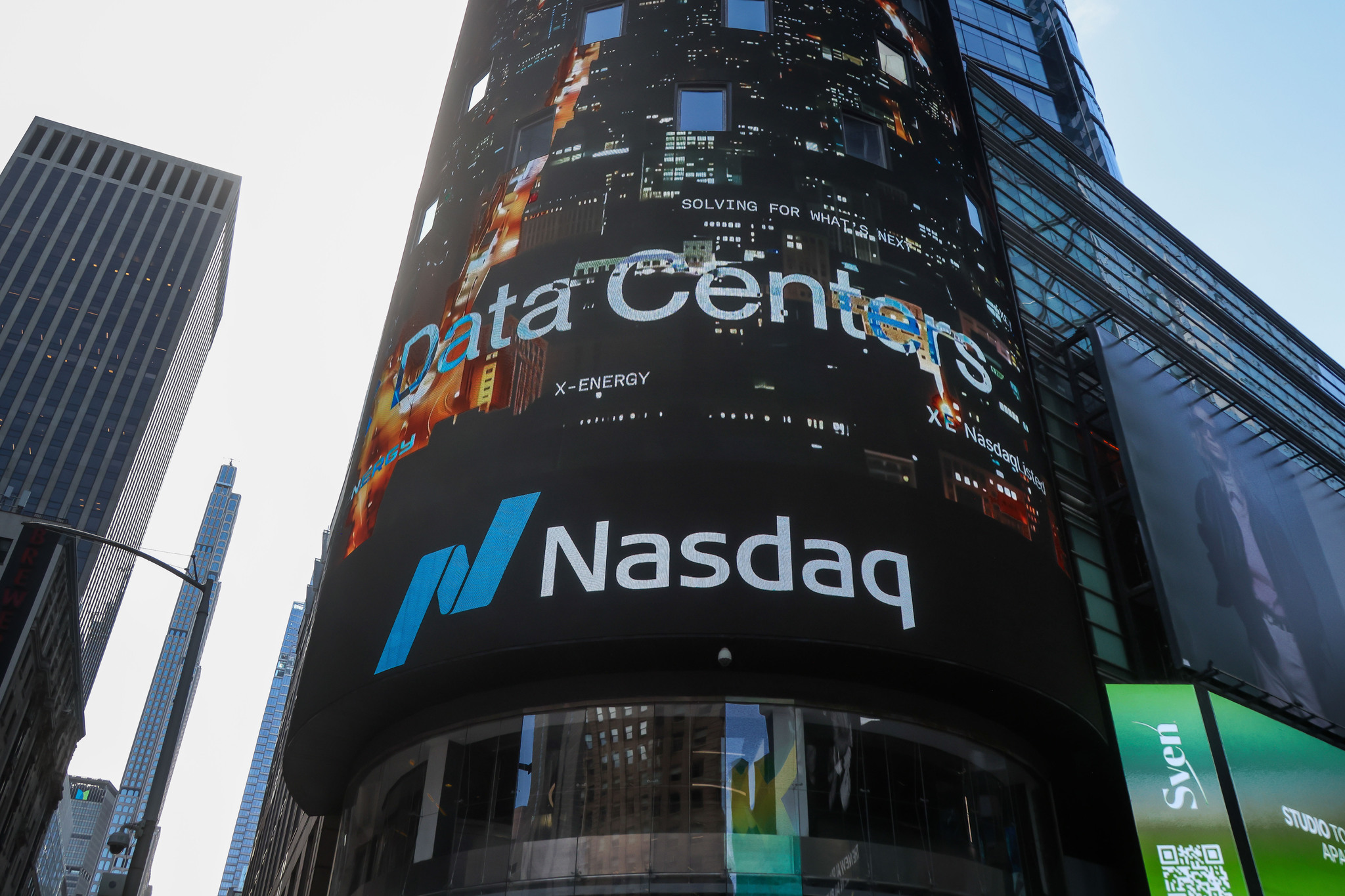
¿Hay que temer una caída mayor de la tecnología en Bolsa? Tras la intensa corrección de la tecnología el viernes en Wall Street y ayer en Asia, el Nasdaq recupera el pulso y los expertos creen que la caída es puntual. Leer
expansion · 4 months ago

Wall Street: Tech- und Chipwerte treiben die Kurse wieder nach oben Technologie- und Halbleiterwerte erholen sich nach dem jüngsten Rücksetzer. Zudem gibt es neue Hoffnung auf Fortschritte in den Gesprächen zwischen den USA und dem Iran.
handelsblatt · 4 months ago
Wall Street: US-Börsen notieren im Minus – Nasdaq verliert drei Prozent Die Spannungen in Nahost lassen offenbar nach. Titel von Chipherstellern können ihre Erholung zunächst nicht fortsetzen. Anleger blicken zudem auf Konjunkturdaten.
handelsblatt · 4 months ago
Warren AI™ Risk analysis engine Is now Live: Building The Risk Intelligence Infrastructure Layer for The Space Economy The space economy is accelerating faster than ever before. Thousands of satellites are being launched. Commercial space stations are emerging. Space manufacturing is on the horizon. Governments, defense organizations, telecommunications […] The post Warren AI™ Risk analysis engine Is now Live: Building The Risk Intelligence Infrastructure Layer for The Space Economy appeared first on SpaceNews.
spacenews · 4 months ago
Avaruus | Avaruusyhtiö Iceyen arvostus pomppasi jo yli 10 miljardin – Siitä voi tulla yli sadan miljardin arvoinen Suomen valtio on nyt merkittävä omistaja 10 miljardin arvoisessa Iceyessä.
helsingin sanomat · 4 months ago
Raketen i Kista: upp 2 400 procent Ett litet teknikbolag i Kista har plötsligt hamnat i centrum för en global aktiehysteri. Resultatet: en kursuppgång på över 2 400 procent – och en situation som kan bli omöjlig för bolaget att hantera.
svenska dagbladet · 4 months ago

La canicule pèse sur la productivité des fournisseurs indiens des géants de la confection Les températures extrêmes atteintes dans de nombreuses régions en Inde affectent les usines qui exportent pour Uniqlo, Marks & Spencer ou Levis. À commencer par leurs millions de travailleurs. Selon un centre de recherche américain, la baisse de la productivité peut aller jusquà 10 .
courrier international · 4 months ago

Exclusive: SBAs Kelly Loeffler predicts AI will fuel Main Street growth Artificial intelligence will fuel job creation on main streets across America, Small Business Administration administrator Kelly Loeffler predicted Tuesday at Axios AM Live in Washington, D.C.Why it matters: AI has both created — and destroyed — jobs, leaving a nuanced footprint on the market. Whats clear is that it will reshape the way people work.Driving the news: As compute power explodes, Loeffler contends the "biggest beneficiaries" will be small businesses, she told Axios Mike Allen.The history-defining tech is a "huge leveler of the playing field for America," she said. But "if China wins" the AI arms race,"this is going to be really problematic for the entire country, but particularly for main streets."Catch up quick: Loeffler, previously a Trump loyalist in the Senate, now sits atop an SBA facing deep funding cuts under the White Houses proposed budget for fiscal year 2027.The National Small Business Association warned the cuts, if implemented, "could be very dramatic, resulting in higher costs for lending, fewer technical resources and greater difficulty for small businesses seeking assistance from the agency."But on Tuesday, Loeffler championed SBAs deregulatory, an onshoring agenda and access to capital for small businesses."Were really reorienting the agency to be technology- and customer-driven as opposed to bureaucracy-driven," she said.Zoom out: Small businesses employ nearly half of the American workforce, per the U.S. Chamber of Commerce, and are a major driver of economic growth.But small business optimism remains below its 52-year average, according to Bank of Americas May analysis of small businesses and the April National Federation of Independent Business report.That sagging sentiment is consistent with falling profitability growth and concerns about inflation and the broader economic outlook, as higher gas prices have strained businesses and consumers alike.Still, Americans are filing paperwork to start new businesses at near-record rates.Go deeper: Iran war hits small business hard
axios · 4 months ago

The bull and bear cases for SpaceX Its a foregone conclusion that SpaceX will raise at least $85 billion in its record-wrecking IPO, with pricing set for Thursday and first trades for Friday.The question, therefore, is what happens next.The bull caseSpaceX will generate hundreds of billions of dollars in revenue by 2030, despite booking less than $19 billion last year.The biggest chunk should be from Starlink, which will leverage Starships larger payloads to supercharge its nascent direct-to-cell business. Starlink could corner the global market, either as a replacement for legacy carriers or as their new infrastructure layer (thus reducing consumer switching costs). Dont forget about its massive spectrum purchase from Echostar.The floor for SpaceXs AI business is that it just keeps selling compute, like the new agreements with Anthropic and Google — which combined will provide around $2 billion in monthly revenue.The ceiling for SpaceXs AI business is that Grok really works as a viable alternative to Claude, ChatGPT, and Gemini (plus their various offshoots). Then the skys the limit, although SpaceX may need to reclaim some of its compute.SpaceX also will continue its flagship launch business, including some lumpiness tied to NASAs lunar missions, and possibly could be generating revenue from orbital data centers where revenue horizons are longer.If SpaceX hits around $200 billion in revenue with continued growth, a $1.75 trillion valuation will look like a bargain.The bear caseSpaceX has spent most of its life operating as the market leader in a category of its own making (commercial space launch).Its future plans are much more crowded, and the starting price is very expensive.Starship remains a work in progress, not a sure bet. Coverage may be superior to current plans, but will it be cost competitive? Starlinks current service is adding subscribers, but at a declining ARPU. There also may be viable rivals — including Amazon, which is buying Globalstar.Compute is a commodity. Right now its benefiting from the bottleneck, but that should ease given the massive number of data center buildouts and expected increases in inference efficiency. And if Grok does work, its possible that rivals like Anthropic and Google would find ways to cut off SpaceXs compute cash cow.The wildcard: Elon MuskMusk has undeniable market magic. Bet against him at your portfolios peril.Hes also a keyman risk. If Musk were no longer leading SpaceX, a lot of investor enthusiasm dissipates. Premium goes poof.Musk is often compared to Steve Jobs, so a big question is if SpaceX is in its pre-iPhone/App Store phase, when Jobs was vital, or in its post-iPhone stage where Tim Cook was able to build on bedrock.Bulls believe the former, adding that SpaceX has perhaps the worlds best physical engineering team, while bears see a rocket/telecom/AI conglomerate thats less than a year old and still needs foundational direction.The bottom line: Well all pay attention to Fridays stock pop or fizzle, but what matters more is years down the road.
axios · 4 months ago

The white-collar jobs contradiction that isnt Data: Bureau of Labor Statistics; Note: Core white-collar is the sum of employment in financial activities, information, and professional and business services sectors; Chart: Neil Irwin/AxiosThe market for many types of white-collar professional workers is bad. The overall U.S. job market is pretty healthy. There is less of a contradiction here than it might seem.The big picture: These are gloomy times for many office workers — their employers shedding payroll, their livelihoods threatened by AI. But the jobs seemingly under the greatest threat right now amount to a small share of overall employment.Moreover, it isnt historically unusual for major sectors of the economy to shed jobs even as the overall labor market remains healthy.What is unusual is that job losses are occurring in sectors that have usually added to payrolls outside of recessions.State of play: Cumulative employment in financial activities, information and professional and business services peaked in April 2023 and has fallen 2 since then. Employment in all other sectors is up 3.7 in that span.These sectors disproportionately employ college-educated staff with high wages in office settings — economist Gad Levanon calls them "core white-collar employment."They added an average of 49,000 jobs a month in the decade through April 2023, but since then have lost an average of 19,000 jobs a month.That likely reflects a mix of employers concluding they overhired during the COVID-19 pandemic, the streamlining of work processes and some anticipatory cost-cutting to take advantage of AI productivity gains.Between the lines: That may confirm the anecdotes and intuition that these are difficult times for white-collar workers — who, we should note, are overrepresented in both those who produce and consume economic news.But it doesnt reflect the broader reality of the massive U.S. job market.By the numbers: Those core white-collar sectors amount to 34 million jobs, about 22 of the total U.S. employment of 159 million.Far more people work in hospitals, restaurants and schools than in tech companies or consulting firms.As such, its not arithmetically difficult to achieve the situation were seeing now — a low 4.3 unemployment rate, an economy adding 114,000 jobs a month so far this year, historically low levels of claims for jobless benefits — even as professional-class jobs are in decline.Yes, but: That could change if AI causes job opportunities to diminish more rapidly than they have thus far.It also could change if the labor-saving implications of the technology become more obvious outside of the types of jobs that involve moving around words, numbers and code on a screen.The fact that white-collar employment has been falling even in a time of strong GDP growth raises the possibility that it could become a bloodbath whenever the economy next tips into recession.Data: Bureau of Labor Statistics; Chart: Neil Irwin/AxiosFor a historical analog of how employment can be depressed in a major sector even amid an otherwise solid job market, the manufacturing sector in the 2000s tells the story.It shows how reallocation of labor across sectors can happen — and cause pain, even when the overall numbers turn out fine.Flashback: In the 2001 recession, manufacturing employment plunged. It reflected both cyclical factors and more profound pressure on U.S. manufacturing wrought by a deepening trade relationship with China and advances in offshoring.Five years later, the overall job market had rebounded. The unemployment rate averaged 4.6 in 2006, and there were millions more jobs than at the 2000 pre-recession peak.The falloff in manufacturing jobs proved permanent, however. Manufacturing employment was 18 lower in 2006 than in 2000, with 3 million fewer jobs.To this day, factory employment has not come close to returning to its pre-2001 levels. There were only 12.6 million manufacturing jobs in the U.S. as of last month, down from more than 17 million in 2000.Zoom in: By 2006, jobs were abundant in the aggregate, but that didnt mean that the factory workers who lost work in the early 2000s were made whole.An entire set of economic literature around the "China shock" shows that job losses were concentrated in certain sectors and locations, and many who lost work ended up retiring early, becoming indefinitely unemployed, or working in lower-wage jobs.It likely contributed to deeper dysfunctions of post-industrial America, including the opioid epidemic and a rise in "deaths of despair."The bottom line: As America zooms toward an AI-fueled future, keeping the job market healthy in the aggregate is necessary, but not sufficient, to avoid deeper societal problems.
axios · 4 months ago

Exclusive: Wall Street embraces crypto it once feared Traditional financial firms are rapidly embracing crypto, marking a turning point for an industry that once viewed digital assets as a threat.Why it matters: A long-running rivalry between Wall Street and crypto is disappearing, with financial institutions racing to meet growing demand for digital assets from retail and institutional investors.What theyre saying: "Nearly all traditional financial services companies are gonna offer crypto, bitcoin, ethereum to their customers," David Ripley, the co-CEO of cryptocurrency exchange Kraken, told Axios on Tuesday.Ripley called this "a big story of 2026." Banks and brokerages are responding to demand from retail investors, institutions and wealthy clients. The big picture: A collision of mega-trends — AI, stablecoins, tokenization and extended-hours trading — is pushing financial markets in the same direction. Investing is becoming more accessible to average Americans, with more assets available to trade and fewer limits on when they can trade them.Ripley said that the rise of stablecoins has shown investors are willing to own blockchain-based versions of traditional assets. He expects publicly traded stocks to be next."Its not going to end there. … The next most significant place where we see tokenized equity or tokenized assets will be public equities," Ripley said.Zoom out: Nasdaq CFO Sarah Youngwood tells Axios that U.S. markets are deep enough to absorb the coming wave of trillion-dollar IPOs without rewriting the rules — even as SpaceX, OpenAI and Anthropic line up to go public.The system is prepared for "both those very small companies" being created by AI and "those larger companies" that emerge from them, she said.Zoom in: SpaceX, expected to debut on the Nasdaq later this week, is aiming to raise about $75 billion, valuing it at $1.7 trillion. That would be the largest IPO ever.What to watch: Both executives described a future in which financial markets are more global, more digital and increasingly always-on. Nasdaq is pursuing extended-hours trading, while crypto markets already operate 24/7. Meanwhile, tokenization is expanding the types of assets investors can own: Kraken recently announced plans to offer tokenized IPO shares to retail investors. Ripley tells Axios the goal is greater "access," noting that many ordinary investors have been "entirely locked out" of some of the biggest wealth-creating companies until late in their growth cycles.
axios · 4 months ago
Russian Stocks Slide to Lowest Level Since October as Hopes for Ukraine Peace Deal Fade Investment analysts note that the MOEXs 14-week slide has already surpassed its historic losing streak during the 2008 global financial crisis.
themoscowtimes · 4 months ago
Futures Pointing To Initial Strength On Wall Street
gdeltproject.org · 4 months ago
Nasdaq sinks more than 3 as tech sell-off reignites Heavy losses for AI-linked stocks overshadow gains across rest of market
financial times · 4 months ago

Wall St rises as tech shares gain, Middle East tensions ease reut.rs/4fwsaQJ
bluesky bot · 4 months ago

Diversidade no topo: abrir novos caminhos Maria João Carioca, co-CEO da Galp, partilha o seu percurso profissional desde o setor financeiro à energia, refletindo sobre liderança, o impacto da diversidade e a gestão em contextos de incerteza.
observador · 4 months ago
Criptomoneda românilor de la MultiversX a picat sub prețul de 3 dolari. Firma sibiană MultiversX Labs SRL, fosta Elrond Network SRL, pe pierderi tot mai mari și personal propriu tot mai restrâns Criptomoneda românilor de la MultiversX a picat, zilele acestea, și sub prețul de 3 dolari, atingând un nou minim istoric, iar firma sibiană MultiversX Labs SRL, fosta Elrond Network SRL, a raportat al doilea an consecutiv de pierderi și număr de angajați proprii în scădere. Citește mai departe pe StartupCafe…
hotnews.ro · 4 months ago
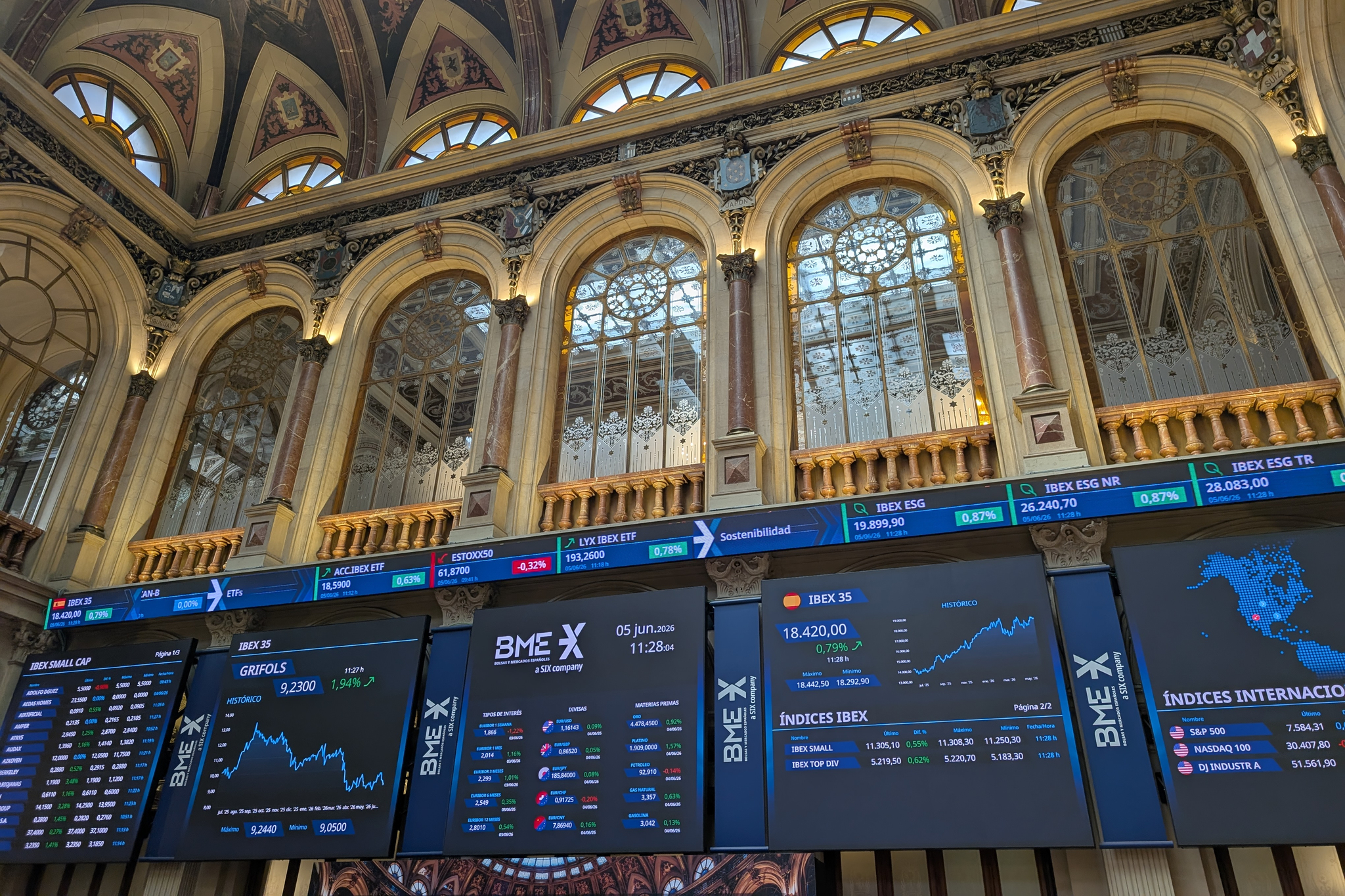
El Ibex gira a la baja al cierre arrastrado por Wall Street y pierde los 18.200 puntos La tregua entre Irán e Israel apacigua de nuevo el precio del petróleo, y relaja unos mercados pendientes ya de citas como el IPC de EEUU de mañana y el BCE del jueves. El Ibex apunta a una consolidación de niveles. Leer
expansion · 4 months ago
La crisis del caza europeo alcanza a Indra en el Ibex El valor estrella del Ibex en 2025 pincha su rally. Las presiones bajistas se centran hoy en Indra, lastrado por las discrepancias que ponen en peligro todo el programa del avión europeo de combate Leer
expansion · 4 months ago
El BCE afronta su primera subida de tipos en casi tres años Un 70 del Consejo de Gobierno ha apoyado ya públicamente el alza de 25 puntos básicos en el precio del dinero, hasta el 2. Leer
expansion · 4 months ago
Börsengang: Zwischen Hype und Milliardenverlusten: Was Investoren an SpaceX fasziniert Der IPO der Raumfahrtfirma spaltet die Finanzwelt. Einige warnen vor zu viel Optimismus, andere erwarten hohe Kursgewinne. Klar ist: SpaceX ist mit seiner riskanten Vision schon erfolgreich.
handelsblatt · 4 months ago
Handelsblatt Live: US-Börsenexperte Koch: KI-Boom an der Wall Street geht weiter Die Anleger greifen am Dienstag weiter bei Chip-Werten zu, der kurze Rückschlag im Tech-Sektor vom Freitag scheint vergessen. Bei der hohen Nachfrage können Chiphersteller aktuell die Preise diktieren, erklärt Markus Koch.
handelsblatt · 4 months ago
Märkte-Insight: Drei Gründe, die gegen Themen-ETFs sprechen Investment-Storys wie aktuell die von SpaceX klingen spannend und lassen sich auch über spezielle ETFs abbilden. Doch Themen-ETFs haben ihre Tücken, meint Andrea Cünnen.
handelsblatt · 4 months ago