
Serbian President Vučić to resign within weeks, triggering early elections
Story Timeline
6 days · 4 summary articles
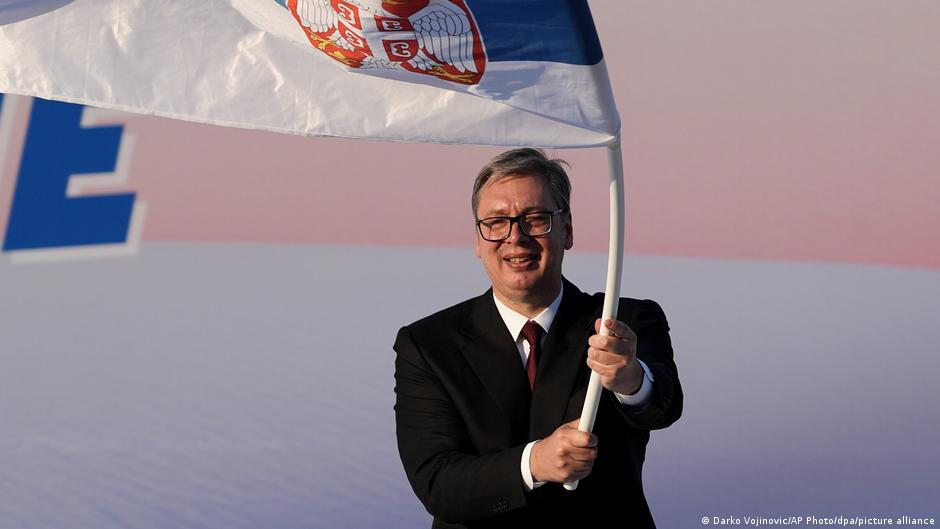
Serbian President Aleksandar Vučić announced on Saturday that he will resign within weeks, triggering early presidential and parliamentary elections in a move that follows 18 months of sustained anti-government protests. The decision, disclosed after a cabinet meeting in Belgrade, comes amid escalating pressure from student-led demonstrations demanding political change and accountability for a deadly structural collapse in Novi Sad that killed 16 people in late 2024.
Vučić, who has dominated Serbian politics for 13 years as both prime minister and president, framed his resignation as a step toward democratic renewal. “I will remain in office for only a few more weeks,” he told reporters, adding that elections would be held to restore public trust . However, political analysts and opposition figures warn that the move may be tactical, with speculation that Vučić intends to pivot to the premiership—a position currently held by his close ally, President of the National Assembly Ivica Dačić.
The protests, which began in late 2024 after the collapse of a railway canopy in Novi Sad, have since expanded into a broader anti-corruption and pro-democracy movement. Demonstrators have repeatedly called for Vučić’s resignation, accusing his government of authoritarianism and mismanagement. International observers have also raised concerns over media freedom and electoral integrity in Serbia. “This resignation is not a concession to democracy but a calculated shift to retain power,” argued political analyst Bota Sot in an op-ed .
Vučić’s announcement follows conflicting reports about his intentions. Earlier this week, French outlet RFI reported that his resignation would open the door to early elections, while German newspaper *Süddeutsche Zeitung* suggested the move could allow Vučić to run as a candidate in the upcoming vote . Dutch newspaper *de Volkskrant* similarly noted that Vučić may seek to influence the electoral process as a leading figure in his party .
In a separate development, Vučić confirmed during a military inspection near Belgrade that mandatory conscription in the Serbian army will resume in March 2027, a decision likely aimed at reinforcing national security amid regional tensions . The announcement coincides with heightened scrutiny of Serbia’s defense policies and its alignment with Western and Russian interests.
As Serbia prepares for elections, opposition groups are scrambling to consolidate their positions. The Democratic Party, led by Stefanos Kasselakis, has distanced itself from former deputy leader Eleni Tzakri, signaling internal realignment ahead of the vote . Meanwhile, international actors, including the EU, are closely monitoring developments to assess whether the elections will meet democratic standards.
Vučić’s resignation marks a pivotal moment for Serbia, but the path forward remains uncertain. Whether his departure leads to genuine reform or a continuation of his political influence under a new title will shape the country’s democratic trajectory in the coming months.
Follow us for live European news
- 3
- 2
- 2
- 2
- 1
- 1
- 1
- 1
- 1
- 1
5 further sources not geolocated
Articles

🇷🇸⚡️ — ⚡️Conscription service in the Serbian army will begin in March 2027 This was stated by President Aleksandar Vučić during an inspection of weapons at the Batajnica military airfield near Belgrade.
telegram_Intel Slava · 5 days ago
«Εγώ ζήτησα από την Τζάκρη να παραιτηθεί» λέει ο Κασσελάκης και δηλώνει ότι πλέον οι Δημοκράτες κινούνται στο φιλελεύθερο κέντρο Και επίσημα επήλθε το πολιτικό διαζύγιο ανάμεσα σε Κασσελάκη και Τζάκρη - Σύμφωνα με πληροφορίες του protothema.gr, ο πρόεδρος των Δημοκρατών είχε ζητήσει εδώ και ημέρες από την αντιπρόεδρό του να παραιτηθεί
protothema · 5 days ago
Vuçiç paralajmëron dorëheqjen , analistët zbulojnë planin : Synon postin e kryeministrit
gdelt bot · 5 days ago
De Servische president Vucic treedt af, zoals de demonstranten vroegen. Maar nu wil hij premier worden
trouw · 5 days ago

Two prime ministerial resignations, 10 years apart: Brexit represents a kind of faultline in British history
bluesky_The Guardian · 5 days ago
Vuçiq njoftoi dorëheqjen - çfarë fshihet pas kësaj ?
gdelt bot · 5 days ago
🇨🇳🇷🇸⚡️ — President Aleksandar Vučić announced that Serbia is officially moving forward with the procurement of the Chinese HQ-9 long-range surface-to-air missile (SAM) system, alongside new fighter aircraft. Serbia has already acquired two batteries of the HQ-17AE short-range air defense (SHORAD) system and four batteries of the FK-3 (HQ-22) medium-range surface-to-air missile (SAM) system. @IntelSlava
telegram_Intel Slava · 5 days ago

Alverca oficializa saída do treinador Custódio Castro Custódio Castro assumiu a equipa no início da época passada, guiando os alverquenses ao 11.º lugar da I Liga e à desejada manutenção no primeiro escalão um ano após a subida.
observador · 5 days ago
Politik in Argentinien: Javier Milei entlässt seinen Kabinettschef Er wetterte stets gegen Korruption – und war mutmaßlich selbst korrupt: Manuel Adorni muss zurücktreten. Er soll etwa Vermögenswerte nicht angegeben haben. mehr...
taz.de · 5 days ago
Serbie: le président Aleksandar Vučić annonce sa démission prochaine, certains y voient une stratégie pour rester au pouvoir Le président serbe Aleksandar Vučić a annoncé samedi 27 juin 2026 quil démissionnerait de ses fonctions dans les semaines à venir, ouvrant la voie à des élections présidentielles et législatives anticipées. Cette décision intervient après un an et demi de manifestations étudiantes anti-corruption réclamant des élections, un mouvement déclenché par leffondrement dun auvent dans une gare de Novi Sad, dans le nord du pays, qui a fait 16 morts. Mais pour certains, le président cherche à changer de poste en restant au pouvoir.
rfi.fr · 5 days ago
Serbia to Reintroduce Mandatory Military Service by Next March
gdeltproject.org · 5 days ago
O țară din Balcani reintroduce serviciul militar obligatoriu după 15 ani. Cine va fi chemat în armată În contextul în care tot mai multe state europene își regândesc strategiile de apărare, o țară din Balcani a decis să reintroducă serviciul militar obligatoriu. Măsura va intra în vigoare de anul viitor și îi va viza pe bărbații cu vârsta de până la 30 de ani.
digi24 · 5 days ago

Serbian president to resign within weeks but hints at run for PM
bluesky_The Times · 5 days ago
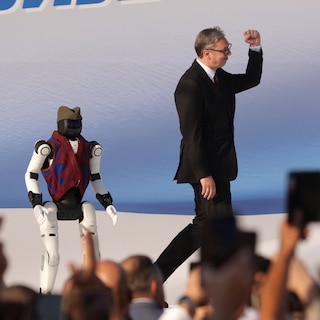
Na 1,5 jaar protest stapt Servische president Vucic op, maar hij mengt zich nog wel in nieuwe verkiezingen
de volkskrant · 5 days ago
Serbien: Vučić kündigt Rücktritt an
sueddeutsche · 5 days ago
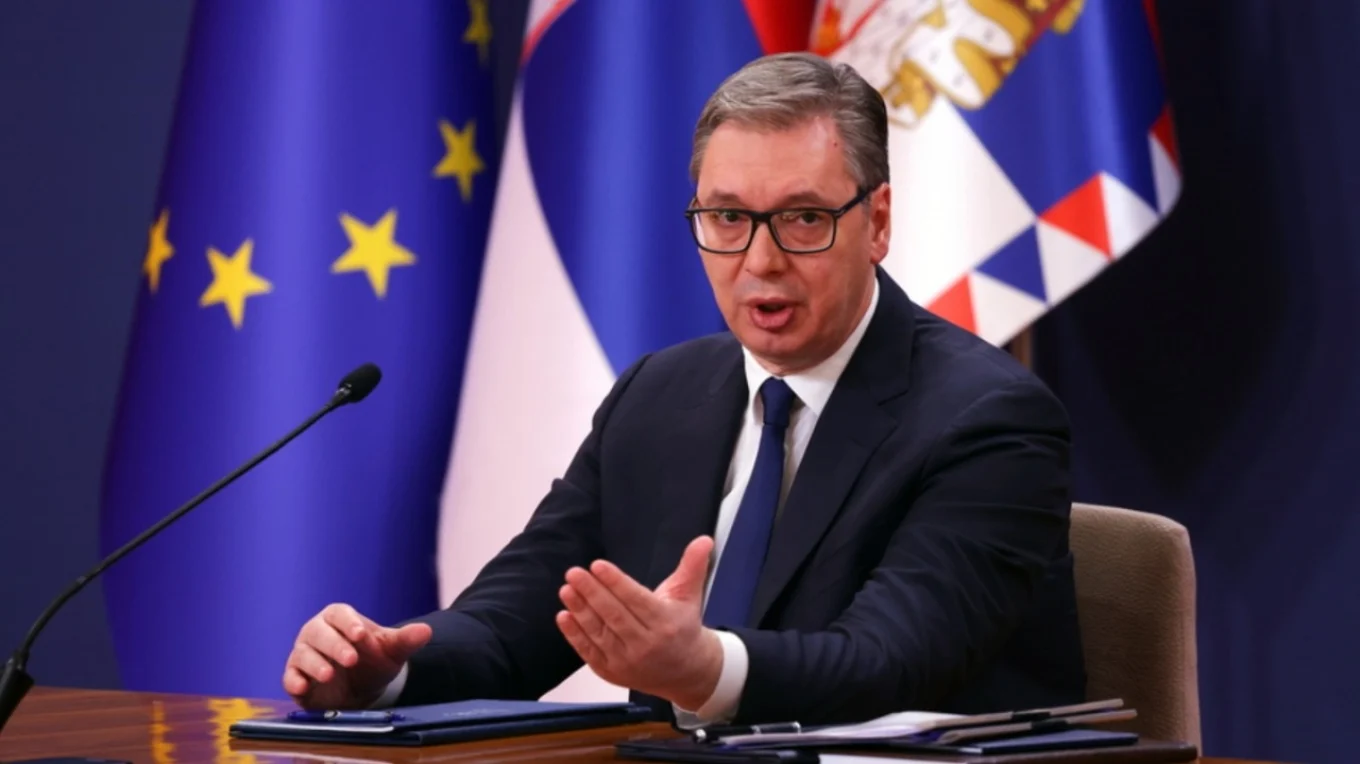
Aleksandër Vuçiç paralajmëron dorëheqjen , Presidenti i Serbisë : Do të jem edhe vetëm për disa javë
gdelt bot · 5 days ago
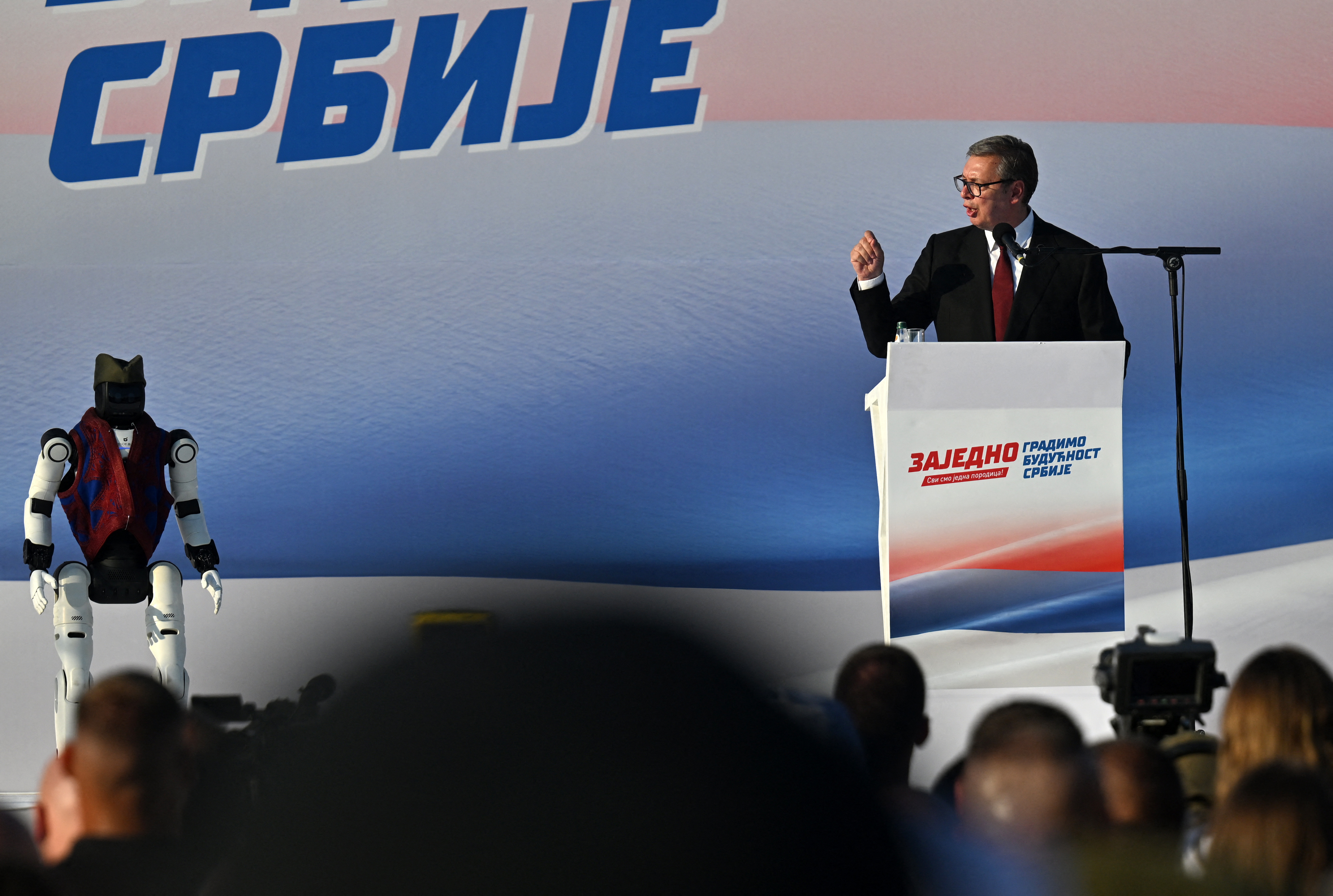
Serbia Vucic Says He Will Resign Within Weeks And Call Early Elections After 18 Months Of Protests
gdelt bot · 5 days ago
Serbias Vučić to resign, opening path to early elections amid political tensions Serbias President Aleksandar Vučić has announced that he will resign within weeks, paving the way for early elections. There is speculation that the populist leader could attempt to move into the more powerful role of Prime Minister. The announcement comes after more than a year of heightened tensions in the Balkan nation, where university students have led protests demanding political change.
france24 · 5 days ago
Bald Neuwahlen in Serbien?: Präsident Vucic kündigt taktischen Rücktritt an Mit dem vorgezogenen Abgang verkürzt Vucic seine Amtszeit. Bei einer vorgezogenen Parlamentswahl könnte er dadurch als Spitzenkandidat antreten. mehr...
taz.de · 5 days ago
Srbský prezident potvrdil priateľstvo s Ruskom a Čínou, no sľubuje plniť záväzky voči EÚ Srbský prezident na podujatí v Belehrade uistil, že Srbsko zostane na európskej ceste, no neotočí sa chrbtom Rusku ani Číne. Zároveň pripustil urýchlenie reforiem pre vstup do Únie.
aktuality.sk · 6 days ago

Serbian President Vucic says he will resign within weeks amid student-led protests #Europe
mastodon bot · 6 days ago
Lemondott a skótok szövetségi kapitánya, amikor kiderült, hogy nem jutottak tovább A Tartan Army csomagolhat.
444.hu · 6 days ago
Na anderhalf jaar protest stapt Servische president toch op De Servische president Aleksandar Vučić heeft vervroegde verkiezingen aangekondigd en stapt op. Daarmee lijkt hij toe te geven aan de belangrijkste eis van de demonstranten die al ruim anderhalf jaar protesteren tegen zijn regering. Of Vučić rol in de Servische politiek daarmee ook is uitgespeeld, is nog onzeker.
rtl nieuws · 6 days ago
Chefe de gabinete de Javier Milei demite-se após suspeitas de corrupção Manuel Adorni publicou nas redes sociais a carta de demissão que enviou ao Presidente da Argentina. Investigação aberta após denúncia de enriquecimento ilícito e branqueamento de capitais.
publico · 6 days ago
Bald Neuwahlen in Serbien?: Präsident Vucic kündigt taktischen Rücktritt an Mit dem vorgezogenen Abgang verkürzt Vucic seine Amtszeit. Bei einer vorgezogenen Parlamentswahl könnte er dadurch als Spitzenkandidat antreten. mehr...
taz.de · 6 days ago

Chefe de gabinete do líder da Argentina demite-se "Pela primeira vez desde 10 de dezembro de 2023, estou a ir contra os vossos desejos", escreveu Adorni na carta de demissão que enviou a Milei.
observador · 6 days ago
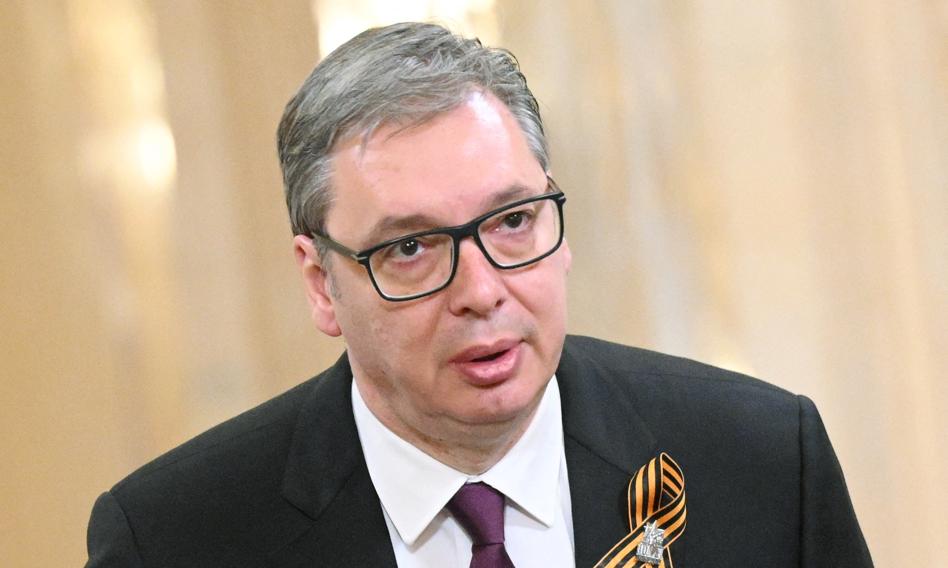
Prezydent Serbii ogłosił , że odchodzi . To moje ostatnie tygodnie
gdelt bot · 6 days ago

Vučić annuncia dimissioni e si candida premier guidando la nuova lista Serbia Unita
gdelt bot · 6 days ago
Serbiens Präsident Vucic will zurücktreten
gdelt bot · 6 days ago

Argentine: démission du chef du cabinet des ministres pris dans un scandale Le chef du cabinet des ministres argentin, Manuel Adorni, a présenté sa démission au président Javier Milei samedi, acculé après avoir admis il y a deux semaines avoir menti dans sa déclaration de patrimoine. ...
la libre · 6 days ago