Thousands of schools across Italy, the United Kingdom and Ireland received hoax bomb threat emails on Wednesday, forcing hundreds of Italian institutions to evacuate and prompting an emergency government meeting in Rome.
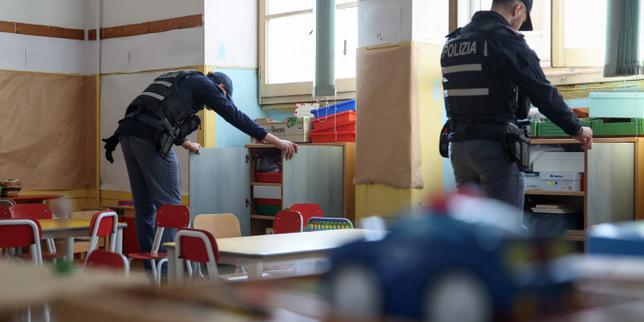
Around 6,300 schools in Italy received the anonymous messages, according to the Education Ministry, with at least 300 buildings evacuated as a precaution. Schools in Scotland, Northern Ireland and the Republic of Ireland also received similar warnings, though police there classified them as hoaxes and did not require evacuations.
The email sent to Italian schools was signed by "Mikhail Andropov," described as the leader of an otherwise unknown group, and contained particularly violent threats. The same name was used in bomb threats sent last week to newsrooms in Bulgaria and Ireland, and in warnings that targeted dozens of European airlines.
Italian Prime Minister Giorgia Meloni convened an emergency meeting with her Cabinet, secret services and cybersecurity experts on Wednesday. "Whoever is sending them wants our fear, lost days, suspicion and chaos," she said in a video message. Law enforcement found no concrete threat during checks of the evacuated buildings, she said.
The anonymous email also threatened Meloni personally, according to copies obtained by Italian media. Police in Northern Ireland said they were conducting "urgent inquiries" after a threatening email was sent to hundreds of schools. Police Scotland said their assessment remained that the messages did not represent a credible threat.
Italian Education Minister Giuseppe Valditara told reporters the incident was most likely a cyberattack rather than a genuine risk. "Given that so many schools are involved, the real risk is almost non-existent," he said. He added that in a context where hybrid warfare is increasingly used to destabilize nations, authorities needed to prepare.
The school threats follow a wave of disruptions across Europe in recent weeks, including false bomb threats against at least 27 airlines, hacking of supermarket refrigeration systems and cyberattacks on blood banks. At least 21 European nations have experienced similar hoaxes or attacks. Some security officials suspect Russia, which denies involvement, while France has accused Iran's Revolutionary Guard of the supermarket attacks.
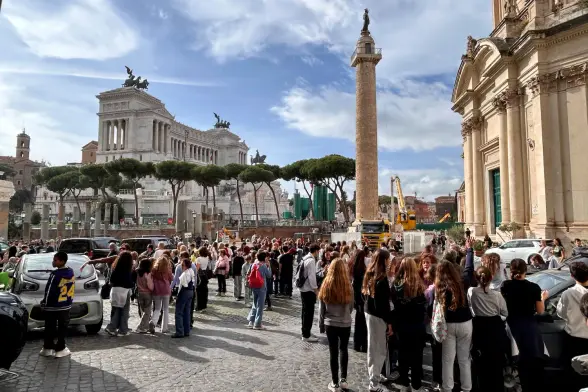
At Rome's Mamiani high school, students poured into the streets mistaking the alarm for the recess bell. "They are saying it was a bomb alert because an email arrived from Russian hackers in which they said they would have killed everyone," said Anita Bartocci, an 18-year-old student.