A senior U.S. Army soldier was arrested near Gloucester on Tuesday on suspicion of spying for Russia, British police said.
The 41-year-old man, who has not been named, was detained near the city in western England and taken to London, where he remains in custody at a police station. Police said the arrest was made under Sections 1 and 3 of the National Security Act 2023, which cover obtaining or disclosing protected information and assisting a foreign intelligence service. "The country to which the allegations relate is Russia," the Metropolitan Police said.
The soldier was assigned to Imjin Barracks in Gloucestershire, which houses the headquarters of NATO's Allied Rapid Reaction Corps, a high-readiness command responsible for planning land forces in a crisis. His rank has not been released, and officials familiar with the investigation told The Washington Post that no sensitive information had been transferred to Russia. Brig. Gen. Sean Stinchon, commanding general of U.S. Army Counterintelligence Command, said the soldier had access to sensitive information. "The alleged conduct of a senior soldier, entrusted with sensitive information, is a sobering reminder that insider threats are real and persistent," he said.
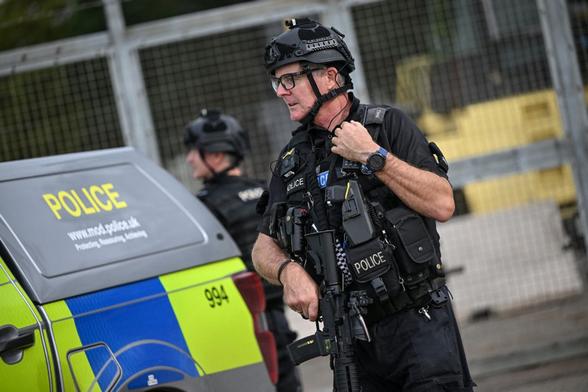
The arrest resulted from close cooperation between British and American authorities, with counterterrorism officers from the Metropolitan Police working with the Federal Bureau of Investigation (FBI) and the U.S. military. Police are searching two locations in Gloucestershire and said the arrest is not linked to any other counterterrorism investigations. Deputy Assistant Commissioner Vicki Evans, Britain's senior national coordinator for counterterrorism policing, said the allegations are serious and the investigation is ongoing.
FBI Director Kash Patel called the arrest "important." He said it involves allegations of espionage that are of "the utmost concern to the United States and our allies." "This FBI has no tolerance for anyone who breaks their oath to the United States and whose actions endanger our national security and that of our partners," he said. Patel said the bureau has investigated more than 160 counterintelligence and espionage threats over the past 21 months.
Under British law, police can hold a suspect arrested under the National Security Act for an extended period before deciding whether to charge. U.S. military law provides for penalties up to life imprisonment in espionage cases. Which country would prosecute the soldier, if charges are brought, has not been announced.