 Sunday, May 17Sunday, May 17
The World Health Organization (WHO) has declared the Ebola outbreak in the Democratic Republic of the Congo (DRC) and Uganda a Public Health Emergency of International Concern (PHEIC), its second-highest alert level, following a surge in cases and fatalities . The outbreak, caused by the rare Bundibugyo strain of the Ebola virus, has resulted in at least 80 deaths and 246 suspected cases in the DRC’s Ituri province, with additional cases reported in Uganda due to cross-border transmission . The WHO’s Director-General, Tedros Adhanom Ghebreyesus, emphasized that while the outbreak meets the criteria for a PHEIC, it does not yet constitute a pandemic emergency .
The Bundibugyo strain is particularly concerning due to its high lethality and the absence of an approved vaccine, unlike the more common Zaire strain, for which vaccines and treatments exist . The outbreak’s spread to Uganda, linked to travelers from the DRC, has heightened fears of further regional transmission, prompting the WHO to warn neighboring countries of potential risks . The International Federation of Red Cross and Red Crescent Societies (IFRC) has also mobilized resources to support containment efforts in Kinshasa and affected regions .
Health authorities are grappling with the challenges of controlling the outbreak amid limited medical countermeasures, with the WHO underscoring the need for enhanced surveillance, contact tracing, and cross-border coordination to prevent further escalation . The declaration of a PHEIC aims to galvanize international support and funding to curb the virus’s spread before it poses a broader global threat.
> Background: **WHO declares Ebola outbreak in DRC and Uganda a global health emergency.** — *3 hours ago*

Will the latest Ebola outbreak in DR Congo and Uganda spread further? The World Health Organization declares the epidemic a global health emergency.
aljazeera · about 3 hours ago
Ebola outbreak declared health emergency in DR Congo and Uganda Ariel Kestens, Head of IFRC Kinshasa Delegation, is our guest.
france24 · about 8 hours ago
WHO declares emergency as Ebola outbreak kills more than 80 in DR Congo The World Health Organization declared an international health emergency on Sunday over an outbreak of an Ebola strain in the Democratic Republic of Congo that has killed more than 80 and for which there is no vaccine.
france24 · about 8 hours ago
How worrying is the global Ebola emergency? – BBC How worrying is the global Ebola emergency? BBCW.H.O. Declares Ebola Outbreak a Global Health Emergency The New York TimesWHO Declares…
europesays.com · about 8 hours ago
WHO declares Ebola outbreak in DRC a global health emergency An Ebola outbreak caused by the rare Bundibugyo strain has killed dozens in Democratic Republic of the Congo.
aljazeera · about 10 hours ago
NEW - WHO declares the epidemic of Ebola-Bundibgyo strain in Democratic Republic of the Congo and Uganda, a PHEIC, public health emergency of international concern. Source: @disclosetv
telegram bot · about 11 hours ago
WHO declares Ebola an international health emergency On Sunday, the World Health Organization (WHO) triggered its second-highest international alert level in response to the Ebola epidemic in the Democratic Republic of Congo (DRC). It is caused by a variant that is highly lethal and has no vaccine. According to a statement published by the Geneva-based WHO on the social network X, its Director-General Tedros Adhanom Ghebreyesus has concluded that the virus constitutes a public health emergency of international concern (PHEIC), but does not meet the criteria for a pandemic emergency. Since 2024, the PHEIC has been the WHOs second highest alert level, after pandemic emergency. +Get the most important news from Switzerland in your inbox Ebola, which causes an extremely contagious haemorrhagic fever, remains formidable despite recent vaccines and treatments, which are effective only against the Zaire strain that has caused the biggest epidemics on record. Bundibugyo variant The province of Ituri, in the north-east of the DRC, has ...
swissinfo · about 11 hours ago
Global health emergency declared after Ebola spreads from DR Congo WHO says outbreak is of international concern as rare strain of disease spills over into Uganda
financial times · about 11 hours ago
WHO declares Ebola outbreak in DRC, Uganda a global emergency: What to know DRC outbreak causes more than 80 deaths and spreads to neighbouring Uganda.
aljazeera · about 11 hours ago
WHO says Ebola outbreak in DRC and Uganda is emergency of international concern At least 80 deaths and 246 suspected cases in DRCs Ituri province, while Uganda reports spread from travellersAn Ebola outbreak in the Democratic Republic of the Congo and Uganda is a public health emergency of international concern, the World Health Organization has said.The WHO made its declaration on Sunday, after more than 80 deaths and 246 suspected cases linked to the outbreak of the Bundibugyo virus. Continue reading...
theguardian · about 13 hours ago
World Health Organization declares Ebola outbreak in Congo a global health emergency : NPR Ambulances are parked outside a hospital in Bunia, Congo, Saturday, May 16, 2026. Constant Same Bagalwa/AP hide caption…
europesays.com · about 14 hours ago
WHO declares global health emergency over Ebola outbreak in Congo and Uganda The World Health Organization on Sunday declared an Ebola outbreak in the Democratic Republic ofCongo and Uganda a public health emergency of international concern, posing risks to neighbouring countries after recording 88 deaths and more than 300 suspected cases in the region.
france24 · about 14 hours ago
Ebola outbreak is a global health emergency, WHO says The World Health Organization said the outbreak does not meet the criteria of a pandemic emergency.
euronews · about 15 hours ago
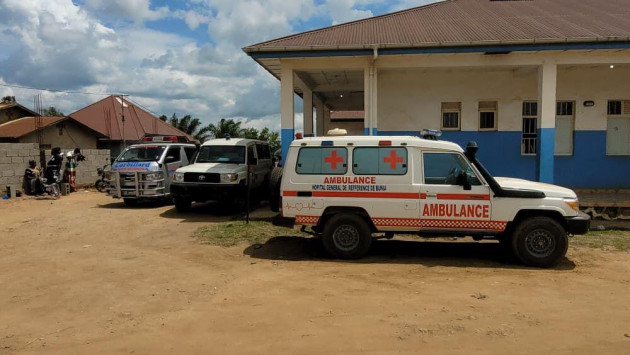
Ebola outbreak in Democratic Republic of Congo declared a global health emergency Some 88 deaths and 336 suspected cases of the highly contagious haemorrhagic fever have been reported so far.
thejournal · about 15 hours ago
WHO declares Ebola outbreak in DR Congo, Uganda a global health emergency DR Congo accounts for all except two of the suspected cases, both of which were reported in neighbouring Uganda.
aljazeera · about 16 hours ago
WHO declares Ebola outbreak in Democratic Republic of Congo a global health emergency Some 88 deaths and 336 suspected cases of the highly contagious haemorrhagic fever have been reported so far.
thejournal · about 16 hours ago
JUST IN: WHO declares global health emergency over Ebola outbreak in Congo and Uganda. @BRICSNews
telegram bot · about 18 hours ago
WHO declares Ebola outbreak in Congo and Uganda emergency of international concern At least 80 deaths reported in Congos Ituri province while Uganda reports spread from travellers from the DRCThe World Health Organization (WHO) has declared an Ebola outbreak in the Democratic Republic of Congo and Uganda a public health emergency of international concern.The WHO on Sunday said the outbreak, caused by the Bundibugyo virus, does not meet the criteria of a pandemic emergency. Continue reading...
theguardian · about 20 hours ago